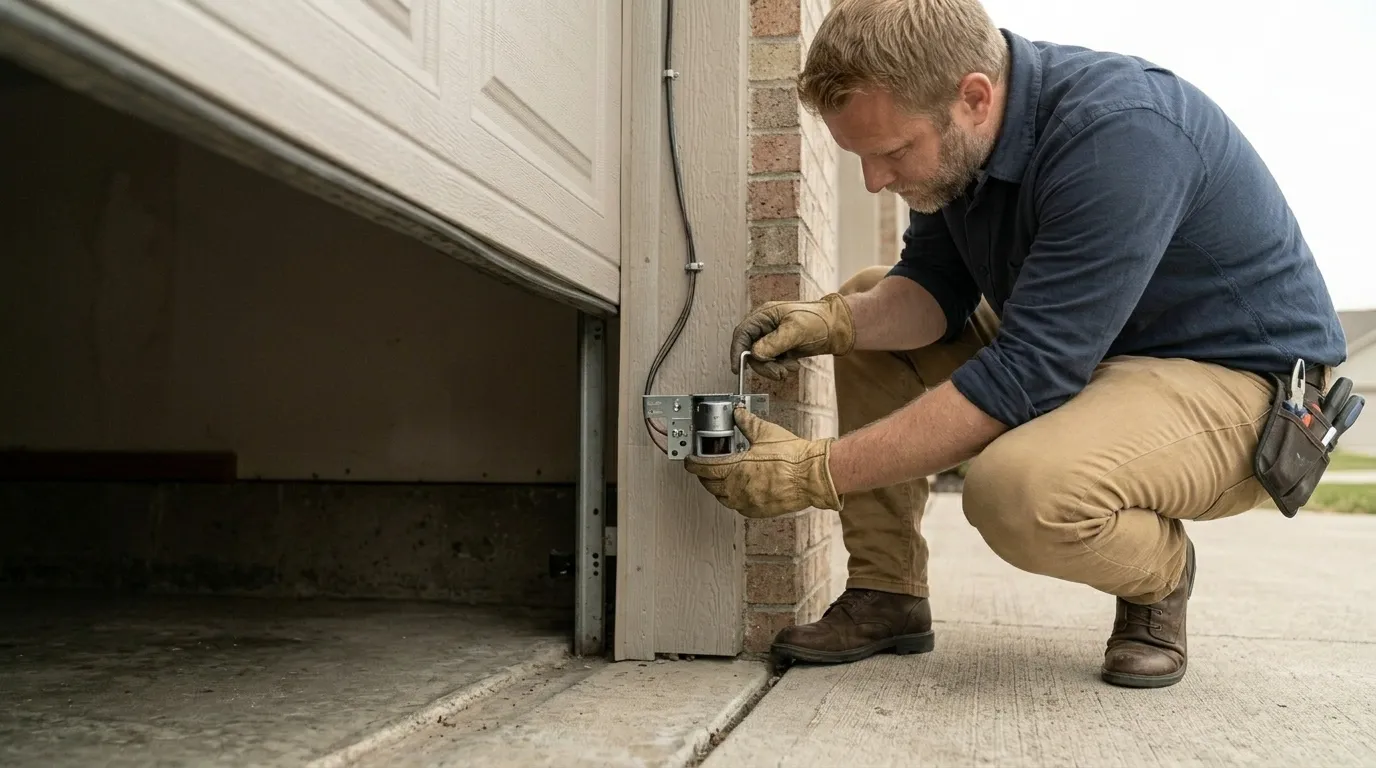
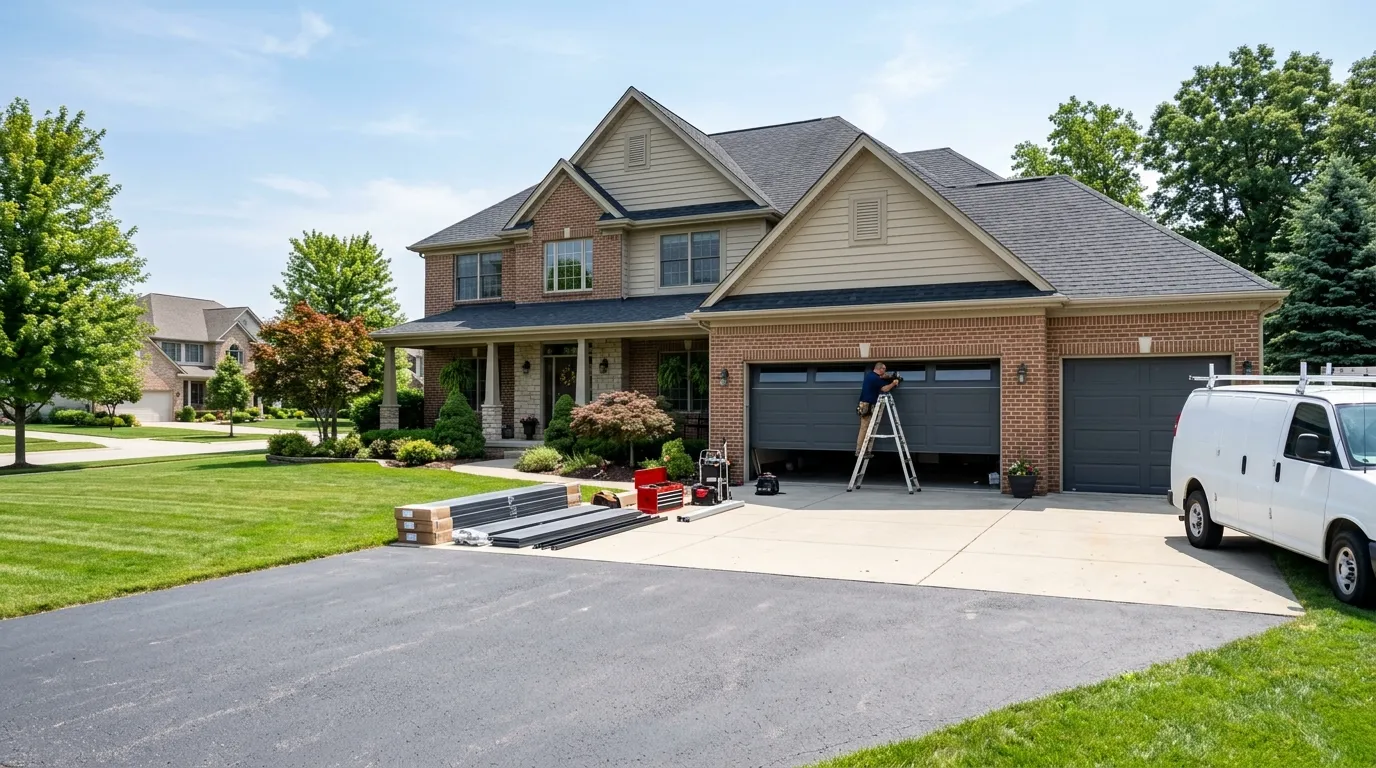
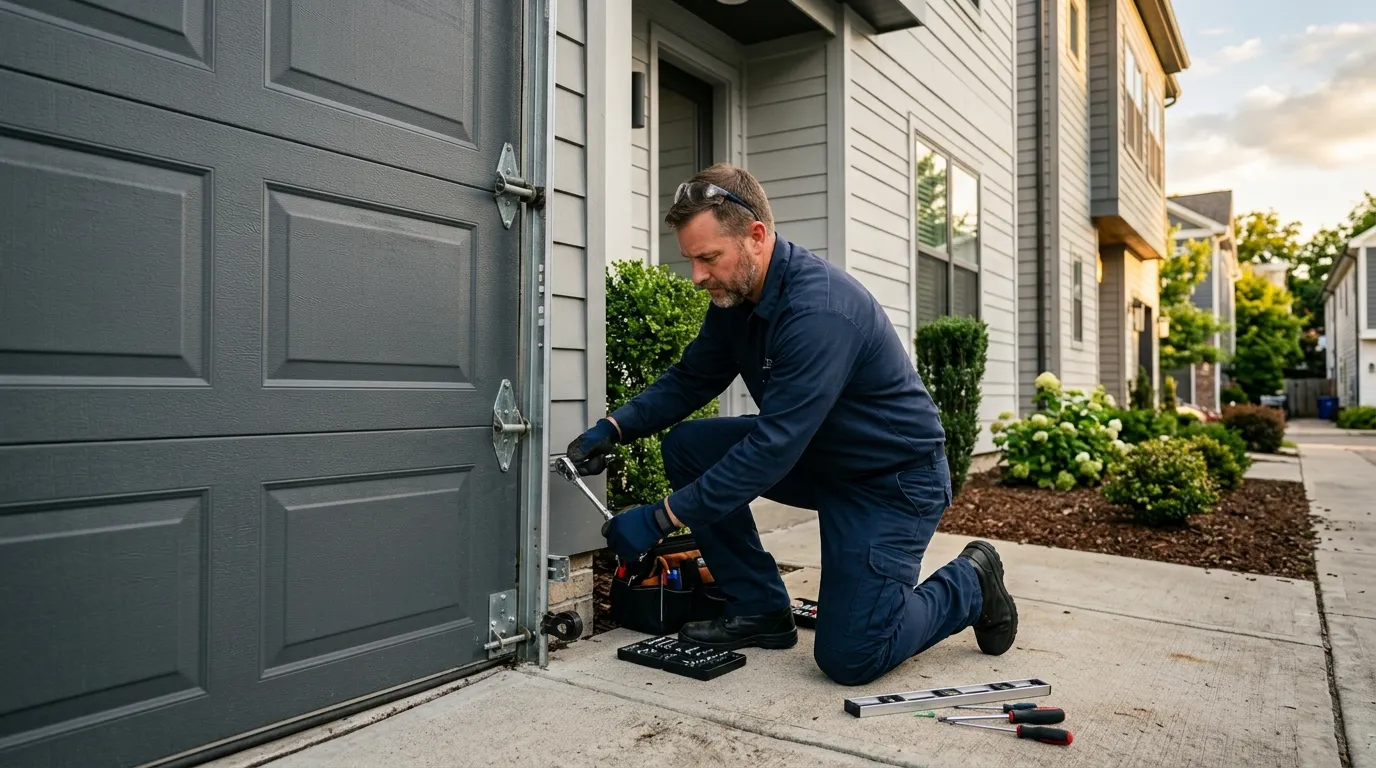
Stratmoor homes mostly date to the mid-1970s, older than the Colorado Springs average. We travel from Colorado Springs to fix the springs, tracks and openers that era actually uses.
Stratmoor's houses cluster around a median build year of 1976, noticeably older than the 1990 median across the wider Colorado Springs service area. That fourteen-year gap matters more than it sounds. A house built in the mid-70s went up before the common torsion-spring conversions and before steel doors became the default over here. With 2,396 households in the area, you've got a fairly compact, consistent pocket of homes that were all framed and fitted out in roughly the same building cycle, which means a lot of original garage hardware is still doing its job decades past when most manufacturers stopped supporting it. Median household income here runs $62,759, well under the $95,392 median across the broader service area, and that gap shapes what kind of work we actually get called for - repair and targeted part replacement more often than full door swaps. Stratmoor sits about 7 miles from Colorado Springs, close enough that a truck out of the city reaches it inside the same working day as calls closer in.
How That Shows Up in the Door
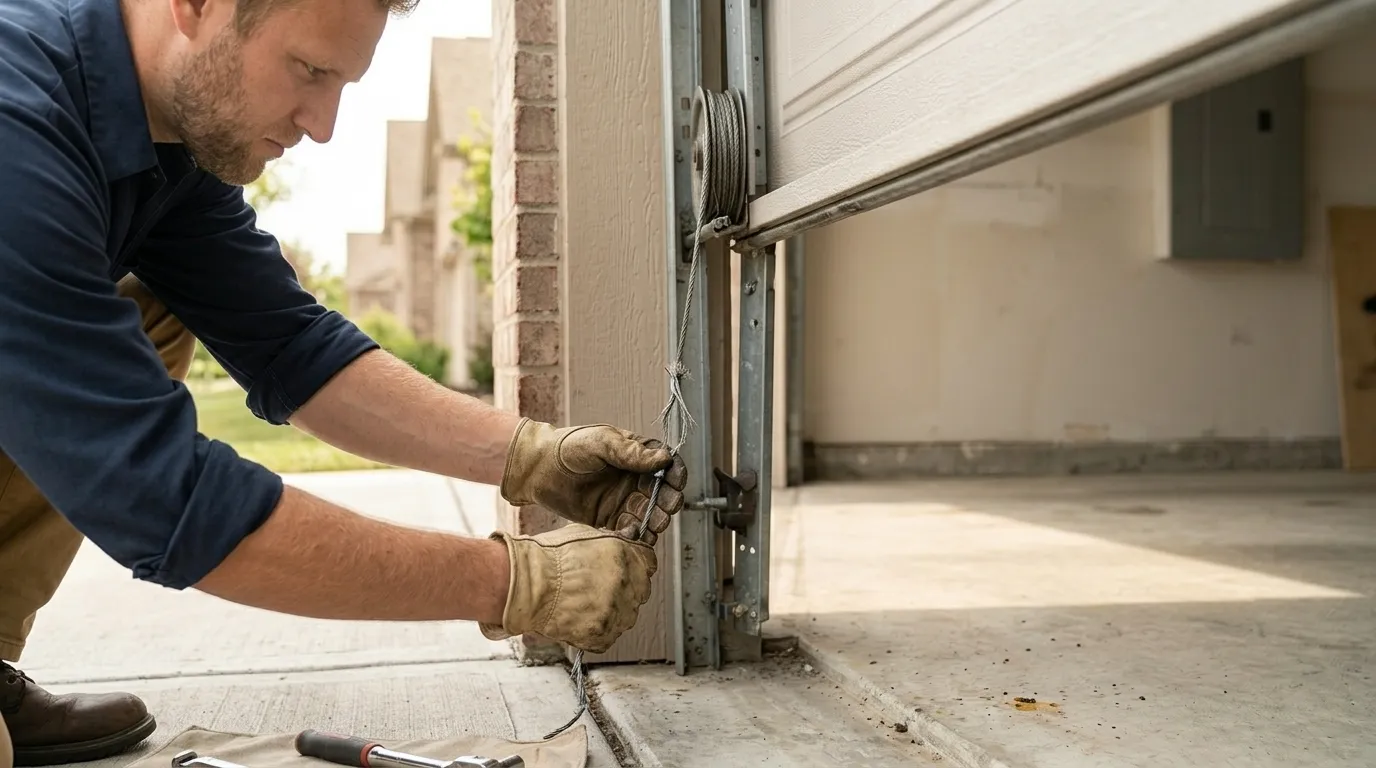
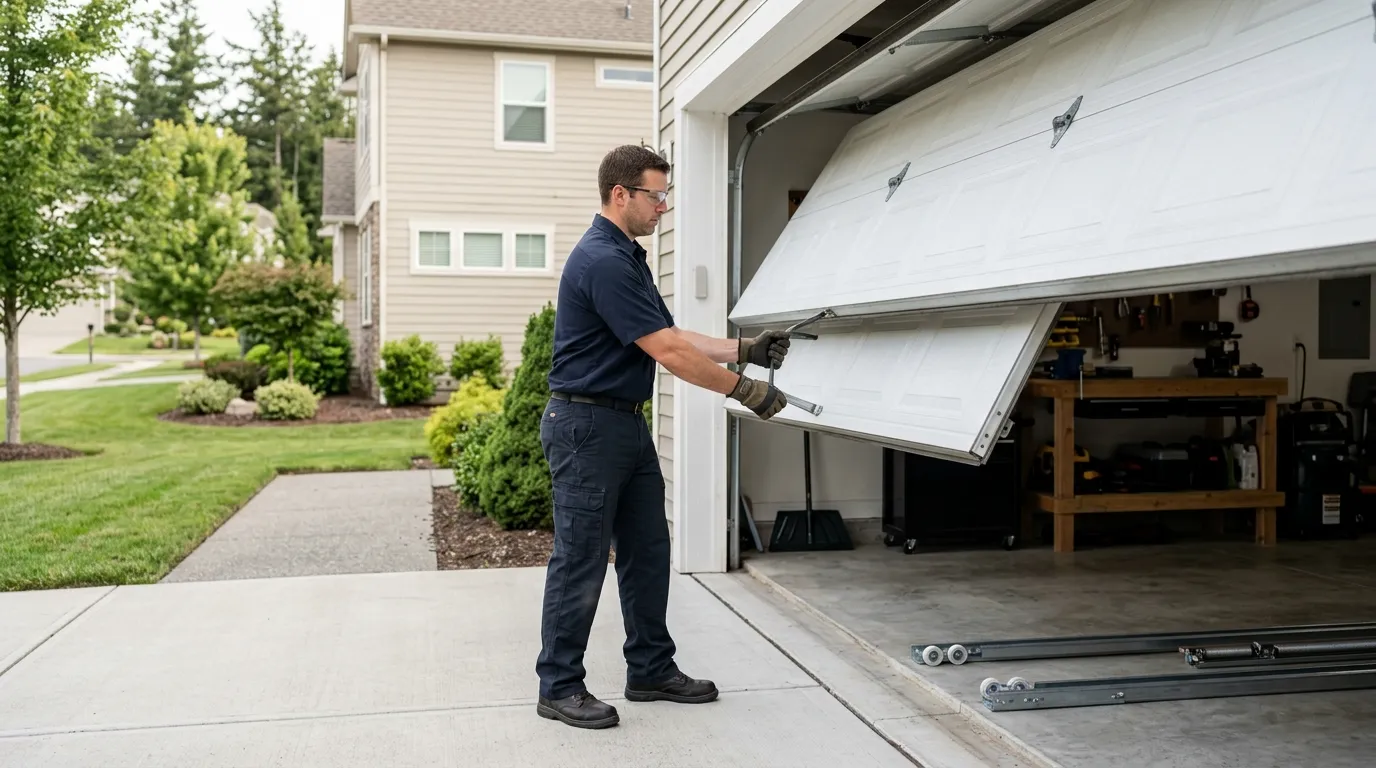
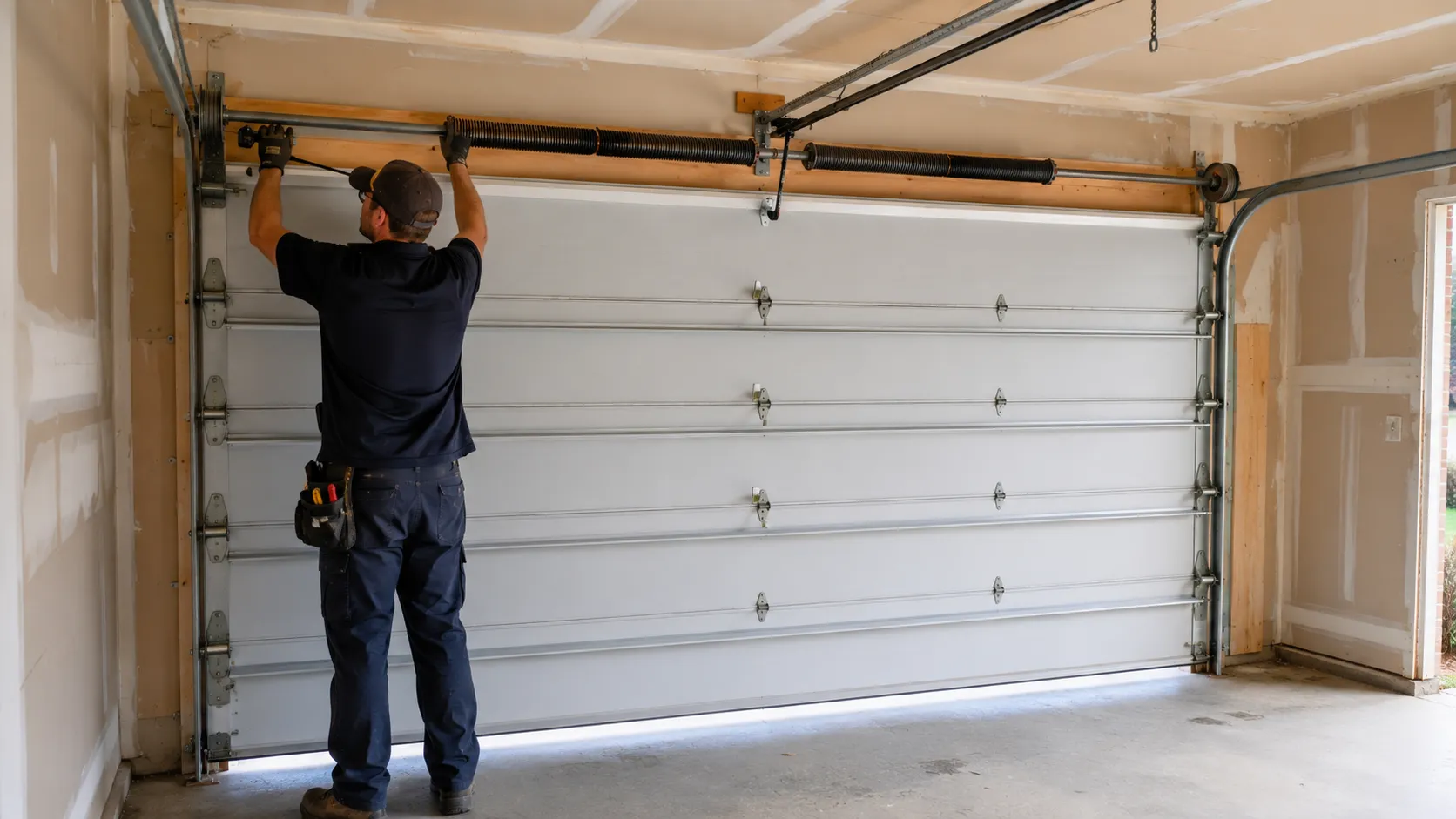
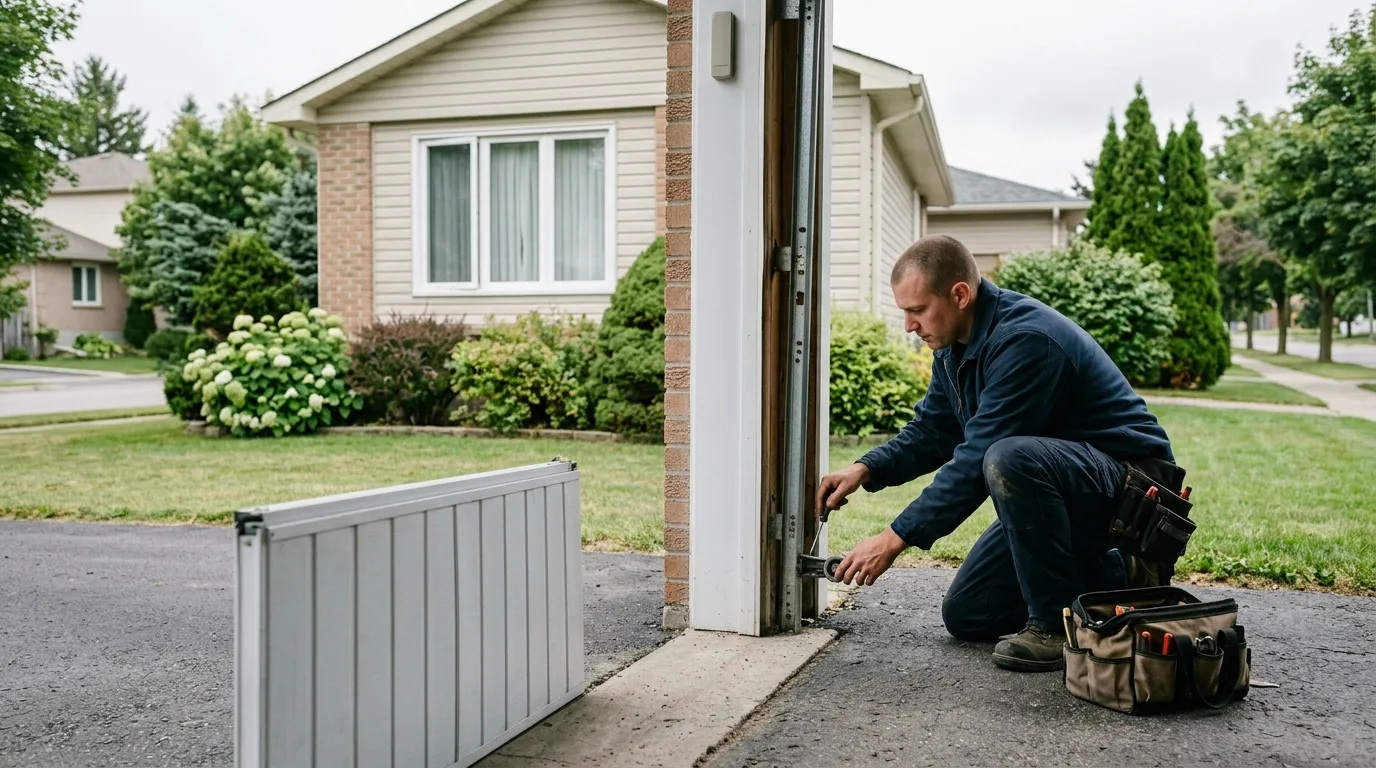
A door installed around 1976 is more likely to be a single steel or wood-composite panel on an extension-spring setup than the two-spring torsion bar you'd find in a house built in the 90s. Extension springs age differently - they stretch and fatigue along their coils rather than fail cleanly at the winding cone, and the safety cables that are supposed to contain a snapped spring were often added later, if at all. Rollers from that era are frequently the original steel-on-steel type, not nylon, which means more noise and more wear on the track over time. Openers get replaced more often than the door itself, so you'll see a mix - a 1976 door bolted to a chain-drive opener from the 2000s, with brackets and wiring that were never quite matched to begin with. None of that is a defect. It's just what forty-plus years of incremental fixes looks like on a house that was never gutted and redone. We check the spring type and cable routing before anything else on these calls, because assuming torsion hardware on a house this age is the fastest way to misdiagnose the job.
Old Streets and New Ones
Stratmoor is one of the closer-in areas we cover, about 7 miles out from Colorado Springs, and it sits alongside other nearby communities like Cimarron Hills at 3 miles and Fort Carson at 12. The COLD severe climate band that covers this whole service area doesn't spare Stratmoor's older stock any more than it spares newer builds - if anything, a 1976 door with worn weatherstripping and a steel panel that's flexed for decades shows winter stress faster than a door installed in the 90s under the era's tighter tolerances. We don't run a depot in Stratmoor; every job here is a truck out of Colorado Springs, which we mention because it means we schedule the area alongside our other nearby stops rather than treating it as a standalone route.
What We Do Most in This Area
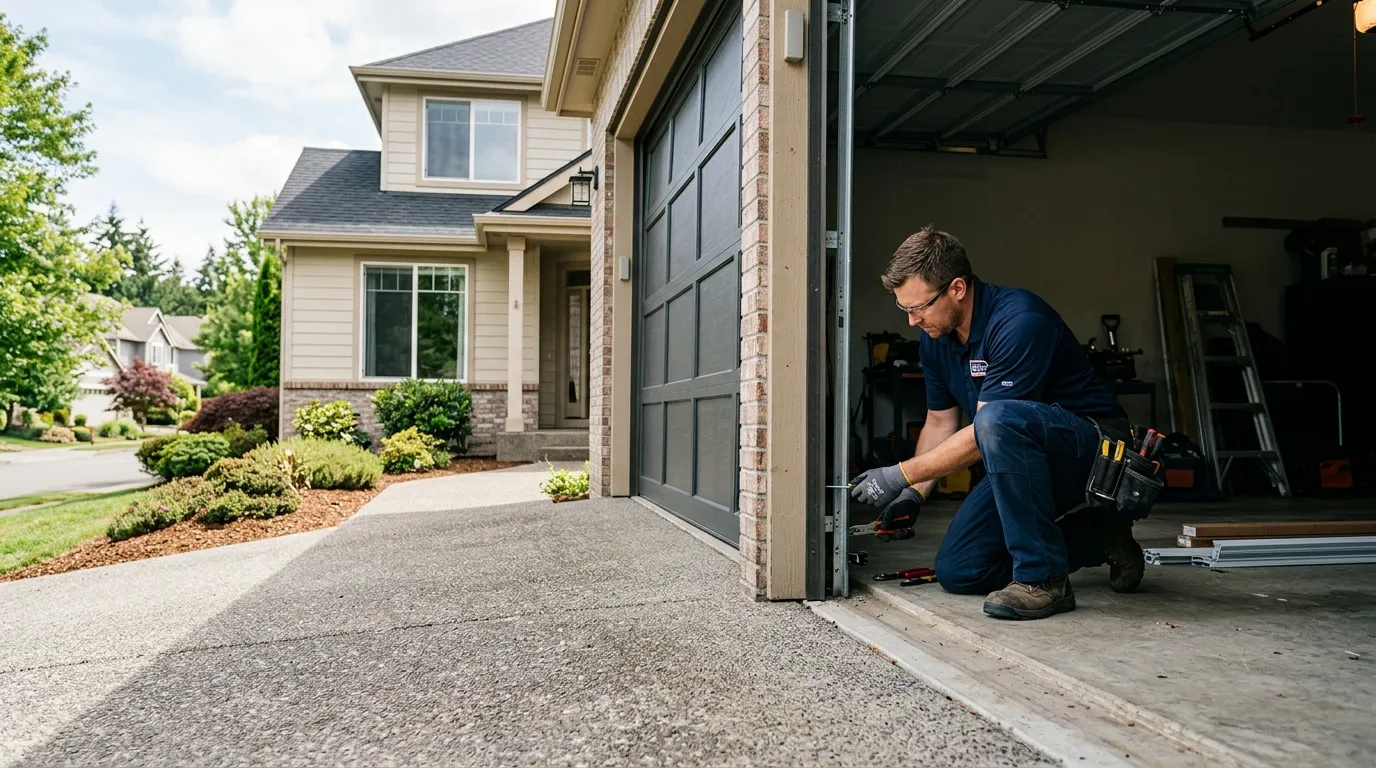
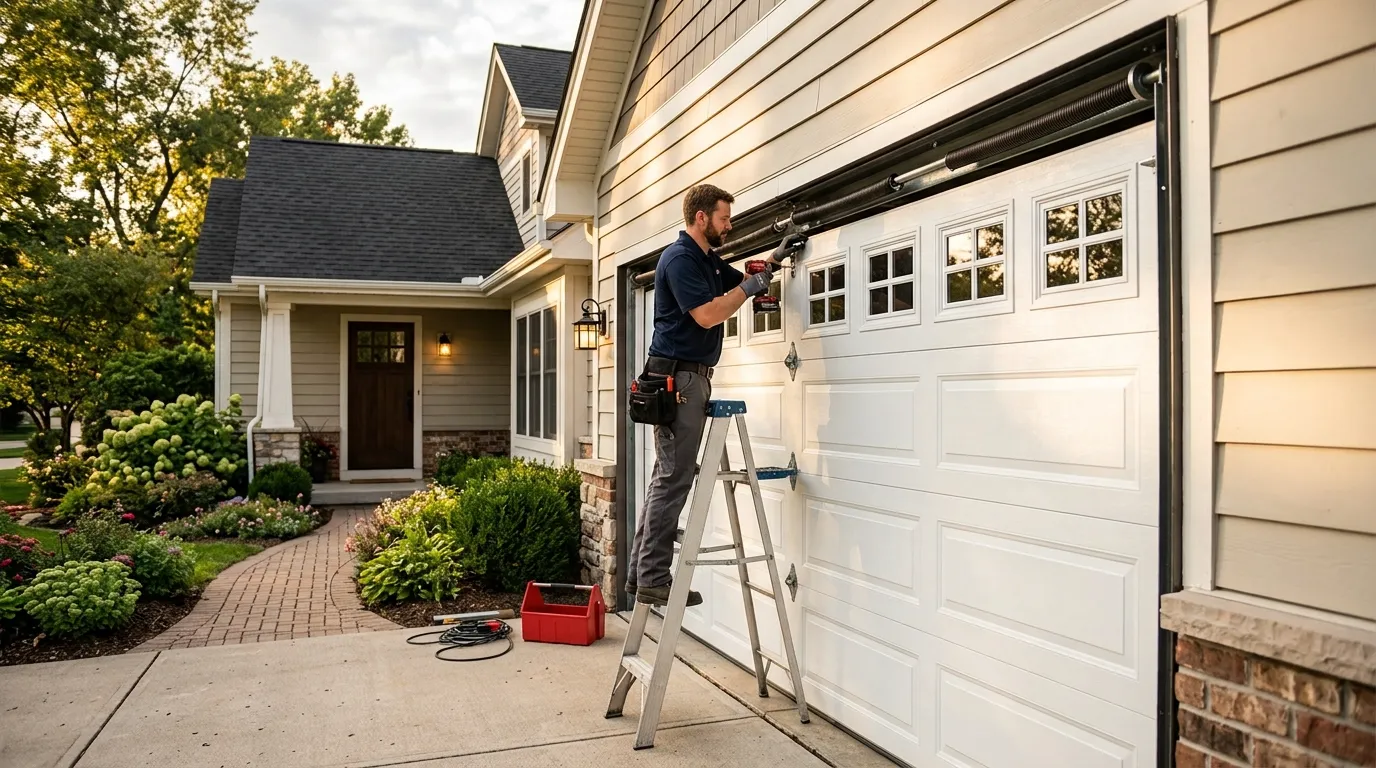
Given the housing age here, the calls we get most are extension spring replacement, roller and track wear from decades of steel-on-steel contact, and safety cable retrofits on doors that never had them installed to begin with. We also see a fair number of openers that were swapped out well after the door itself, leaving mismatched brackets or travel limits that need adjusting rather than replacing. Full door replacement comes up less often here than in newer parts of the service area - a 1976 frame in decent shape usually doesn't need a new door, just spring, cable and roller work brought up to current safety standards. One honest limitation: if the jamb or header has shifted with the house over the decades, which happens more with older framing, that's a carpentry problem before it's a garage door problem, and we'll tell you that up front rather than force a door into an opening it doesn't fit anymore.
How it works
From “it’s stuck” to “it’s fixed”
01
Tell us what’s wrong
Describe the symptom - won’t open, loud bang, opener runs but the door won’t move.
02
On-site diagnosis
A technician tests the door under power and by hand and finds what actually failed.
03
Clear, up-front plan
You get the fix that’s needed and what drives the cost - before any work starts.
04
Repaired & tested
The repair is done, the door is set true and tested, and the work area left clean.
Serving Colorado Springs, CO - tell us what your door’s doing and we’ll take it from there.
Are Stratmoor garage doors different from newer parts of Colorado Springs?
Often, yes. Stratmoor's median build year is 1976, well before the 1990 median across the wider service area. That means more extension-spring setups, more original steel rollers, and doors that predate common safety-cable retrofits - all things a newer house typically won't have.
Do you have a shop or depot in Stratmoor?
No. We're based in Colorado Springs and drive out to Stratmoor, about 7 miles away, for service calls. There's no local depot here, just a truck scheduled out of the city.
Why does my extension spring keep failing instead of just breaking clean?
Extension springs, common on houses from Stratmoor's era, fatigue along their coils rather than snapping at one point the way torsion springs do. That gradual stretch is normal wear for hardware this age, but it means the spring can look fine right up until it isn't.
Is it worth replacing my whole door if it's from the 1970s?
Not usually, if the frame and jamb are still square. Most of what we see on Stratmoor's older stock is spring, cable and roller wear that's fixable without touching the door panel itself. Full replacement makes more sense when the frame has shifted or the panel is physically damaged.
Ready to get your garage door sorted?
Tell us what it’s doing and where you are in Colorado Springs - we’ll take it from there.