When the Power Goes Out and Your Garage Door Won't Move
Colorado Springs Garage Door Pros explain what a power cut does to your opener, when it's fine to wait, and why this area's 1980s-2000s housing stock and cold winters change the answer.
A garage door opener needs line power to run the motor, full stop. When the power cuts, the trolley that pulls your door along the rail just sits there, and the door itself is fine - it's the opener that's stuck. Most houses in this service area were built between 1951 and 2006, with a lot of that stock going up through the 1980s and 90s across the fifteen named areas we work in. Openers from that era, and even many replacements installed since, don't have a battery backup built in. That's the difference between a five-second inconvenience and being stuck with the car inside until the power company finishes its work. If your opener predates battery backup as a standard feature, a cut means manual release, every time, no exceptions.
Circuit boards on these older units also don't always come back cleanly after a surge when the power snaps back on. Sometimes the opener just needs the wall button pressed again. Sometimes the board is fried and won't respond at all, which is a different problem than the power cut itself and worth knowing apart from it.
When Waiting Is Fine
If the power cut is short and your opener is otherwise healthy, there's nothing to do but wait. The motor doesn't hold a charge, the door doesn't lose its settings, and once power's back the opener should run like nothing happened. This is the case most of the time - utility outages in this area tend to be brief, and an opener with no battery backup just resumes normal work the moment current returns.
Waiting is also fine if you don't need the car right now. Pull the manual release cord, lift the door by hand, and go about your day. A door on a properly balanced torsion system lifts with one hand even on a double-car opening. If it doesn't, that's a spring problem, not a power problem, and it's worth a separate call. The one thing not worth doing is repeatedly hammering the wall button during an outage - it doesn't speed anything up and it can leave the opener in a confused state once power returns.
Checking It Yourself
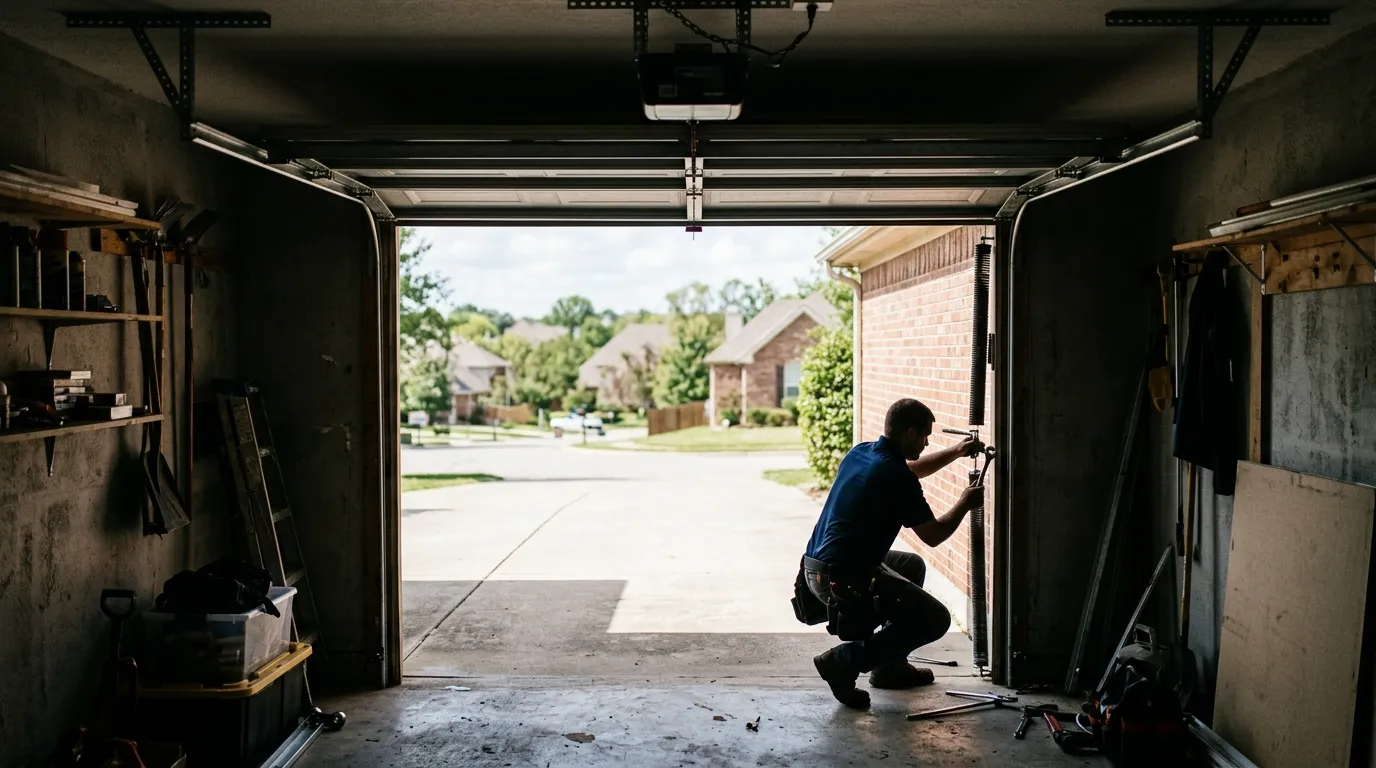
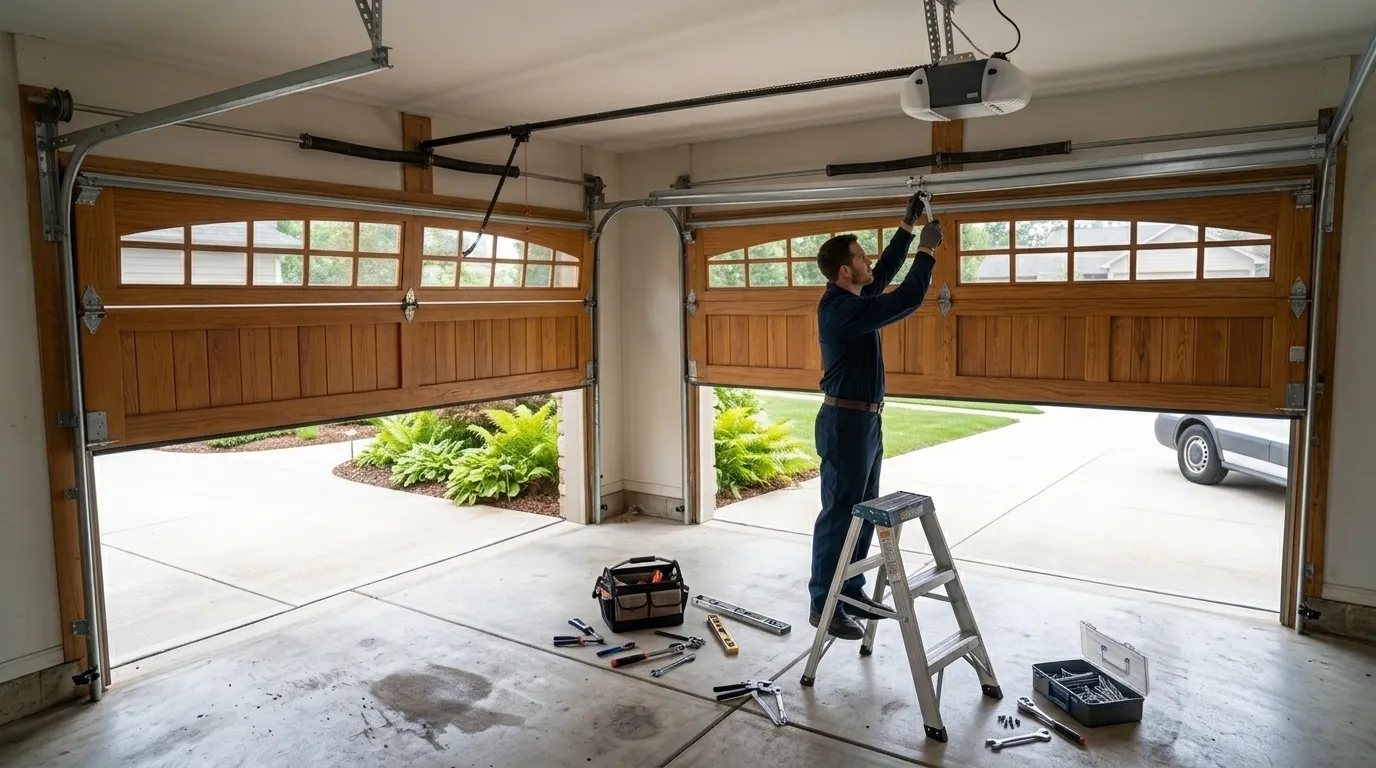
Before assuming the worst, check three things. First, confirm it's actually a power cut and not a tripped breaker specific to the garage circuit - a lot of houses from the 1980s and 90s stock in this area have the garage on its own breaker, separate from the house lights, so the rest of your home can be lit up while the garage sits dead. Second, look at the wall unit for any light or display; if it's dark while house power is on, the issue is local to that circuit or the opener itself, not the utility. Third, find the manual release cord - usually a red handle hanging from the trolley rail - and pull it straight down to disconnect the door from the opener so you can lift it by hand.
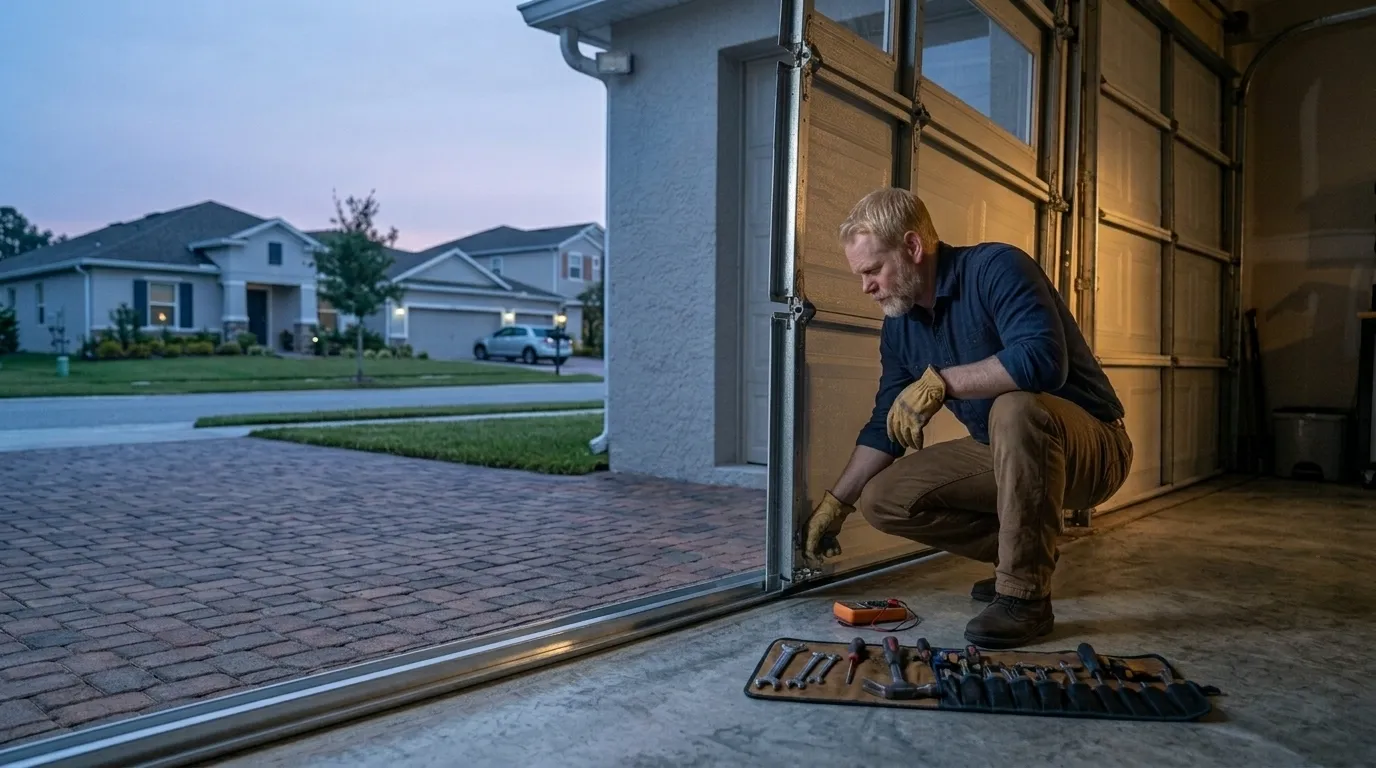
What you shouldn't do is start pulling the opener apart or testing the circuit board with a multimeter unless you already know what you're looking at. That's a good way to turn a simple outage into a motor replacement.
What Local Conditions Do
Cold makes power cuts worse here, not because of the cut itself but because of what happens to the opener while it sits idle. This area sits in a severe cold climate band, and low temperatures thicken the grease in the opener's gear housing and stiffen the springs, so a unit that comes back to life after a cut sometimes struggles or grinds on the first cycle instead of running smooth. On an opener that's already twenty or thirty years old - common given the median build year of 1990 across the housing stock here - that extra load during a cold restart is often what pushes a weak motor over the edge.
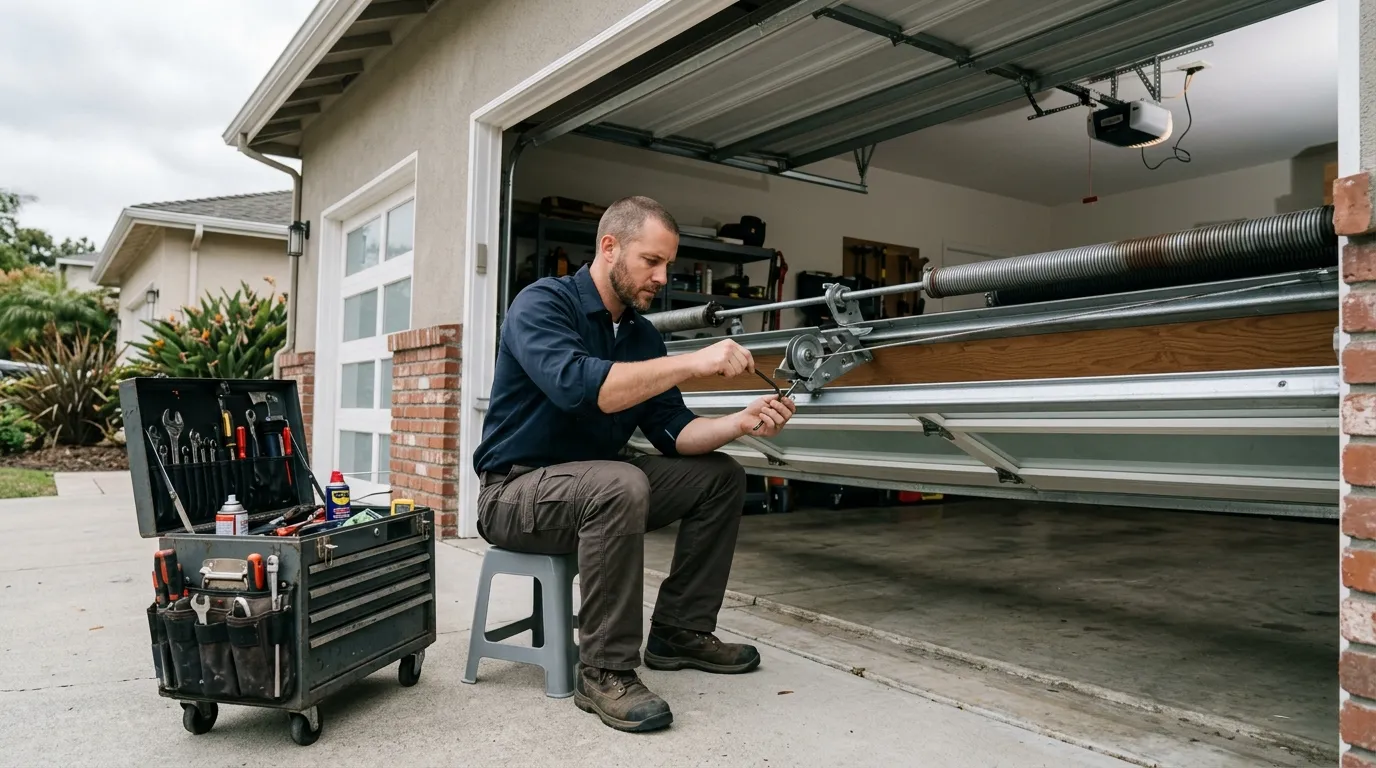
We don't install utility backup power and won't pretend that's part of the job. What we do is look at whether your opener has battery backup at all, whether the gear housing needs fresh grease rated for cold, and whether the unit is old enough that a power cut just exposed a problem that was coming anyway.
How it works
From “it’s stuck” to “it’s fixed”
01
Tell us what’s wrong
Describe the symptom - won’t open, loud bang, opener runs but the door won’t move.
02
On-site diagnosis
A technician tests the door under power and by hand and finds what actually failed.
03
Clear, up-front plan
You get the fix that’s needed and what drives the cost - before any work starts.
04
Repaired & tested
The repair is done, the door is set true and tested, and the work area left clean.
Serving Colorado Springs, CO - tell us what your door’s doing and we’ll take it from there.
Usually not on its own. Most openers just sit idle and resume normal operation once power returns. The risk is a power surge when electricity snaps back, which can occasionally damage the circuit board, especially on older units common in this area's 1980s and 90s housing stock.
Should I install a battery backup opener because of outages here?
It depends on how often you lose power and whether you need the garage during a cut. A lot of homes in this area still run openers without backup batteries. It's a reasonable upgrade if you're already due for a new opener, but not something we'd push on a unit that's otherwise working fine.
Why is my opener slower to respond after a cold snap and a power cut together?
Cold thickens the grease in the opener's gear housing and stiffens spring tension, so the motor works harder on its first cycle. Combine that with a fresh restart after an outage, and an older motor can struggle or grind before it settles back into normal operation.
Ready to get your garage door sorted?
Tell us what it’s doing and where you are in Colorado Springs - we’ll take it from there.