What Actually Happens During a Garage Door Service Call Here
A look at what our techs actually check on a Colorado Springs service call, from cold-weather binding to the older hardware still common in this area's housing stock.
When we get a call, the first thing we're doing is narrowing down whether the problem is the door, the opener, or the hardware connecting them. That sounds obvious, but a lot of homeowners assume a slow or noisy door means a new opener when it's actually a spring losing tension or a track that's shifted out of alignment.
Housing across this service area was mostly built between 1951 and 2006, with the bulk of it going up in the 1980s and 90s. That matters on a service call because a door installed during that stretch is often running original torsion hardware that's now 25 to 40 years old. Springs have a rated cycle life, and once a door hits that number, it doesn't fail gracefully - it snaps, usually on a cold morning when the steel is stiff and the tension is highest.
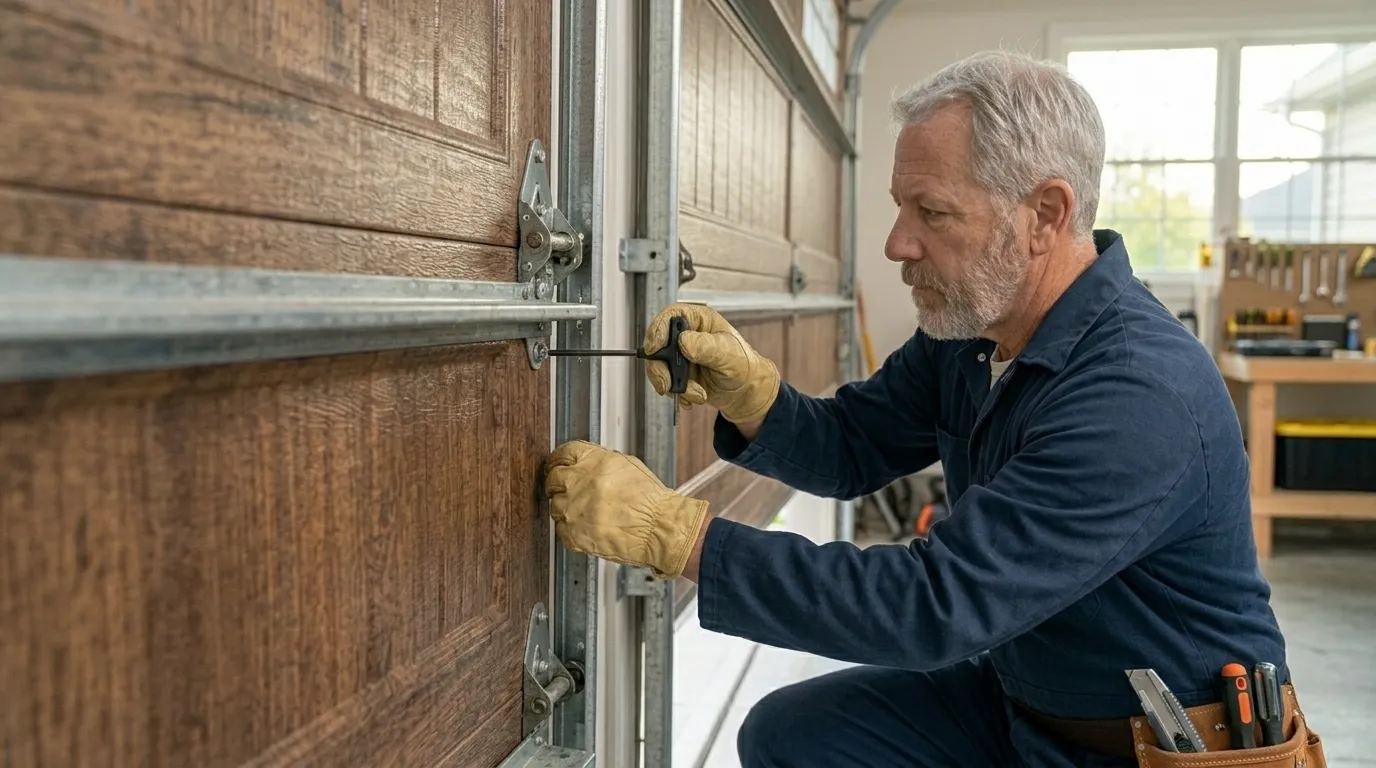
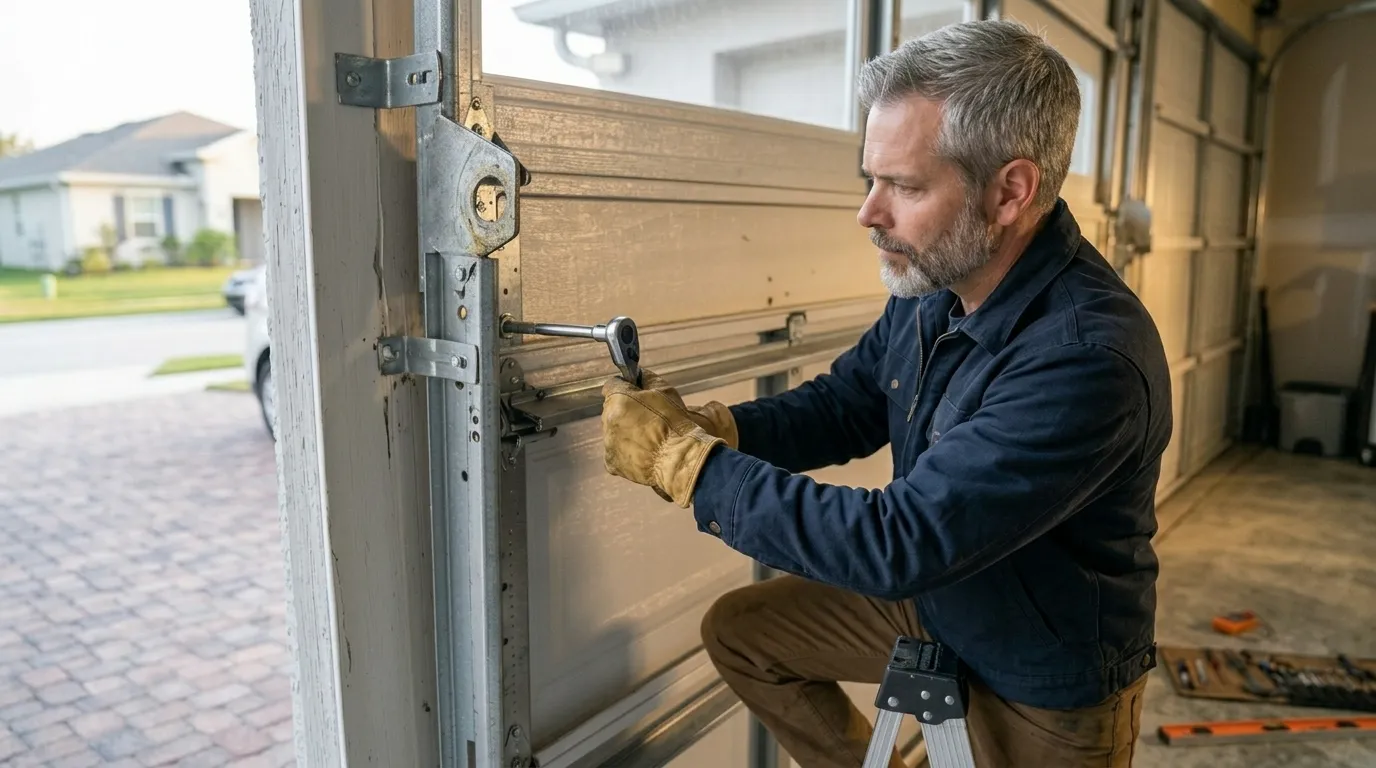
So a real diagnostic isn't just "does the door open." We're checking spring wind, cable fray, roller condition, and whether the track spacing still matches the door panel. On a house built in 1990, all four of those are candidates before the opener motor ever gets blamed.
When Waiting Is Fine
Not every noise or hesitation means a same-day call. A door that groans on the first open of a cold morning but runs fine after that first cycle is usually just stiff lubricant reacting to the temperature, not a failing part. In a cold-severe climate like this one, that's common enough that we don't treat it as an emergency.
Same goes for a door that's slightly slower to close in winter than summer - steel contracts in the cold, and a door that was set up in July can bind a little differently by January. If it's not grinding, not off-track, and the opener isn't straining, it's fine to keep an eye on it rather than book a call right away.
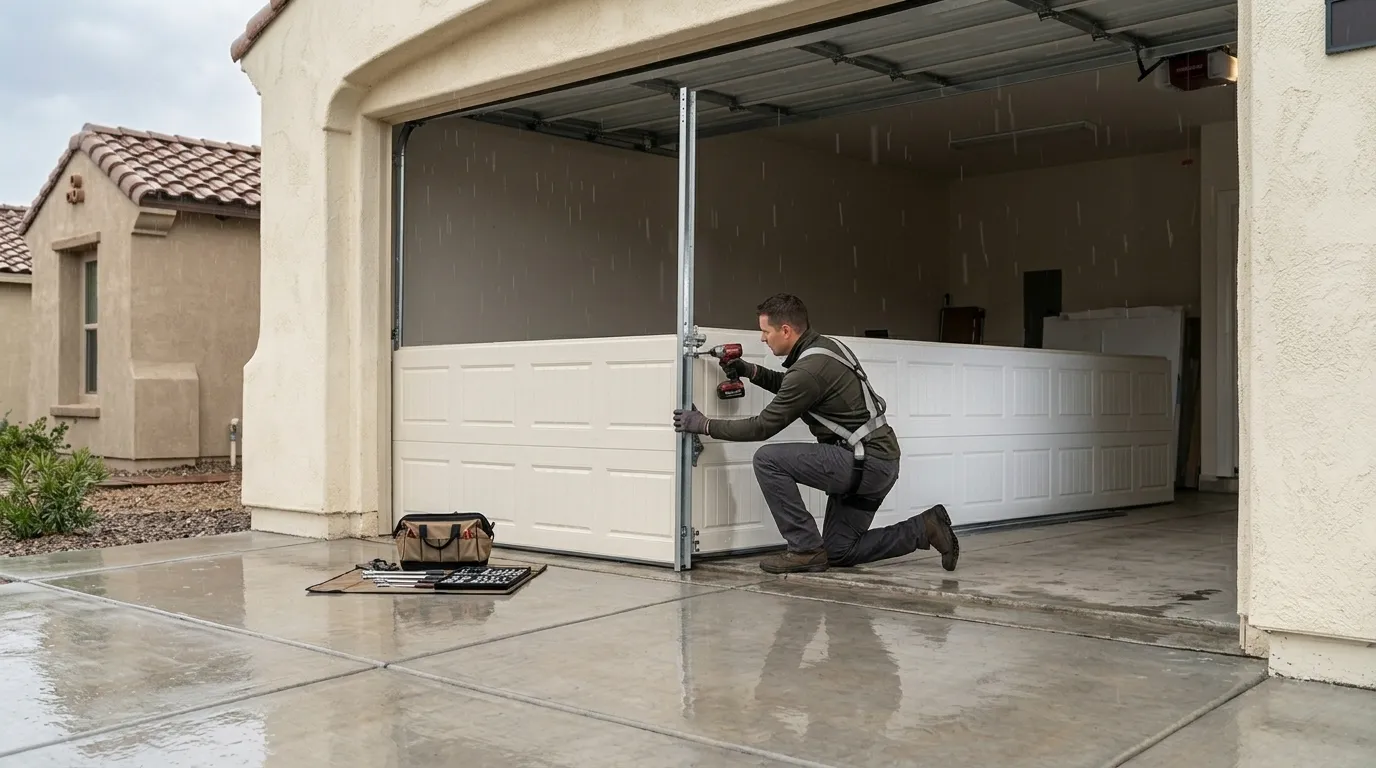
Where we draw the line: a snapped cable, a spring that's visibly separated, or a door that's come off one of its tracks. Those don't wait, because a door under tension with a broken component is a safety issue, not a maintenance one. Everything short of that, you can usually let ride until it's convenient.
Checking It Yourself
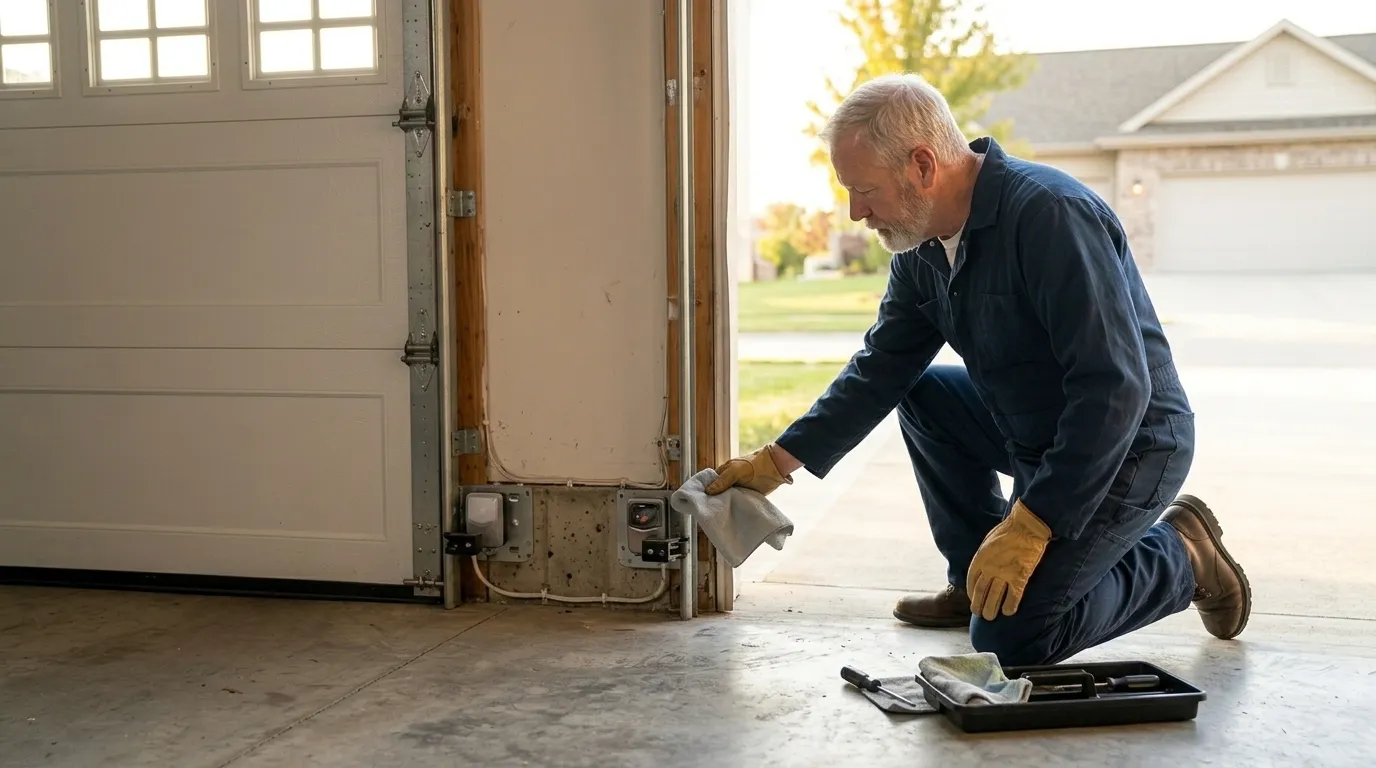
Before you call anyone, there's a short list worth looking at. Stand the door up and look at the springs above the opener rail - if you see a gap in the coil, that spring is broken and the door shouldn't be run on the opener until it's replaced. Next, pull the manual release and lift the door by hand. It should move smoothly and stay roughly where you let go. If it drops or feels heavy, the spring tension is off.
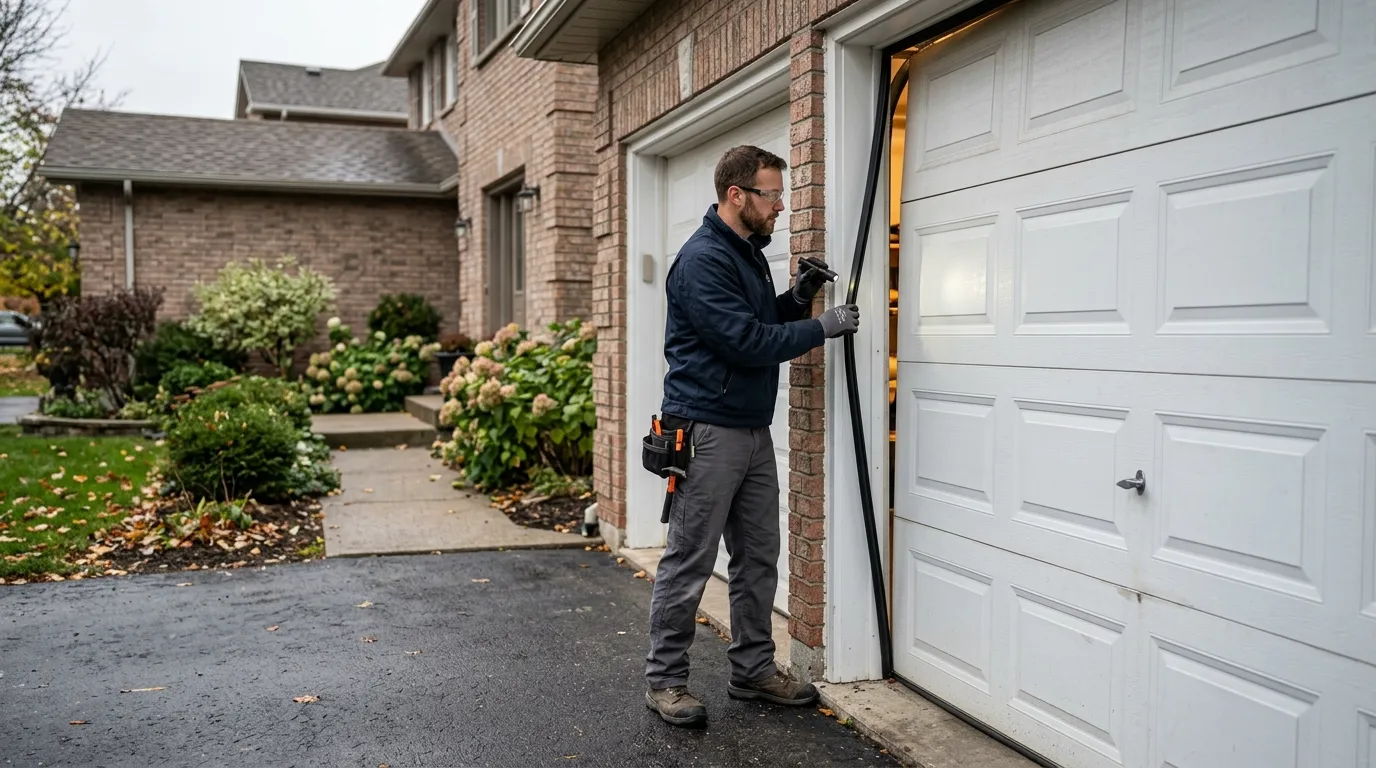
Check the tracks for daylight gaps where a roller has jumped out, and look at the cables for fraying near the bottom bracket. On homes built in the 1980s and 90s especially, we still see galvanized cable that's original to the door, and thirty-plus years of cycling wears through the strands unevenly.
One honest limitation here: we can't diagnose an opener's circuit board or a intermittent electrical fault over the phone from a description. If the door is doing something inconsistent - working sometimes, not others, no clear pattern - that one needs a tech with a meter, not a guess.
What Local Conditions Do
This area sits in a cold, severe climate band, and that shapes what a service call actually finds. Steel doors contract in low temperatures, which changes how much clearance a track needs and how tight a spring's wind should be set. A door balanced correctly in summer can bind slightly in January if the track spacing wasn't set with winter contraction in mind.
We see this pattern repeat across the service area - from homes near Cimarron Hills to houses out toward Stratmoor and Security-Widefield - because the housing stock in most of those areas dates to that same 1980s-90s build window. Builder-grade hardware from that era wasn't always spec'd for the swing between a hot August afternoon and a sub-zero January night, and three decades of that cycling is what shows up as fatigue in springs, cable, and track brackets today.
A service call here isn't just fixing what's broken - it's often resetting tension and clearance for conditions the original install didn't fully account for.
How it works
From “it’s stuck” to “it’s fixed”
01
Tell us what’s wrong
Describe the symptom - won’t open, loud bang, opener runs but the door won’t move.
02
On-site diagnosis
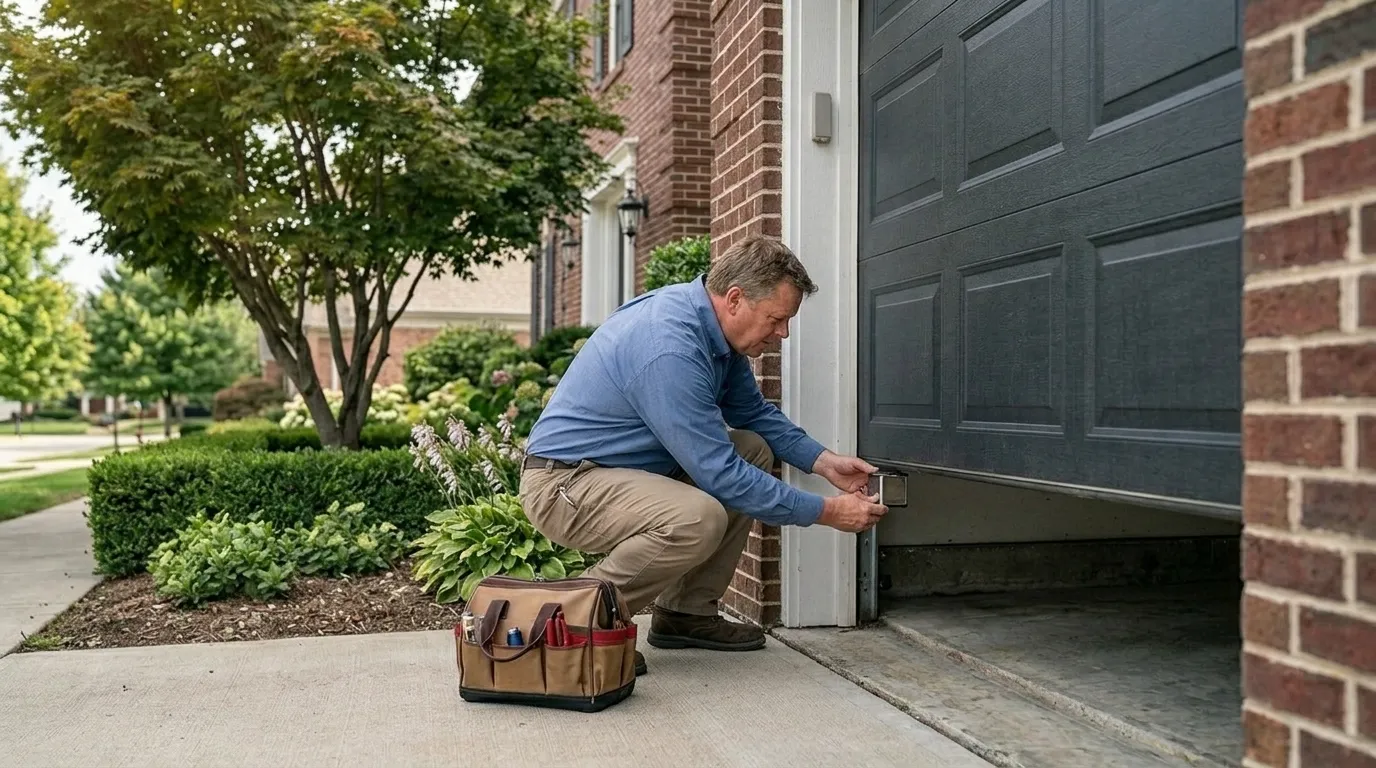
A technician tests the door under power and by hand and finds what actually failed.
03
Clear, up-front plan
You get the fix that’s needed and what drives the cost - before any work starts.
04
Repaired & tested
The repair is done, the door is set true and tested, and the work area left clean.
Serving Colorado Springs, CO - tell us what your door’s doing and we’ll take it from there.
Why does my garage door get harder to open in winter?
Steel contracts in cold temperatures, which can tighten track clearance and change how a torsion spring balances the door's weight. In this climate band, that swing between summer and winter is significant enough that a door balanced in July can bind slightly by January without anything actually being broken.
How old is too old for a garage door spring?
Springs are rated by cycle count, not age, but most homes in this area were built between the 1980s and 2006, so a lot of original hardware is now 25 to 40 years into a lifespan it wasn't built to exceed. If your door was never reworked, the spring is a reasonable first place to look.
Can you tell me what's wrong over the phone?
We can rule some things in or out based on your description, but an intermittent opener fault or a wiring issue needs a tech with a meter on site. We won't guess at an electrical diagnosis and charge you for a repair that might not fix it.
Is a noisy door always an emergency?
No. A groan on the first cold-morning cycle that smooths out after that is usually just stiff lubricant reacting to temperature, not a failing part. Grinding, off-track movement, or a visibly broken spring is the point where it stops being something to watch and starts being something to call about.
Ready to get your garage door sorted?
Tell us what it’s doing and where you are in Colorado Springs - we’ll take it from there.