What That Noise From Your Garage Door Is Actually Telling You
A grinding, popping, or screeching garage door in Colorado Springs usually traces back to 1980s-90s hardware and hard freeze-thaw cycles. Here's how to tell what's serious.
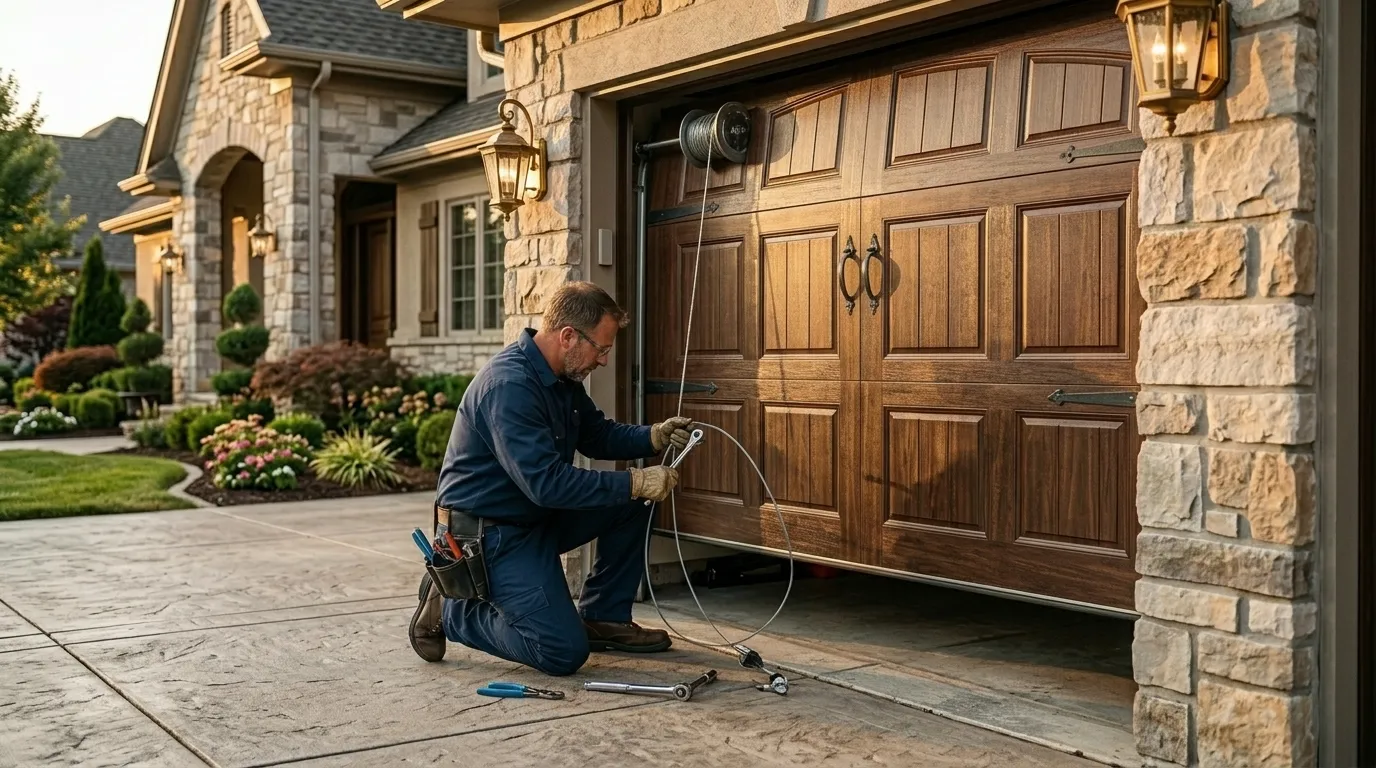
Most of the noise calls we field trace back to age and weather, not mystery. Housing across this service area went up mostly between 1951 and 2006, with the median build year sitting around 1990, and a lot of the neighborhoods we work in - places like Cimarron Hills three miles out and Stratmoor seven miles out - are still running the same torsion springs, rollers, and openers that came with the house when it was framed. A screech usually means dry rollers or a dry track. A loud bang followed by the door refusing to open almost always means a broken torsion spring, which is common on doors from that 1980s-90s build window because the springs are simply reaching the end of their cycle life. A rhythmic thump as the door travels is often a flat spot on a roller or a bent track section. Popping or cracking, especially on the first cold morning after a warm stretch, is usually the steel panel itself contracting - normal in this climate band, but worth a look if it keeps happening. None of these sounds are random. Each one points at a specific part, and the part is almost always original to the house.
When Waiting Is Fine
Not every noise needs a same-day call. A dry squeal from the rollers or hinges is a lubrication problem, and if the door still opens and closes smoothly and evenly, you can wait for a weekend and grease it yourself. A single pop on a hard-freeze morning, without the door binding or sticking, is usually just steel doing what steel does in a cold-severe climate - it's not a structural issue by itself. If the opener motor sounds a little louder than usual but the door still travels the full distance smoothly, that's worth watching over a couple of weeks rather than panicking over. What you should not wait on: any grinding sound that changes pitch as the door moves, a loud bang followed by the door not moving at all, or a door that now needs noticeably more force to lift by hand. Those point to spring or cable failure, and on a door this size, that's a two-person injury risk, not a weekend project. If you're not sure which category you're in, describe the sound over the phone before you decide it can wait.
Checking It Yourself
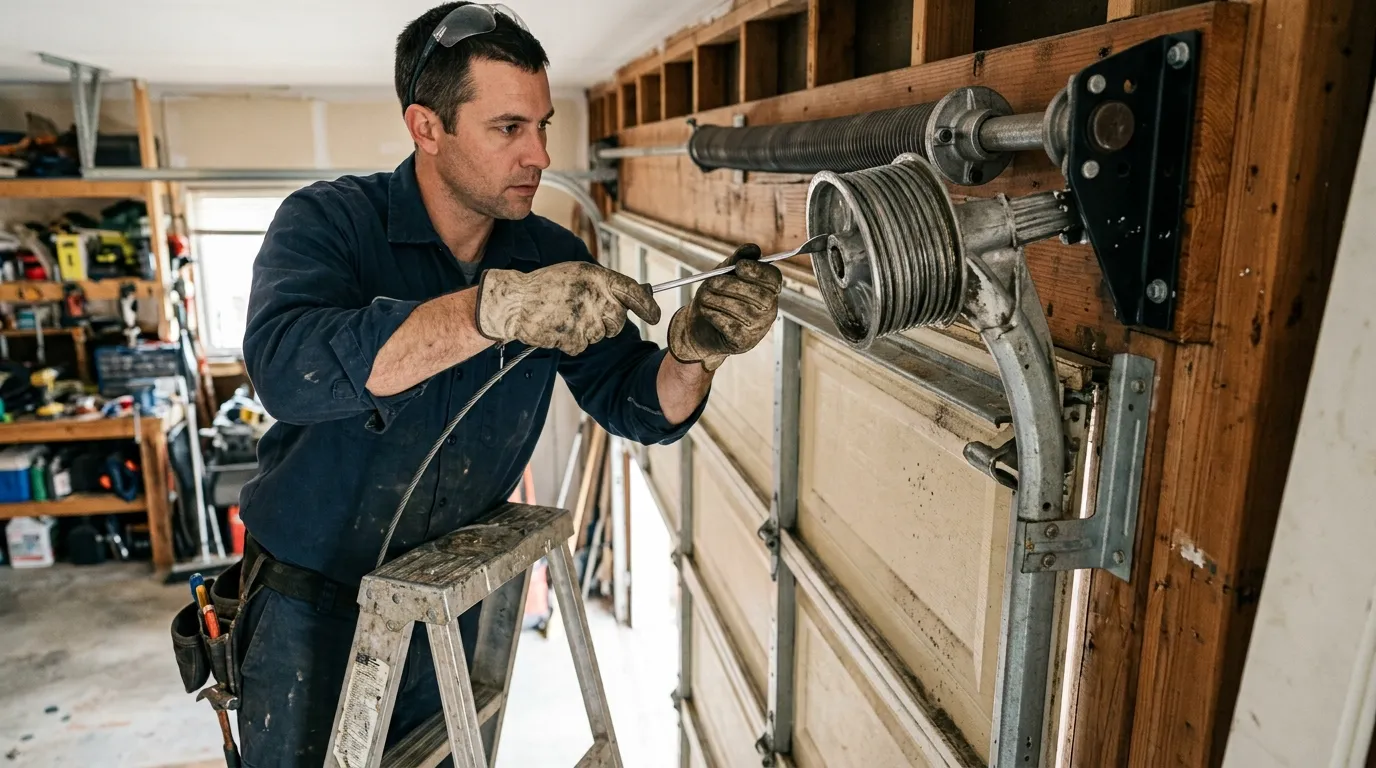
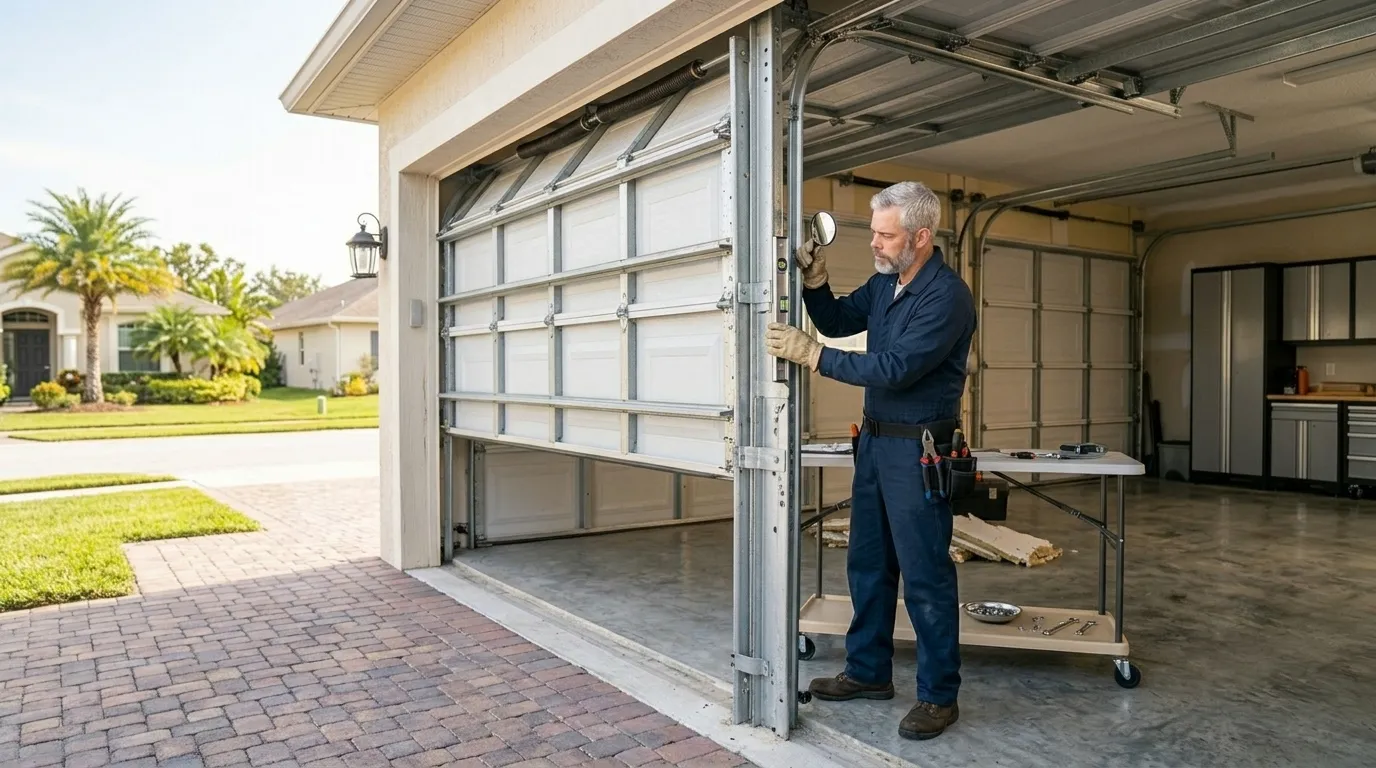
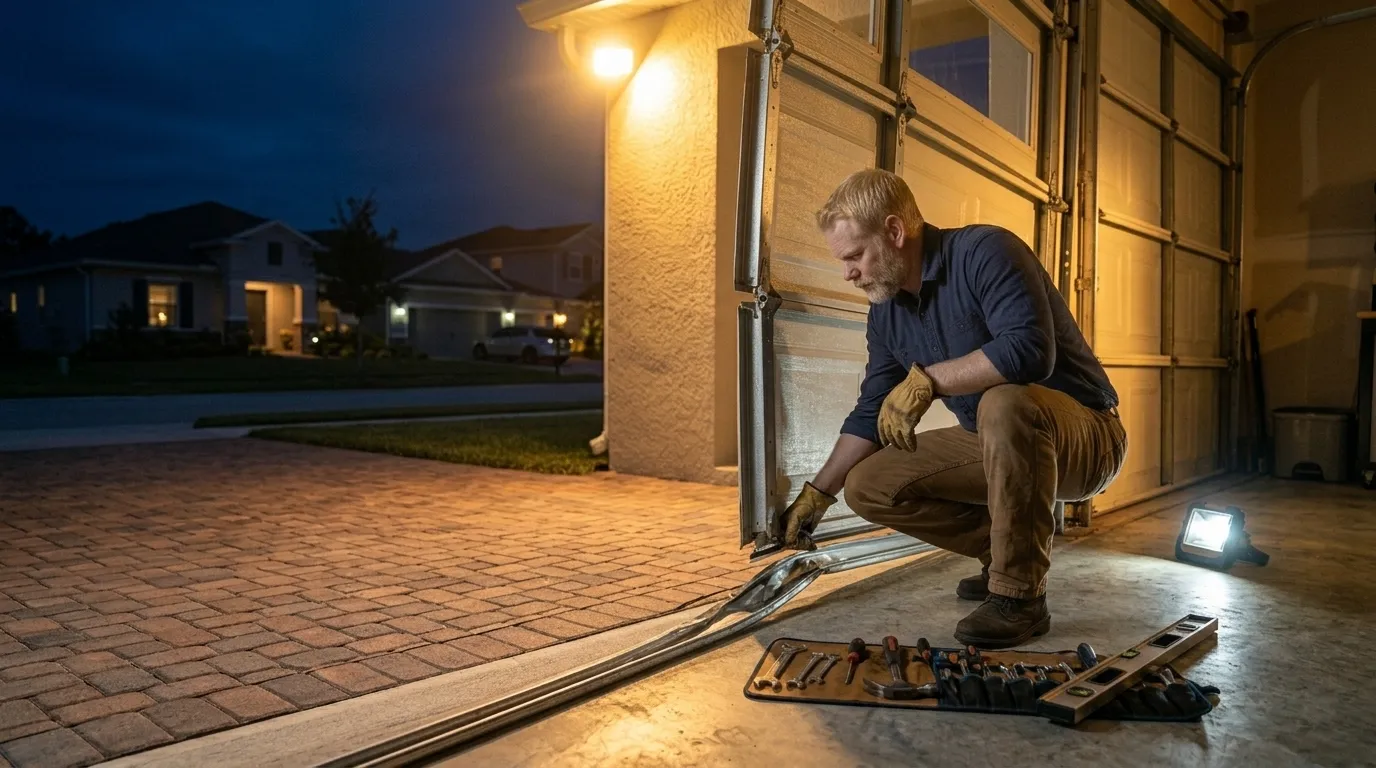
Start with your eyes, not your hands. Pull the release cord, disconnect the opener, and lift the door manually about halfway. It should move smoothly and hold its position without your help - if it drops or feels heavy, the spring is losing tension and that's not a DIY fix. With the door back down, look at the torsion spring above the door (if you can see it safely) for a visible gap in the coil, which means it's already broken. Check the rollers for cracking or flat spots, especially on doors installed during that 1980s-90s wave, since original hardware in this area is now 30 to 40 years old. Run your hand along the track for dents or gaps in alignment, and check that the bottom brackets and cables aren't frayed or loose. What you shouldn't do: touch the torsion spring itself, loosen the winding cones, or try to adjust cable tension. That's the one honest limit here - spring adjustment and cable work on a wound torsion system is not a homeowner task, full stop, regardless of how straightforward a video makes it look.
What Local Conditions Do
This area sits in a cold-severe climate band, and that matters more for garage doors than people expect. Overnight lows followed by sun-warmed afternoons put steel panels and torsion springs through repeated freeze-thaw flexing that doors in milder climates never see. Lubricant that's fine in summer gums up and stiffens in a hard freeze, which is why a door that ran quiet in July can start grinding in January with zero mechanical change - just cold grease. Springs also lose a bit of tension capacity with each hard cold cycle, which is part of why original springs from the 1980s-90s building wave common across this service area's 15 named areas are showing up broken more often now than they did a decade ago. If you're out past Cimarron Hills or Stratmoor, or up toward Gleneagle and Monument where winters run colder longer, expect that aging to show up sooner rather than later. None of this means the door is failing - it means the climate here asks more of hardware than a lot of manufacturers designed for.
How it works
From “it’s stuck” to “it’s fixed”
01
Tell us what’s wrong
Describe the symptom - won’t open, loud bang, opener runs but the door won’t move.
02
On-site diagnosis
A technician tests the door under power and by hand and finds what actually failed.
03
Clear, up-front plan
You get the fix that’s needed and what drives the cost - before any work starts.
04
Repaired & tested
The repair is done, the door is set true and tested, and the work area left clean.
Serving Colorado Springs, CO - tell us what your door’s doing and we’ll take it from there.
Why does my garage door only make noise in the morning?
Cold overnight temperatures stiffen lubricant on rollers and hinges, and steel panels contract slightly in the cold. Once the door warms up and moves a few times, the sound often goes away. If it doesn't ease up after a few open-close cycles, the rollers or hardware may need attention, not just grease.
Is a loud bang from my garage door always a broken spring?
Not always, but it's the most common cause, especially on doors original to houses built in the 1980s and 90s wave common in this area. A bang followed by the door refusing to open is almost always a torsion spring letting go. If the door still opens after the bang, it could be a bracket or cable issue instead.
Can I just add oil to a squeaky garage door myself?
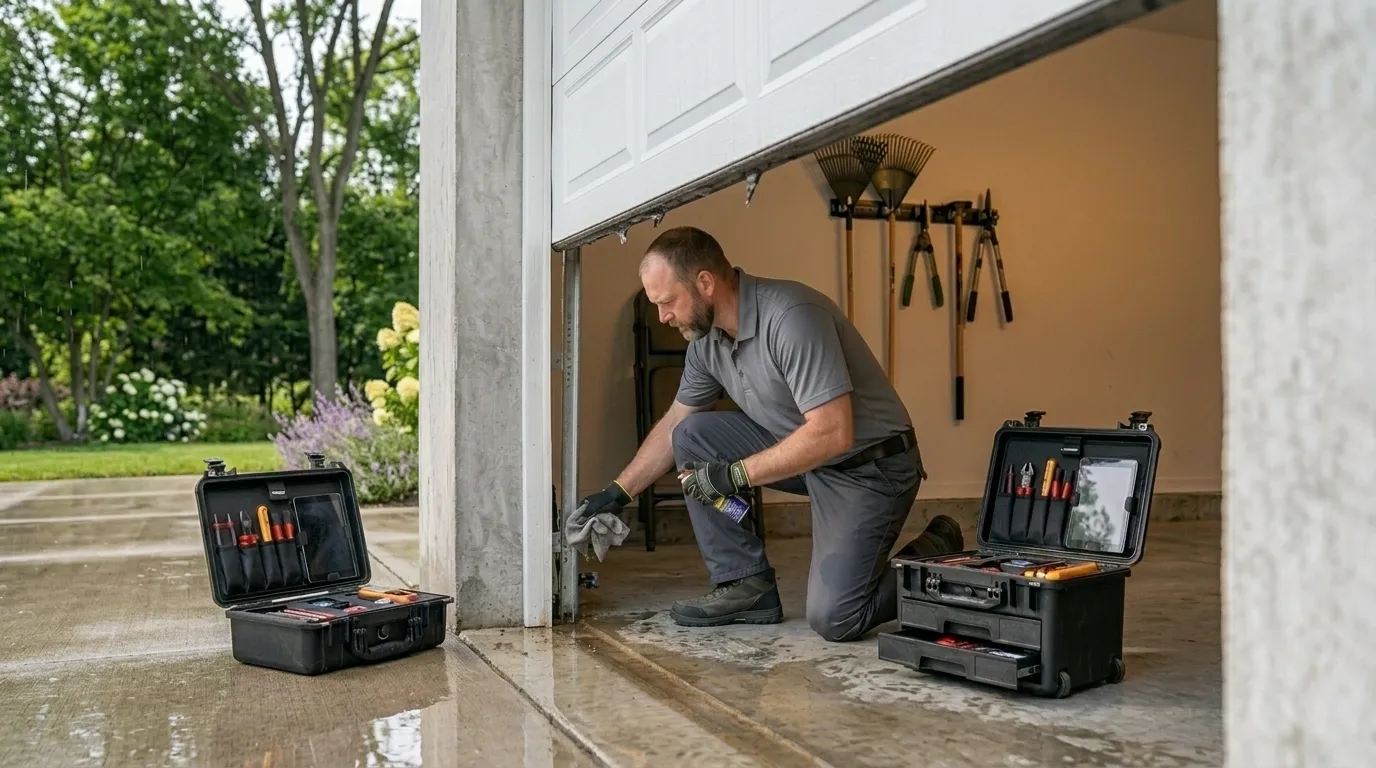
Yes, lubricating rollers, hinges, and the track is a reasonable homeowner task and often clears up a dry squeal on its own. Use a garage-door-specific lubricant rather than WD-40, which attracts dust. If the squeal returns within days, the part itself may be worn rather than just dry.
Why do older houses in this area have more spring trouble?
A lot of the housing stock here dates to the 1980s and 90s, which means many original torsion springs are 30 to 40 years old and simply reaching the end of their rated cycle life. Combine that with cold-severe winters that add extra flex stress, and older springs fail more often than newer ones.
Ready to get your garage door sorted?
Tell us what it’s doing and where you are in Colorado Springs - we’ll take it from there.