Doors on Colorado Springs houses built between 1951 and 2006 fail differently depending on age and altitude. Here's what to check before you call for repair.
Most of the houses we get called to sit on stock built between 1951 and 2006, with the median going up around 1990. That range matters because it spans three or four totally different eras of garage door hardware. A house from the early end of that window still has its original torsion setup, sized for a door that's heavier and thinner-skinned than anything sold today. A house from the 1990s median is more likely running an early-generation opener with a logic board that's now past its expected life, even if the door itself looks fine.
Across the fifteen named areas that make up this stock - places like Cimarron Hills, Stratmoor, Security-Widefield, and the neighborhoods closer in like East Colorado Springs and Southeast Colorado Springs - the mix skews toward that 1980s-90s build era rather than anything newer. That means when a spring lets go or a track pulls loose, the fix often has to account for hardware sizing and mounting patterns that don't match what's on the shelf at a big-box store. It's not that the door is broken in some unusual way. It's that the parts under it were never standardized the way people assume.
When Waiting Is Fine
Not everything that looks wrong is urgent. A door that's noisy but still opens and closes on a level track, with both springs intact, can usually wait a few days for an appointment - noise alone doesn't mean failure is close. Cosmetic dents in a steel panel, faded paint, or a slightly crooked window insert are appearance issues, not safety ones, and fixing them isn't worth an emergency call.
We'll say plainly what we won't rush out for: a door that operates normally but sounds different than it used to. That's a scheduling call, not a same-day one. Where we do push people to move fast is anything involving a snapped cable or a spring under tension that's visibly separated - those situations get worse the longer a door sits used. If your opener struggles on cold mornings but works fine once the garage warms up, that's often lubrication and adjustment, not a part failure, and it can wait for a normal visit rather than treated as an emergency.
Checking It Yourself
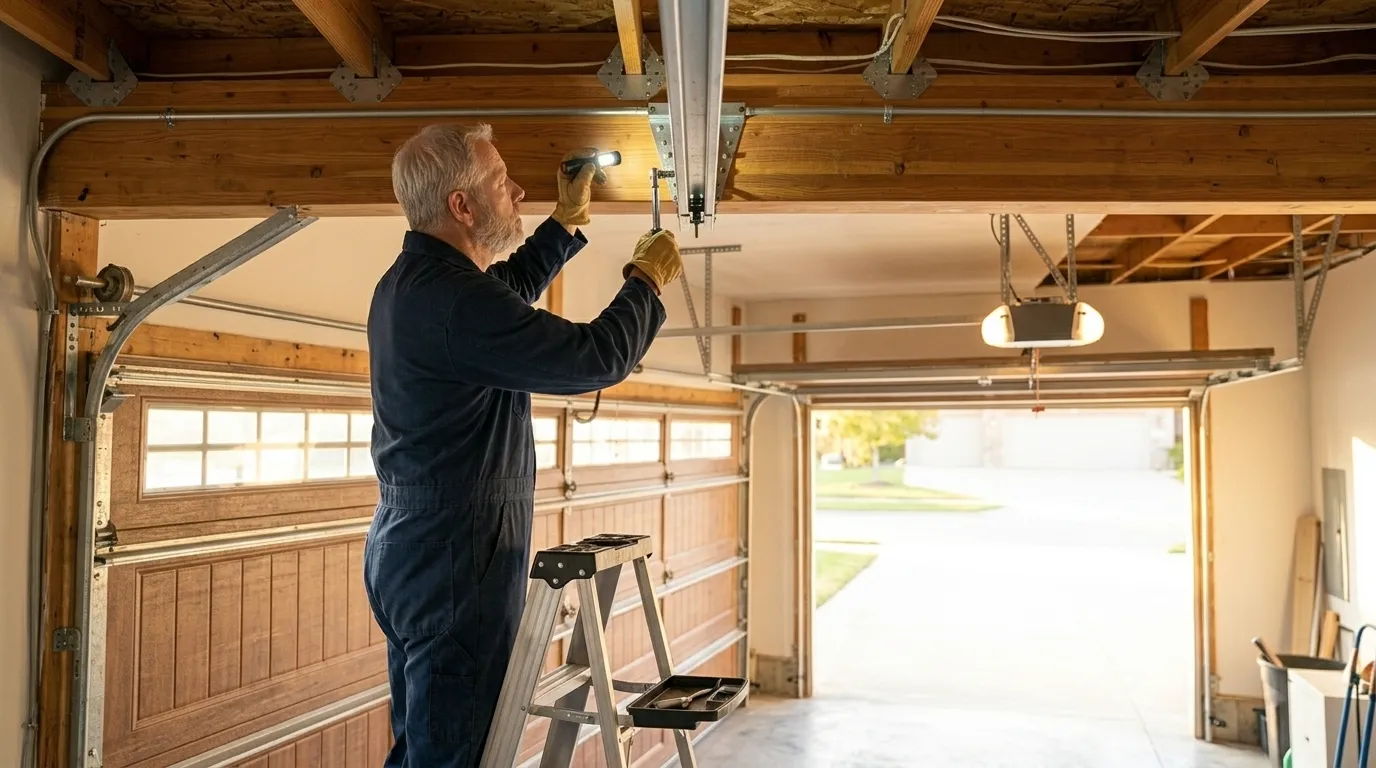
Start with the springs, since a house from this era's median build year of 1990 is old enough that original torsion springs are near or past their rated cycle count. Look for a visible gap in the coil - a spring that's separated needs a professional, not a DIY fix, full stop; the tension involved can cause serious injury.
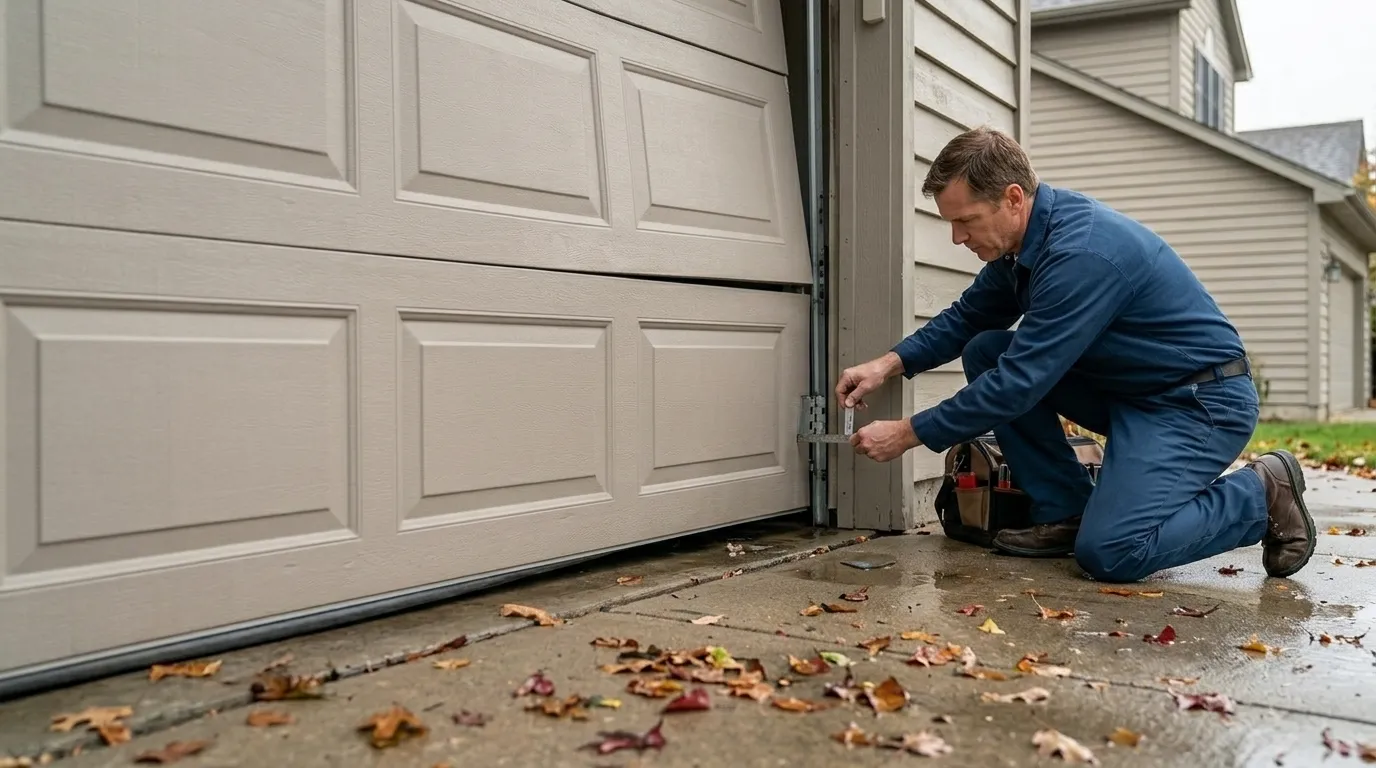
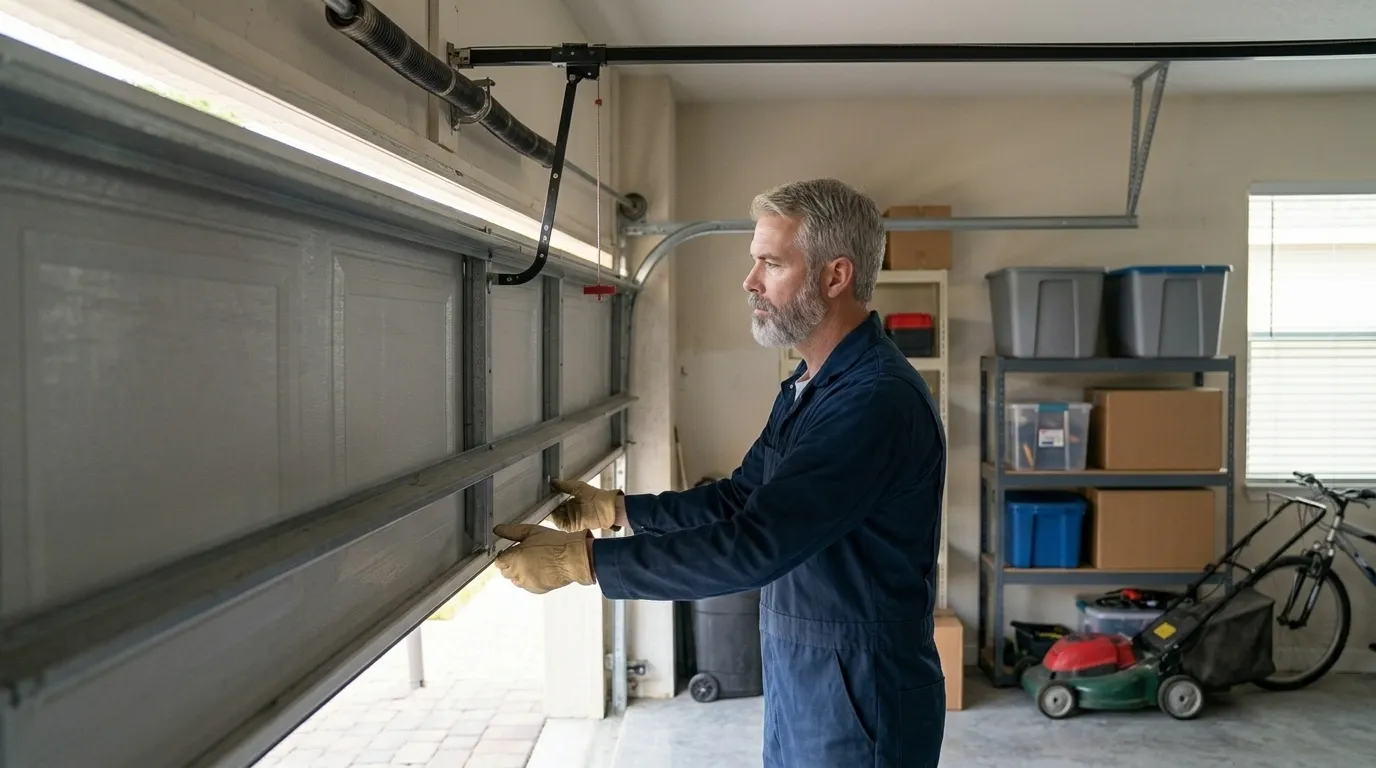
Next check the tracks for anything more than light surface rust, since houses on this stock often still have galvanized track that's held up fine but can pit over decades of temperature swings. Run your hand along the horizontal section (with the door closed and opener unplugged) and feel for rough spots or bends.
Last, test the auto-reverse safety feature by placing a block of wood under the door as it closes. It should reverse on contact. If it doesn't, that's not a maintenance item - it's a safety failure and worth a call regardless of how old the opener is. Beyond these three checks, we'd rather you call than guess at spring tension or track alignment yourself.
What Local Conditions Do
This area sits in a severe cold climate band, and that changes what actually fails on a garage door here versus somewhere milder. Steel panels contract overnight and expand through the day, and on a door installed decades ago with older seals, that daily cycle works gaps into the weatherstripping faster than the door itself wears out. Openers see it too - cold grease in an old gear system is a common reason a door that worked fine at 2pm won't budge at 7am.
Houses built earlier in the 1951-2006 range, before more recent insulation standards applied, often have steel doors with little to no foam core. Those doors do more work absorbing outside temperature than an insulated door would, and the hardware holding them - hinges, rollers, the torsion spring itself - takes more strain from the same freeze-thaw cycle over the years. It's one reason a repair on an older, uninsulated door sometimes turns into a conversation about replacement instead: fixing hardware on a door that's fighting the cold every winter isn't always the better long-term move.
How it works
From “it’s stuck” to “it’s fixed”
01
Tell us what’s wrong
Describe the symptom - won’t open, loud bang, opener runs but the door won’t move.
02
On-site diagnosis
A technician tests the door under power and by hand and finds what actually failed.
03
Clear, up-front plan
You get the fix that’s needed and what drives the cost - before any work starts.
04
Repaired & tested
The repair is done, the door is set true and tested, and the work area left clean.
Serving Colorado Springs, CO - tell us what your door’s doing and we’ll take it from there.
My garage door is from the 90s and still works fine. Do I need to do anything?
Not urgently, but a house from that build era is now old enough that torsion springs are near their expected cycle life. Have someone check the spring coil and opener gear condition at your next service call rather than waiting for a failure on a cold morning.
Why does my door struggle more in winter than summer?
This area sits in a severe cold climate band, and steel doors - especially older, less insulated ones - contract in the cold. That stiffens seals and thickens opener grease, which is why doors installed decades ago often act up specifically on the coldest mornings.
Is a noisy door an emergency?
Usually not. Noise alone, without a visible cable or spring problem, is a scheduling issue rather than an urgent one. Save the emergency call for a snapped cable, a separated spring coil, or a door that won't stay up.
Should I fix or replace an older uninsulated door?
If your house falls earlier in the 1951-2006 build range and the door has no foam core, repeated repairs on hardware straining against cold-weather cycles sometimes cost more over time than replacing the door. We'll tell you honestly which side of that line your door is on.
Ready to get your garage door sorted?
Tell us what it’s doing and where you are in Colorado Springs - we’ll take it from there.