How That Shows Up in the Door
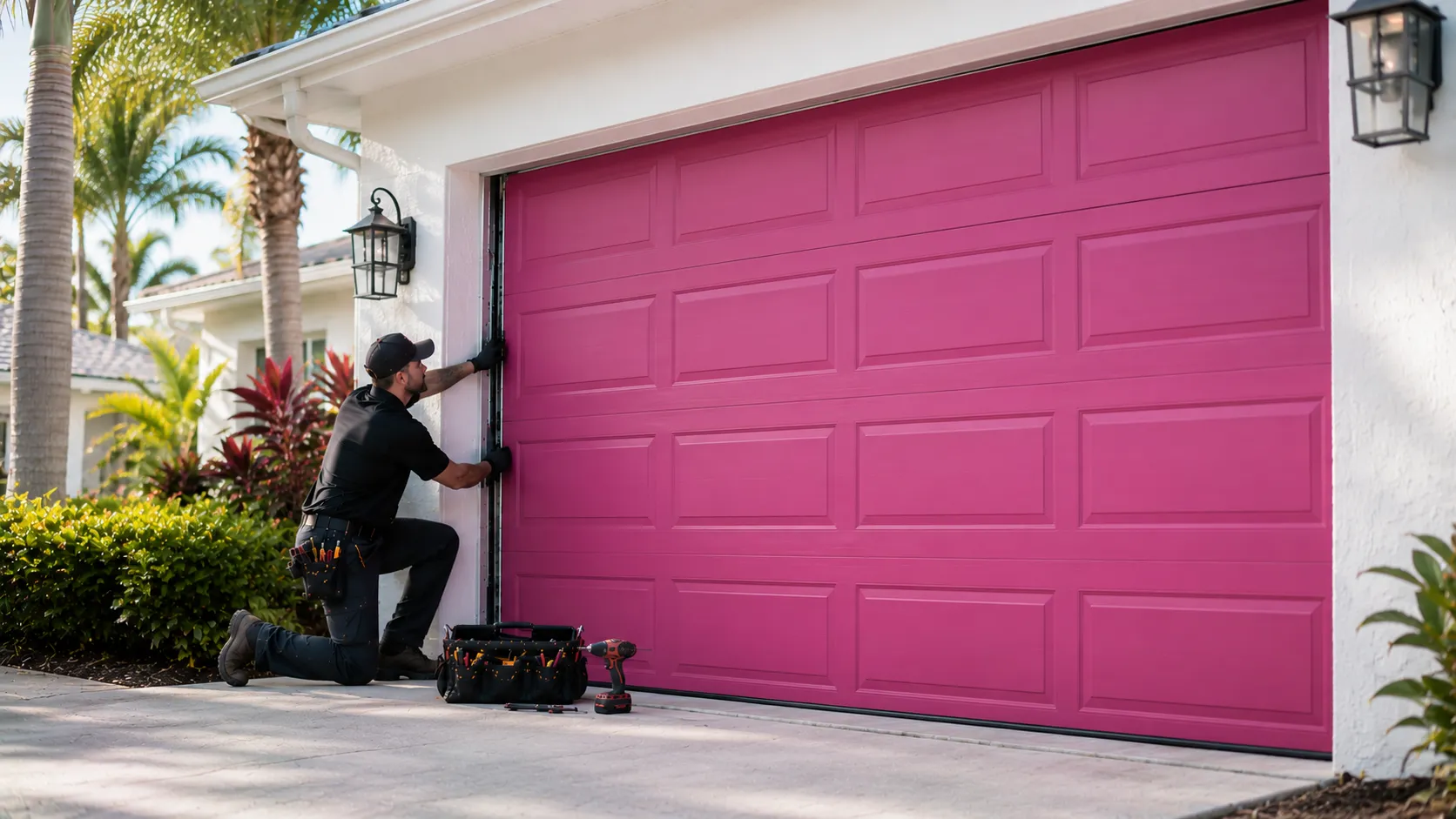
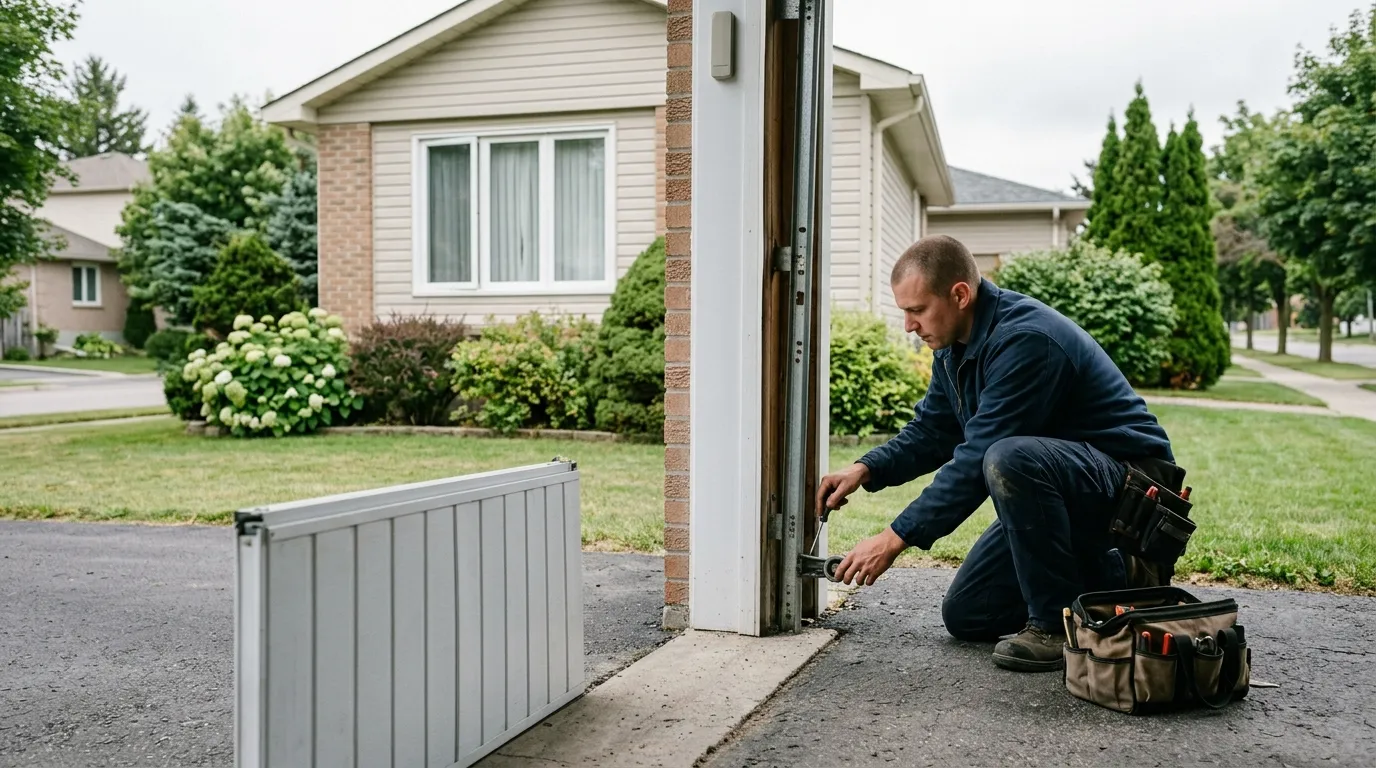
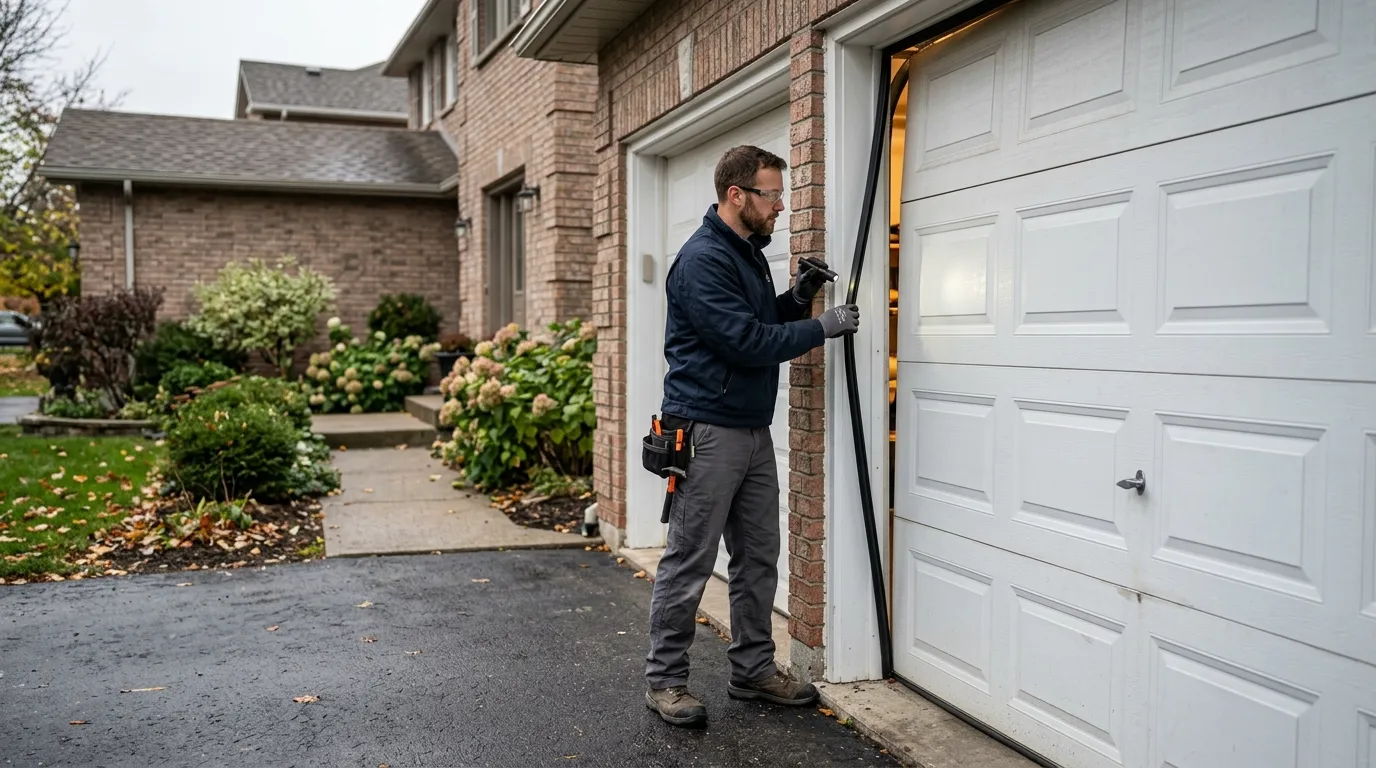
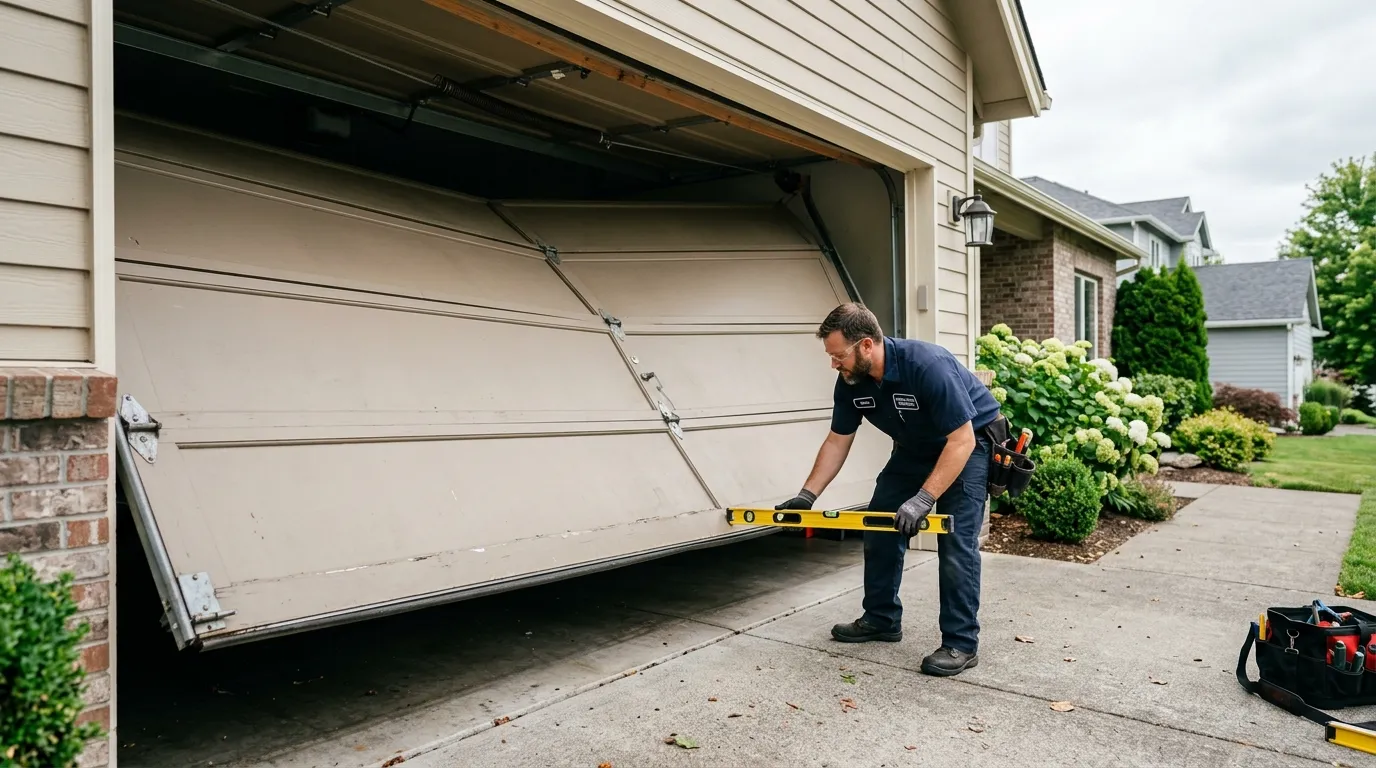
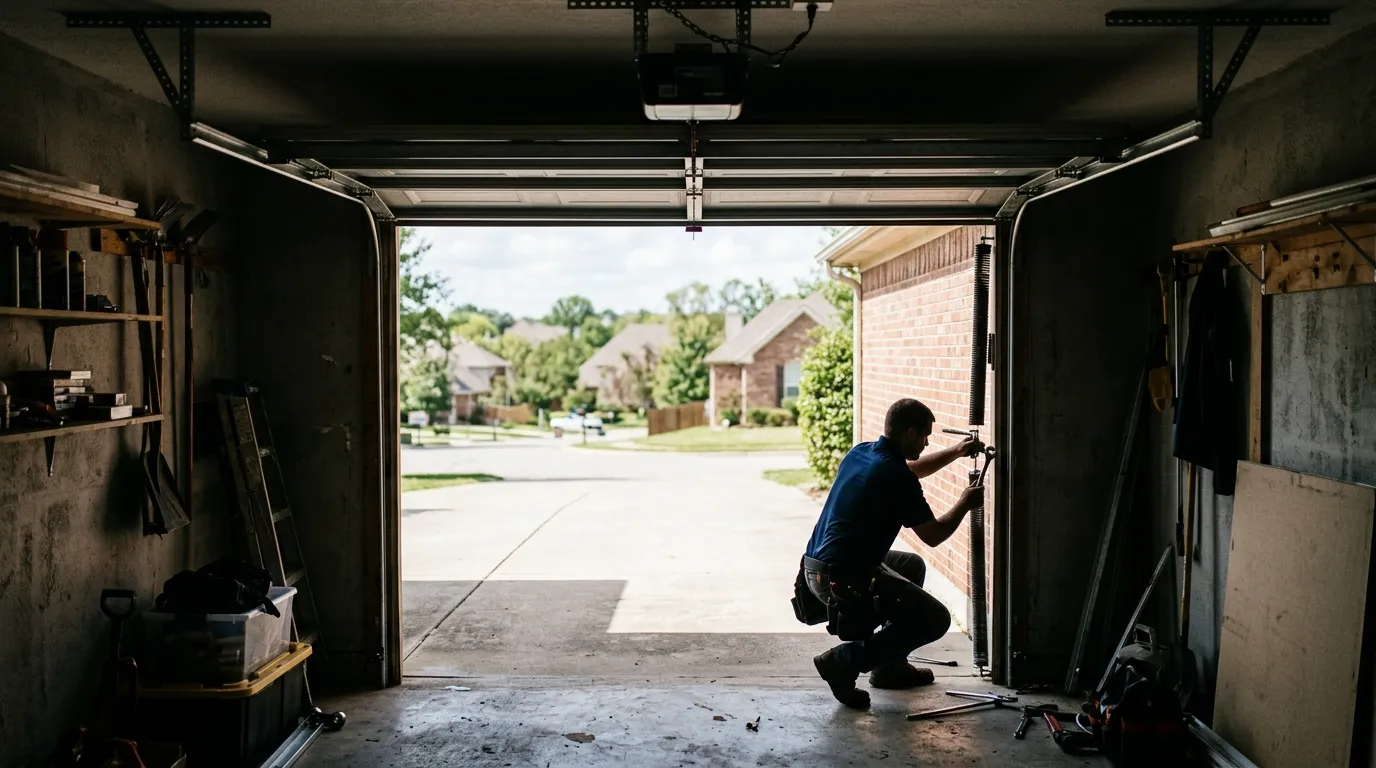
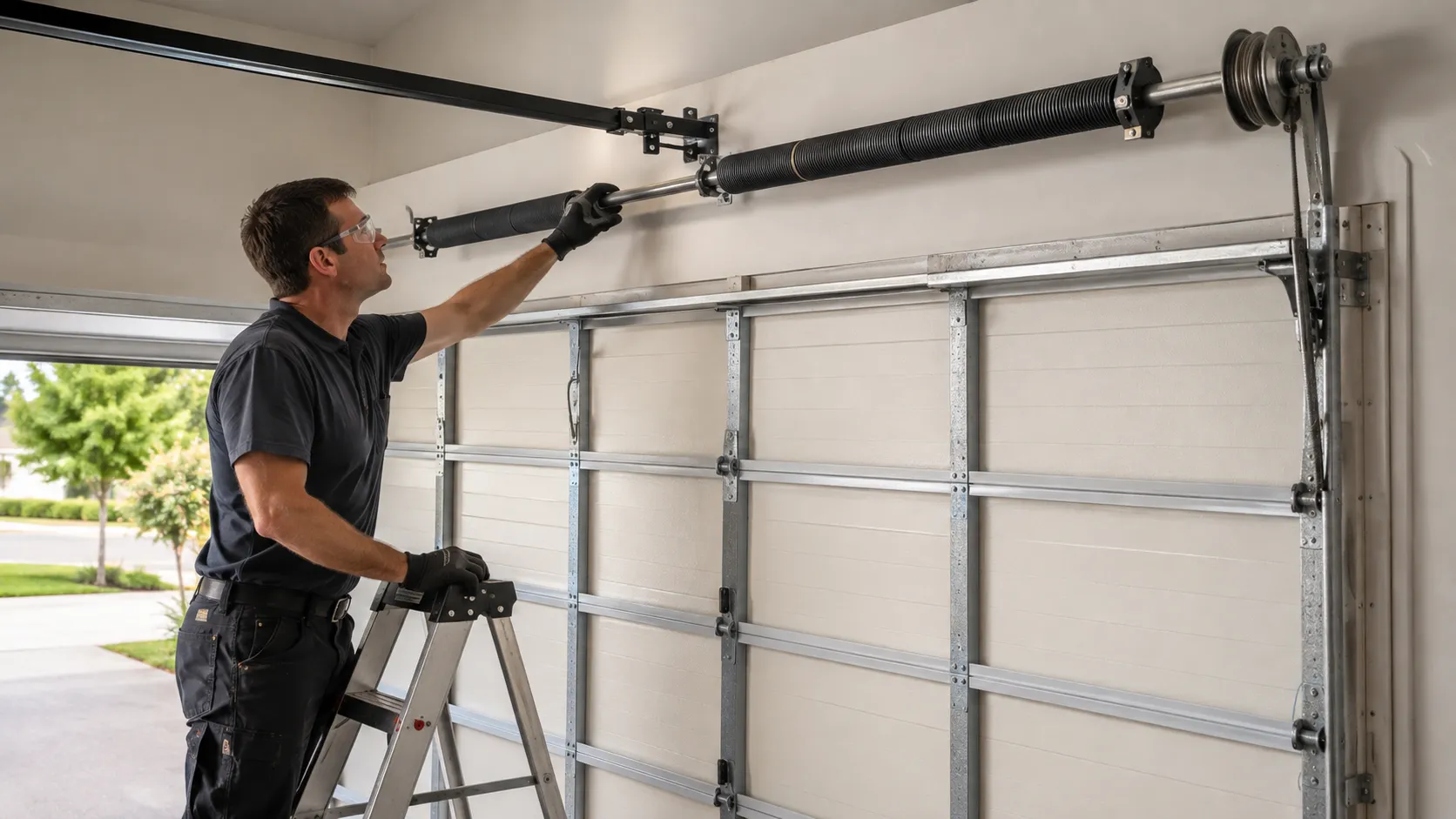
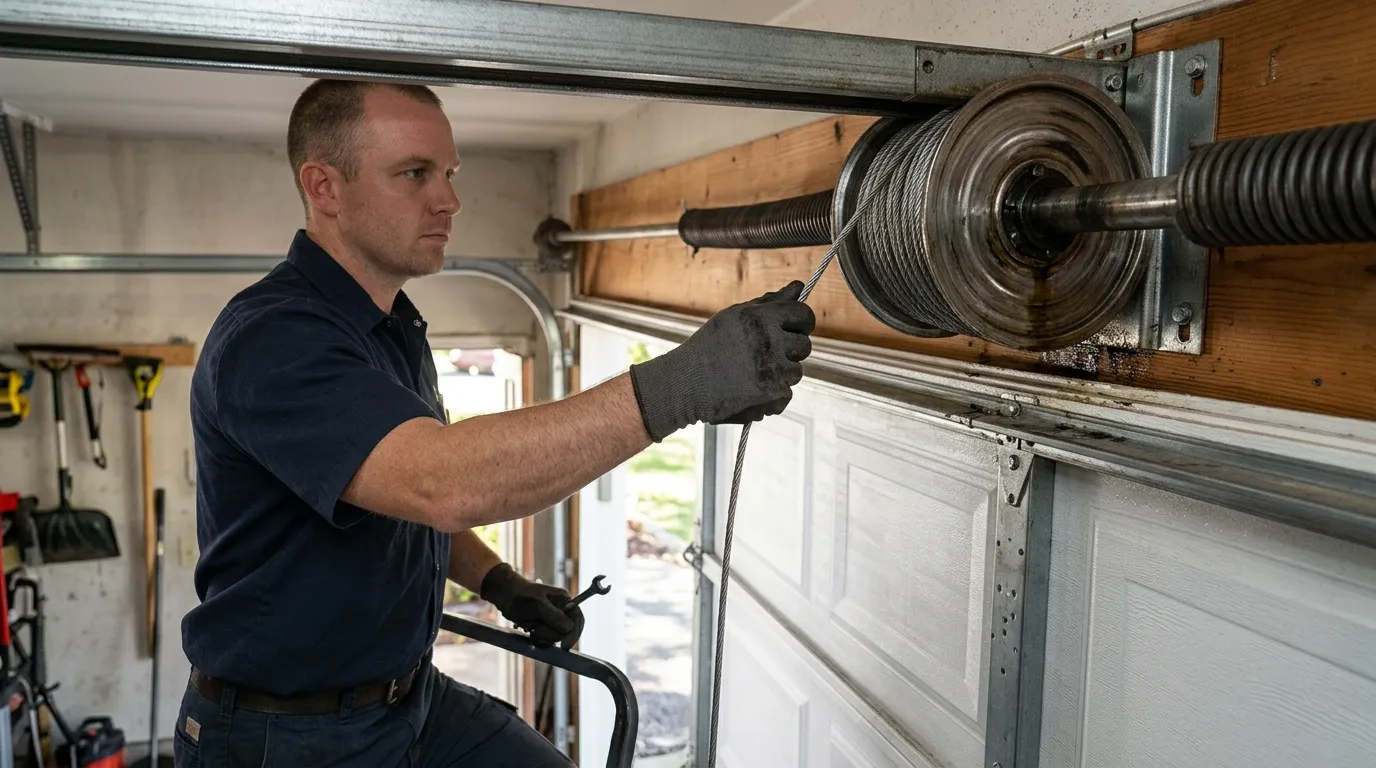
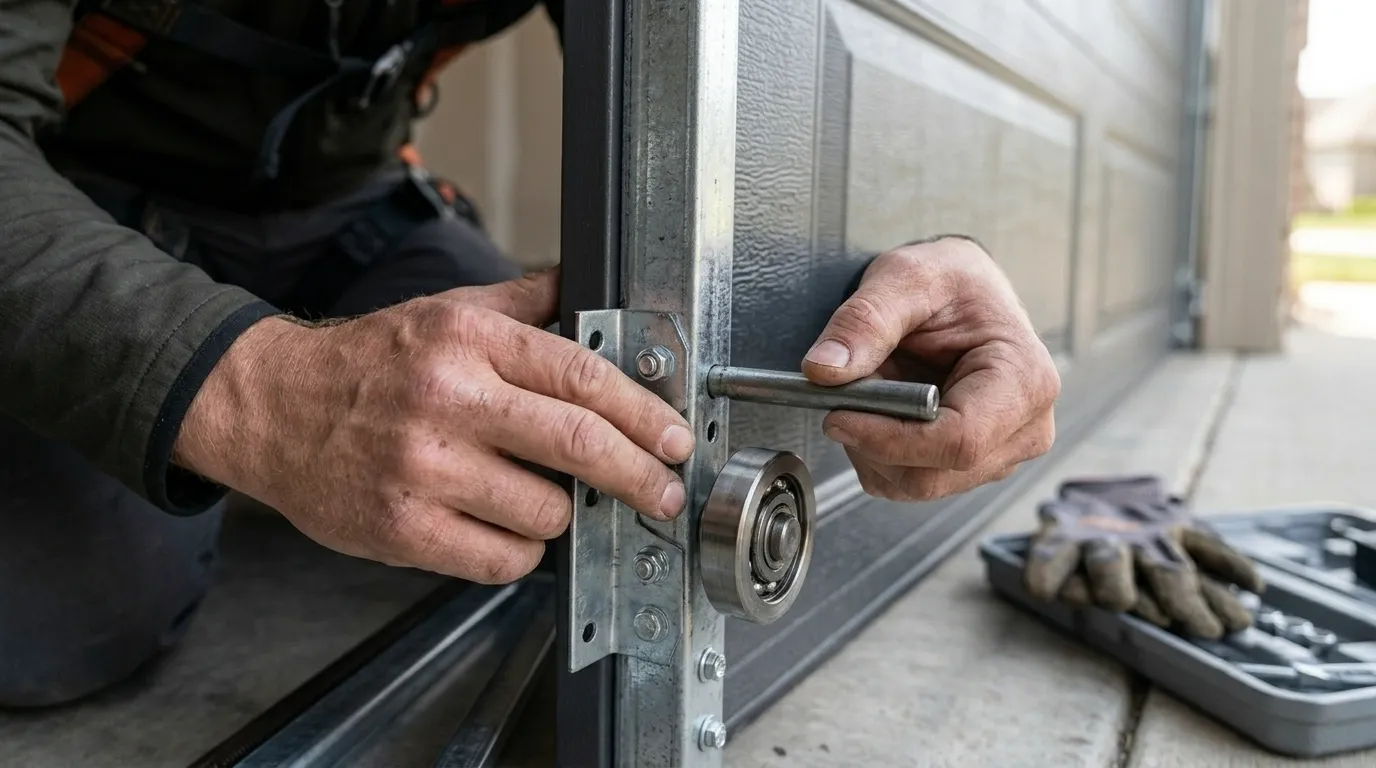
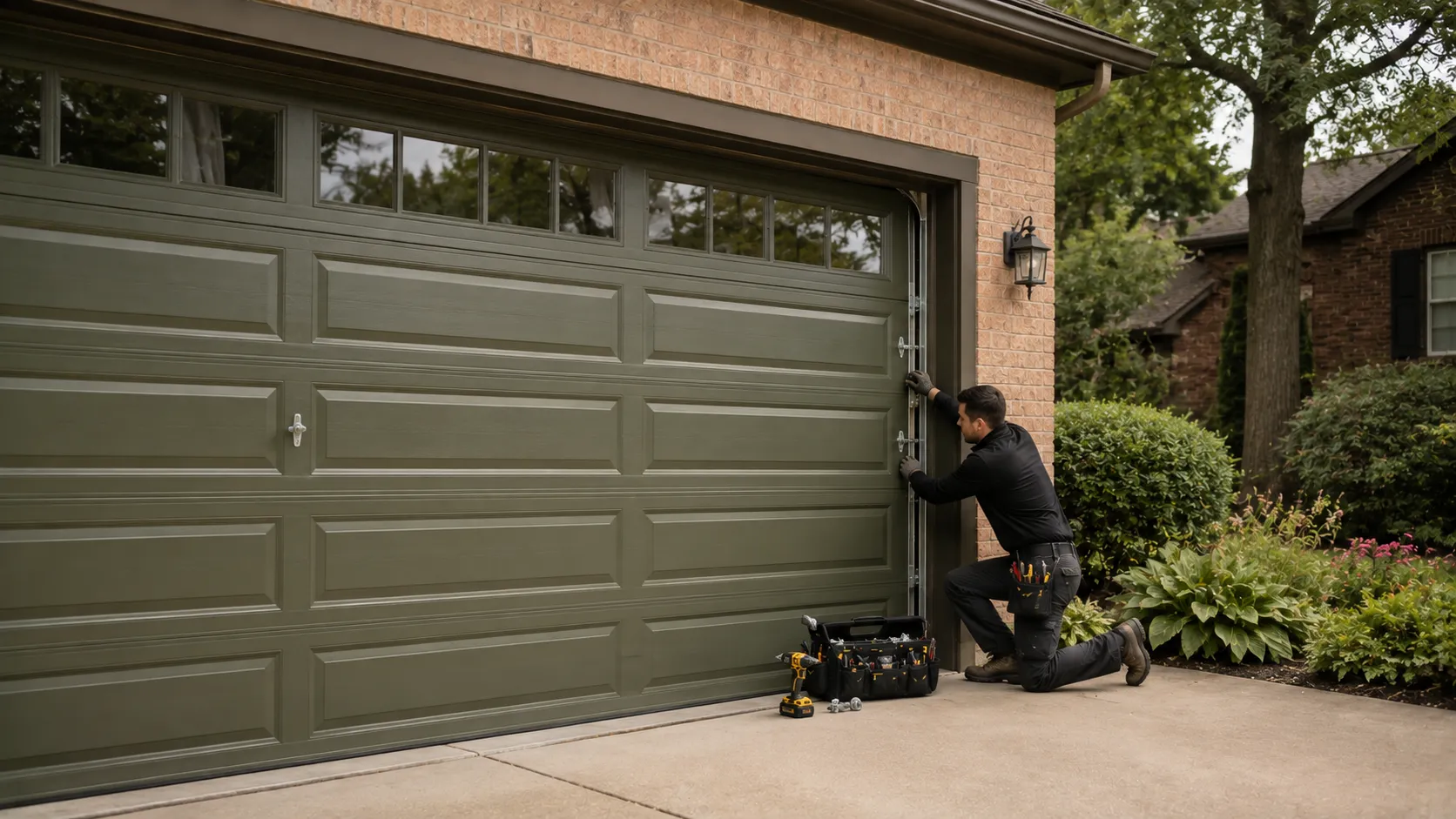
A door built in 1998 has different failure points than one built in 1965. You're less likely to run into a wood-panel door on loose hinges, and more likely to see a steel sectional with the original torsion spring still on it - which by now is old enough that the coil has cycled tens of thousands of times and is due, not broken yet but close. Rollers on doors this age are usually the original nylon, worn oval instead of round, which is what makes the door sound like it's grinding rather than rolling.
Openers from this era are a mixed bag. Some homes still run a chain-drive unit from the original build, noisy but functional. Others have already been through one opener replacement and are on their second unit. We see fewer of the truly ancient safety-eye-less openers out here than we do on older housing stock, which matters for what a repair actually costs - most Fountain jobs don't also require bringing the whole system up to a modern safety standard, because it mostly already is.
Old Streets and New Ones
Fountain doesn't have the mix of pre-war and postwar streets you find closer to the city center. What you have instead is a run of construction that mostly happened after 1990, meaning fewer surprises tied to a house's age and more variation tied to which builder and which decade of that stretch a given block went up in. A door from the early part of that build-out already has 25-plus years on its springs; one from the tail end is still running original rollers that haven't been serviced.
The area sits about 13 miles from our shop in Colorado Springs, which is close enough that a same-day trip out is routine but far enough that we plan the day's route around it rather than treating it as a drop-in stop. We don't have a location in Fountain itself - we come from the city.