Is Your Old Garage Door Worth Fixing, or Time to Replace It
Colorado Springs homes built 1951-2006 carry different door hardware and cold-weather wear. Here's how to tell if yours is worth repairing or replacing.
Most of the houses we get called to sit on stock built between 1951 and 2006, with the median around 1990. That's a long stretch, and it means the doors and openers we find vary a lot from one call to the next. A place near Cimarron Hills or Stratmoor might still have its original steel door from the 80s or 90s, while a newer build out toward Gleneagle or Monument could have a door from the last decade with a different track and hinge setup.
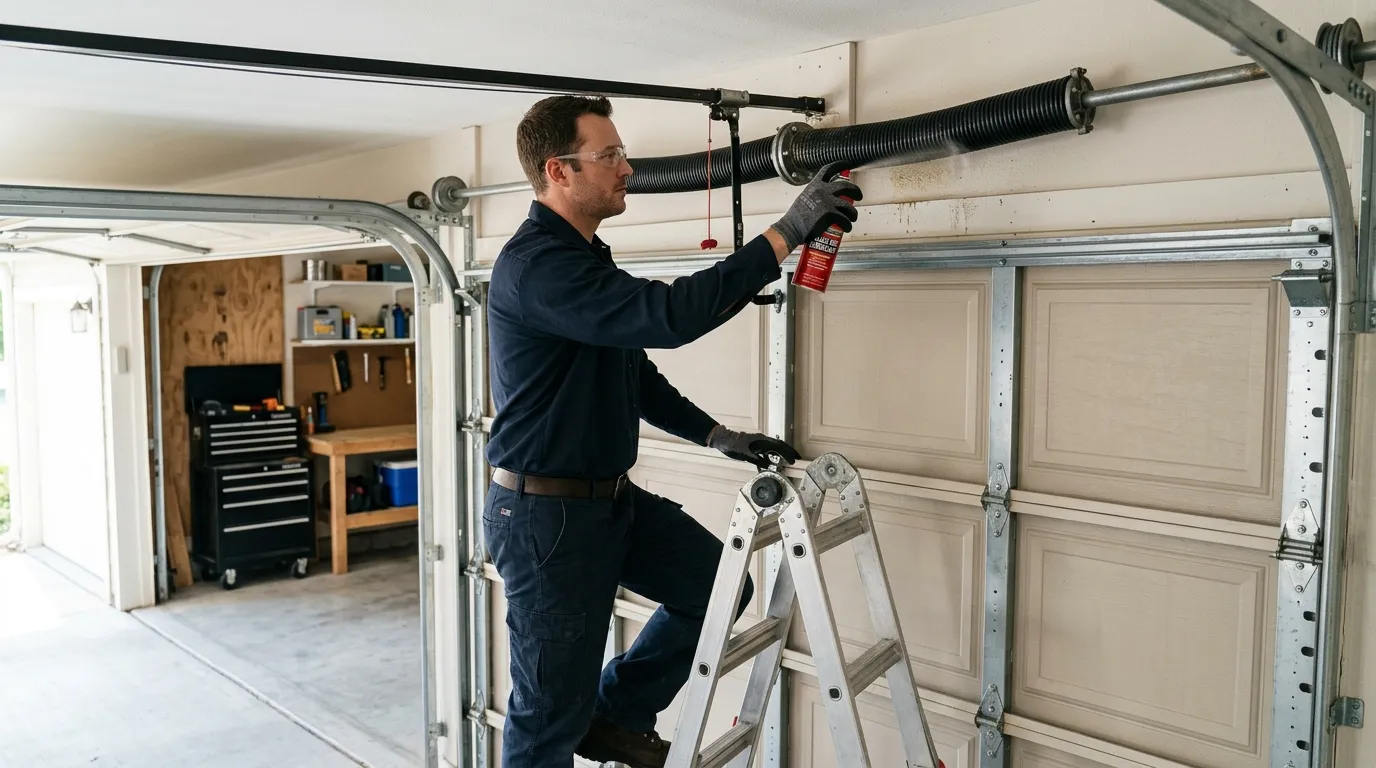
What we're usually diagnosing when a door "goes bad" in these older sections isn't one thing. It's cumulative: a torsion spring that's cycled tens of thousands of times, rollers that were fine ten winters ago and are now worn oval, an opener from the original build that's simply reached the end of its gear life. On a house from the 1990s stock across the fifteen or so areas we work, all three of those are usually happening at once, which is why a "quick fix" call often turns into a longer conversation about what's actually worth doing.
We're not going to tell you every old door needs replacing. Plenty of the 90s-era doors around here have solid steel skins and just need spring and hardware work. The judgment call is whether the door itself, not just the parts, has held up.
When Waiting Is Fine
If your door is sluggish in the morning but runs fine by afternoon, that's often just cold-weather grease behaving the way cold grease does in a severe winter climate like ours - it thickens up overnight and loosens as things warm. That's not an emergency, and it's not usually a sign of failure.
A little surface rust on hardware from an older build, especially anything installed before the 1990s median, is cosmetic until it's flaking off in chunks or the metal underneath is pitted. Noise that's been the same noise for years - a rattle, a hum - is usually just the door's personality, not a warning.
Where we tell people to wait: if the door still balances correctly (it stays put roughly where you leave it, half open), and the opener still reverses when it hits something, you likely have weeks or months, not days. The honest limitation here is that we can't tell you exactly how long a spring has left just from a phone description - we have to look at it. But a door that still balances and reverses safely is not a same-day call.
Checking It Yourself
Pull the release cord and lift the door by hand, slowly, to about waist height. Let go. A properly balanced door should stay roughly where you left it. If it drops on its own or shoots upward, the spring is carrying the wrong tension for the door's weight - common on original hardware from houses built in the earlier part of that 1951-2006 range, where the door itself may have been swapped once already without the spring being matched to it.
Look at the rollers where they meet the track. Worn ones show a flat spot or an oval shape instead of round, and you'll usually hear it before you see it - a grinding tick as the door moves. On older stock, especially anything nearing the 1990 median age, worn rollers are one of the most common calls we get.
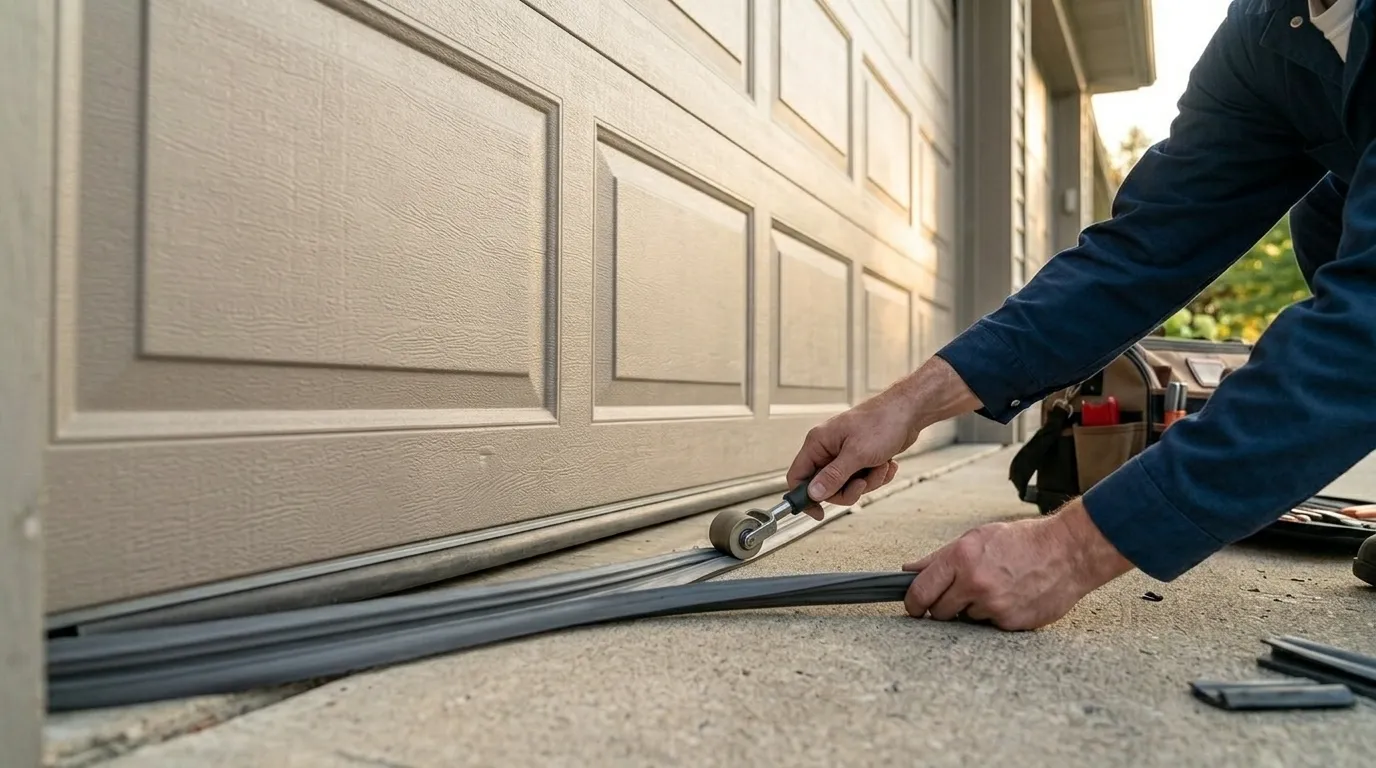
Check the bottom seal for cracking or stiffness. In a cold, severe-winter climate the rubber hardens over the years and stops sealing the slab to the floor, which shows up as a draft along the bottom edge in January more than a broken part. None of this tells you what to replace. It tells you what to describe when you call.
What Local Conditions Do
Cold severe winters put a specific kind of stress on garage doors that milder climates don't. Steel contracts, lubricant stiffens, and torsion springs - which are already working hardest in the coldest months when people use the door most - see more cycles under more load. On a door installed anywhere near the median build year of 1990, that's three decades of winters doing that same work.
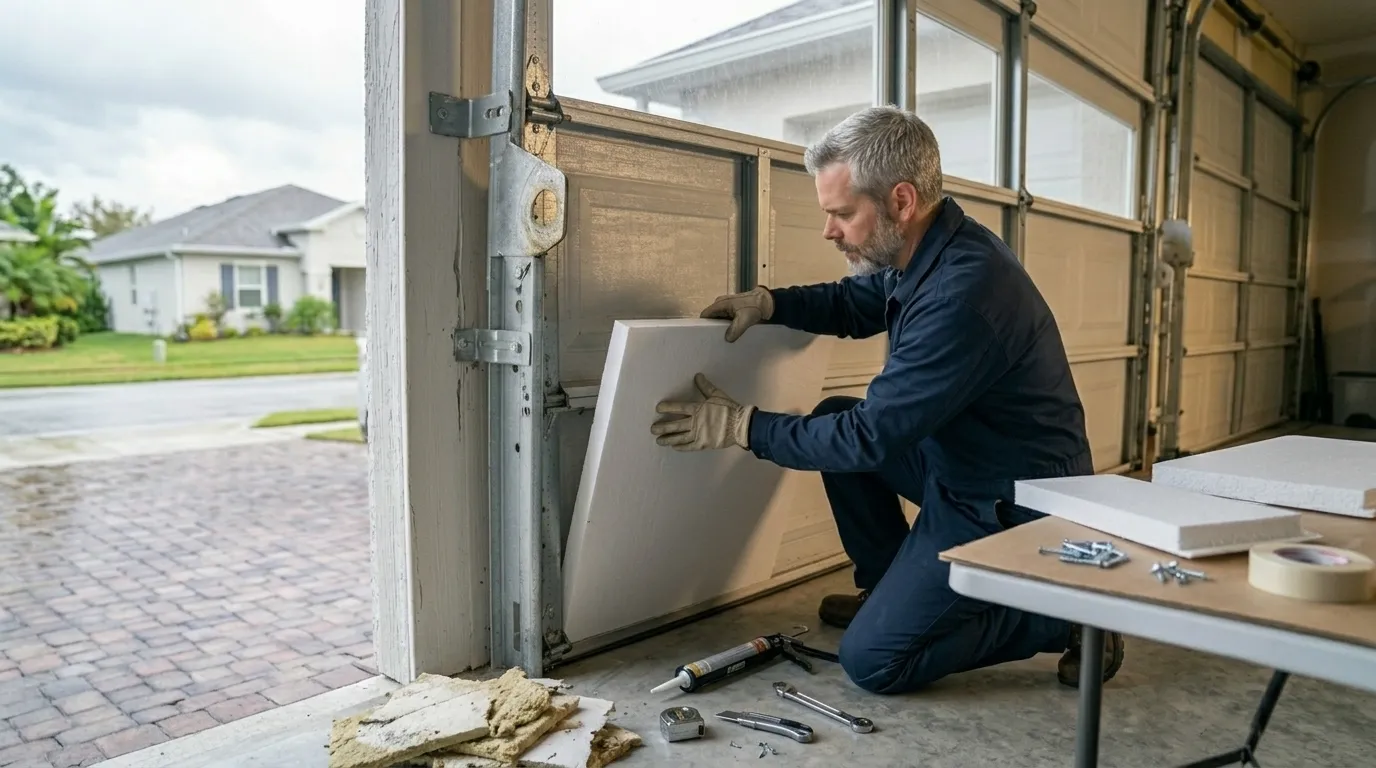
Across the roughly 38,030 owner-occupied houses in the areas we cover, we see this play out differently depending on when the house went up. Homes from the earlier end of the 1951-2006 range often still have single-layer steel doors with no insulation, which move more with temperature swings and put more strain on hinges and track alignment over time. Later builds, closer to the 2006 end, tend to have insulated sandwich-panel doors that hold up better in the cold but are heavier, which changes what the spring needs to do.
This is the piece that gets missed in generic advice: a fix that makes sense for a lightly-built older door is often the wrong fix for a heavier insulated one, and vice versa. What your door is worth fixing depends on which kind you actually have.
How it works
From “it’s stuck” to “it’s fixed”
01
Tell us what’s wrong
Describe the symptom - won’t open, loud bang, opener runs but the door won’t move.
02
On-site diagnosis
A technician tests the door under power and by hand and finds what actually failed.
03
Clear, up-front plan
You get the fix that’s needed and what drives the cost - before any work starts.
04
Repaired & tested
The repair is done, the door is set true and tested, and the work area left clean.
Serving Colorado Springs, CO - tell us what your door’s doing and we’ll take it from there.
My garage door is from the 1990s - is it worth repairing or should I replace it?
Depends what's failing. If it's rollers, cables, or a spring, and the door panel itself isn't rusted through or dented, repair almost always makes sense on a 90s-era door. If the opener, springs, and rollers are all failing around the same time - common once a door hits three decades in this climate - replacement can end up cheaper than repeated repair calls.
Why does my door get so much harder to open in winter?
Cold thickens the grease on rollers and the spring, and steel components contract slightly, which adds friction. In a severe winter climate this is normal seasonal behavior, not necessarily a failure. If it's severe enough that the opener struggles or reverses on its own, that's worth a look rather than waiting it out.
How do I know if my spring is original to the house?
We can't tell that from a description over the phone - it takes a look at the spring's winding and any stamped date. What we can tell you is that houses built earlier in the 1951-2006 range around here are more likely to be on original or once-replaced hardware than newer builds toward the 2006 end.
Ready to get your garage door sorted?
Tell us what it’s doing and where you are in Colorado Springs - we’ll take it from there.