Garage Door Maintenance for Black Forest's 1990s Housing Stock
Black Forest homes date mostly to 1996 - original springs, cables and openers are 29 years old. We service this hardware, driving in from Colorado Springs.
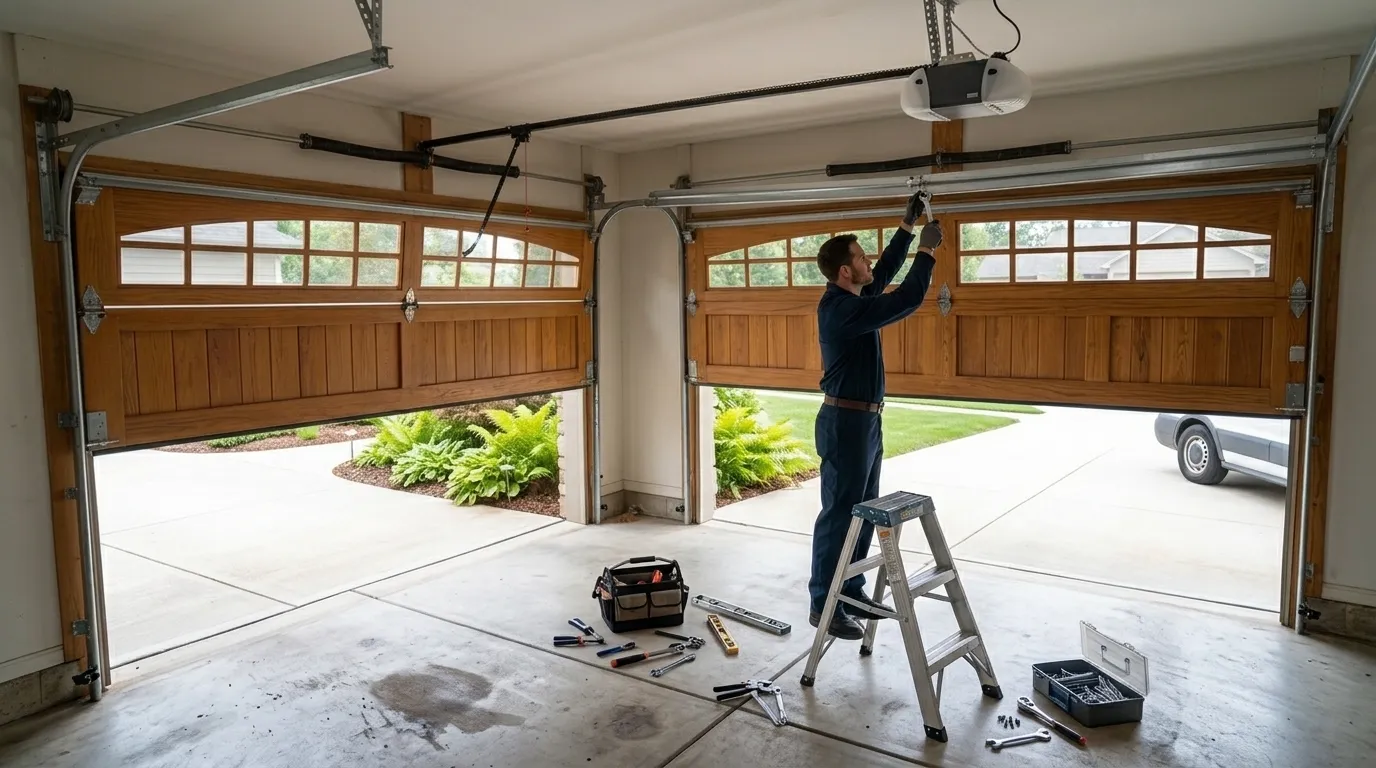
Most houses out here went up around 1996, which puts the original garage door hardware at roughly three decades old on a lot of properties. That matters more than the mileage on the odometer, because torsion springs are rated in cycles, not years, and a spring installed when the house was framed has usually seen 10,000+ open-close cycles by now with nobody touching it. Same goes for the cable, the rollers, and on a lot of these builds, the original chain-drive opener that's been running since the drywall went up.
What you're seeing when a door starts to sag on one side, or the opener strains and groans before it lifts, isn't usually a defect - it's just hardware reaching the end of a normal service life at the same time, because it was all installed the same week. On a newer subdivision you'd expect a mix of ages. Here, a lot of Black Forest garages are running on one generation of parts, which is why when one thing goes, you often find two or three more close behind it on inspection.
The severe cold swings this area gets add wear that a milder climate wouldn't: steel contracts, lubricant stiffens, and a spring near end-of-life is more likely to snap on a cold morning than a mild afternoon. That combination - original-era hardware plus a hard winter climate - is the actual maintenance story for houses built through the 1990s.
Where This Job Goes Sideways
The most common mistake on a house this age is treating a noisy door as an opener problem when it's a spring or roller problem, and swapping the opener without touching the hardware that's actually failing. We see it because a well-meaning owner (or a previous contractor) replaces the motor unit, the door still binds or drops unevenly six months later, and now there are two service calls instead of one.
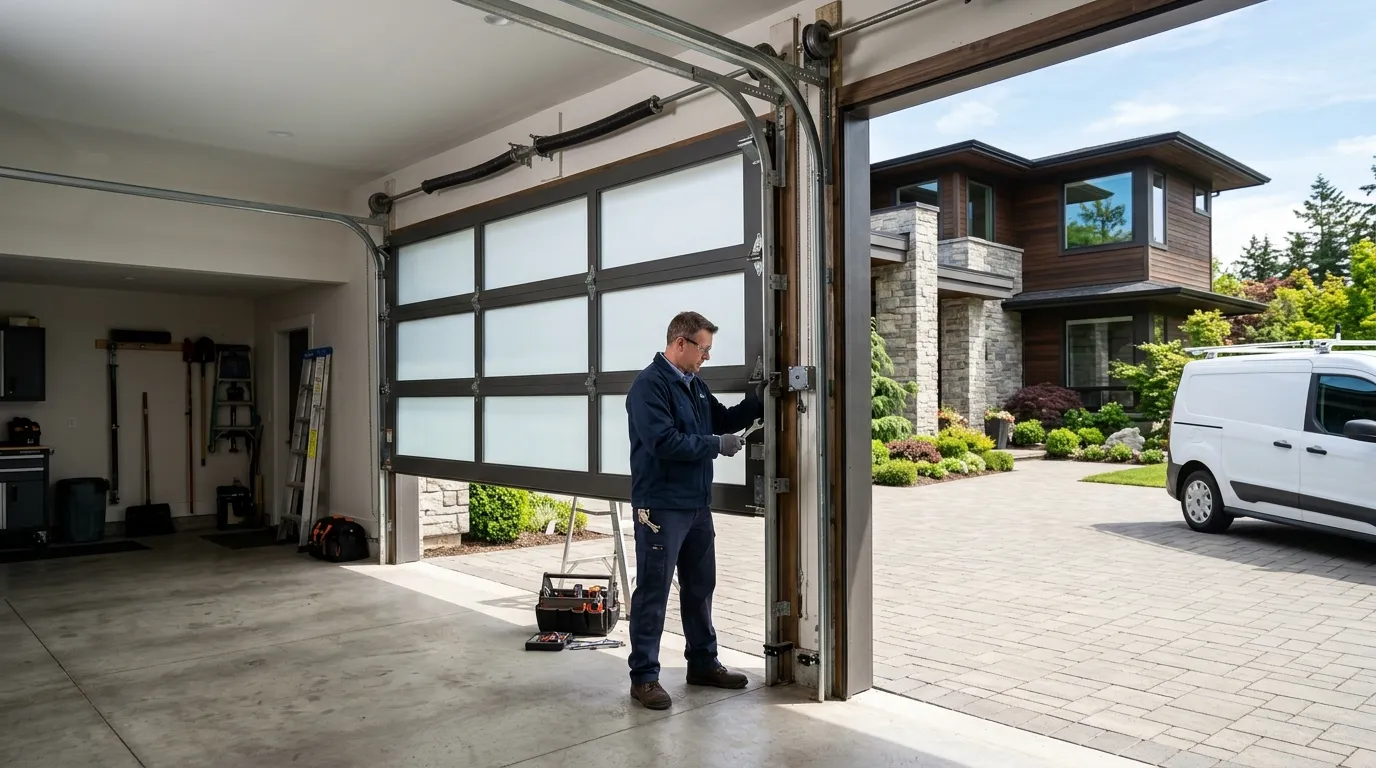
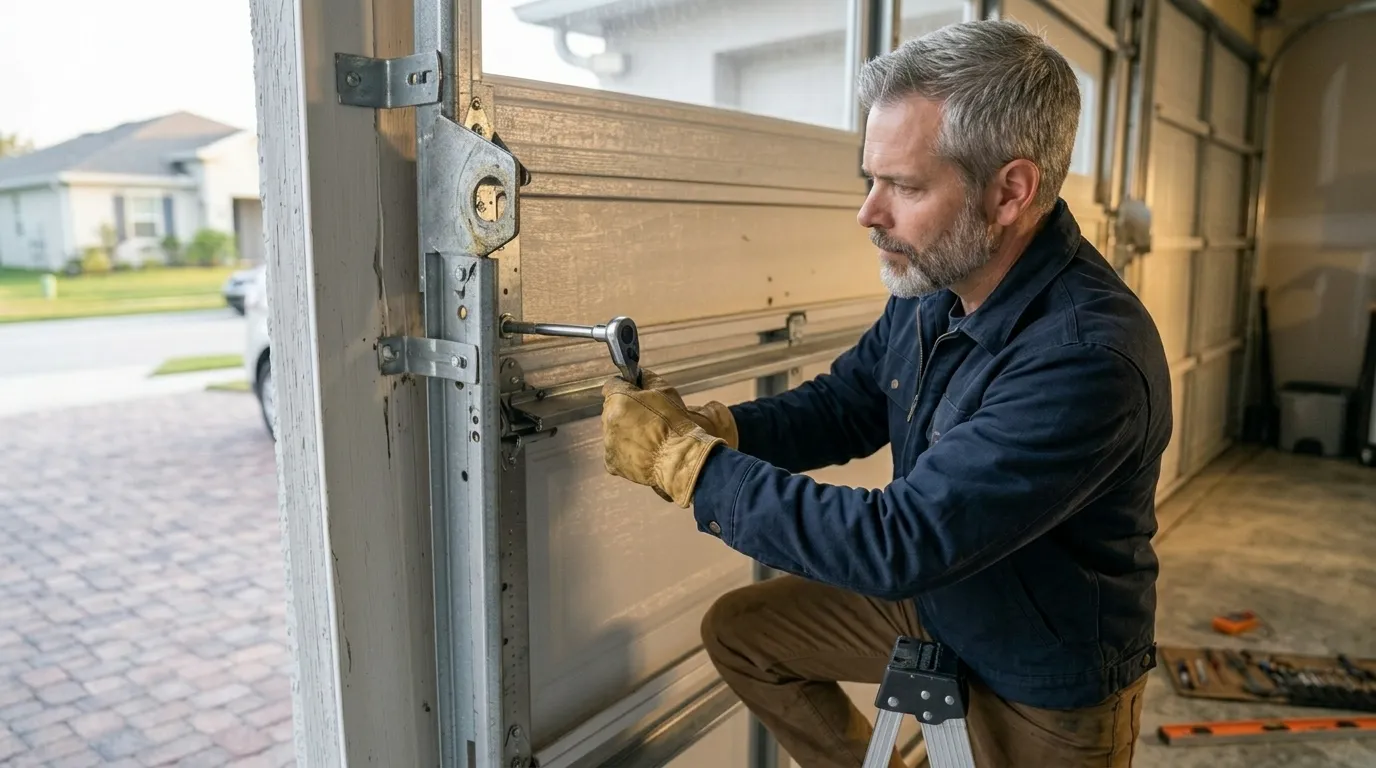
The other place this goes sideways is torque. A torsion spring holds enough stored energy to break a hand or worse if it's loosened or removed without the door properly secured - this isn't a job for a ratchet and an afternoon. If a spring on your door looks stretched, gapped, or rusted through, that's the one item on this list we'd tell you to leave alone until someone with the right winding bars is standing there.
We'll also say plainly: not every door on a 1996-era house is worth restoring piece by piece. If the track is bent, the panels are original steel with rust coming through, and the opener is also failing, patching each part separately usually costs more over a year than replacing the door and opener together. We'll tell you which side of that line your door is on before we start charging for parts.
Parts We Carry
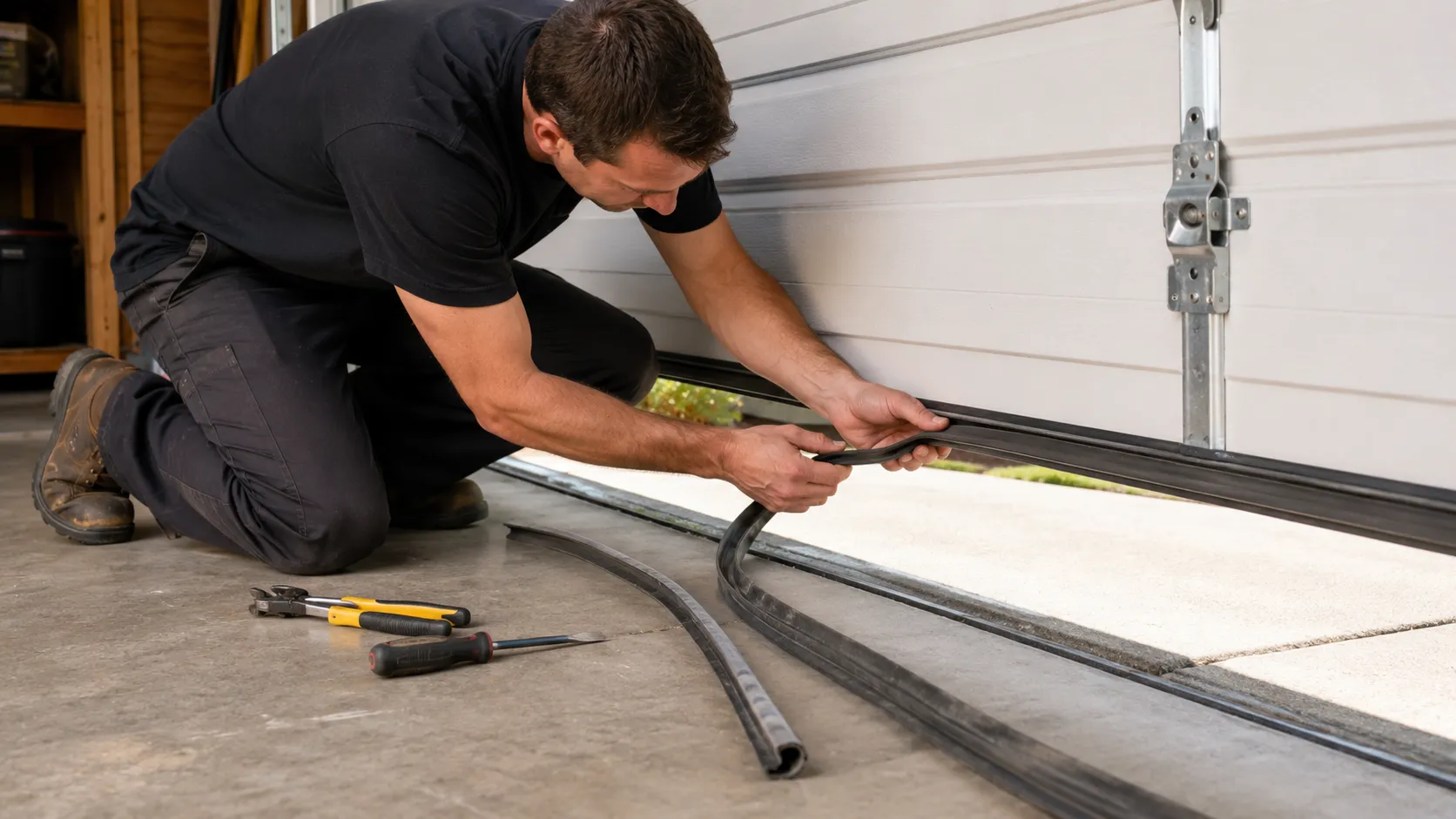
For hardware from this build era we carry the springs, cables, rollers, and hinges that fit standard torsion setups from the 1990s and 2000s - the sizes that show up again and again on Black Forest doors built to that period's code and framing standards. Steel rollers get swapped for sealed nylon on most jobs now, since they run quieter and don't need the grease schedule the old steel ones do.
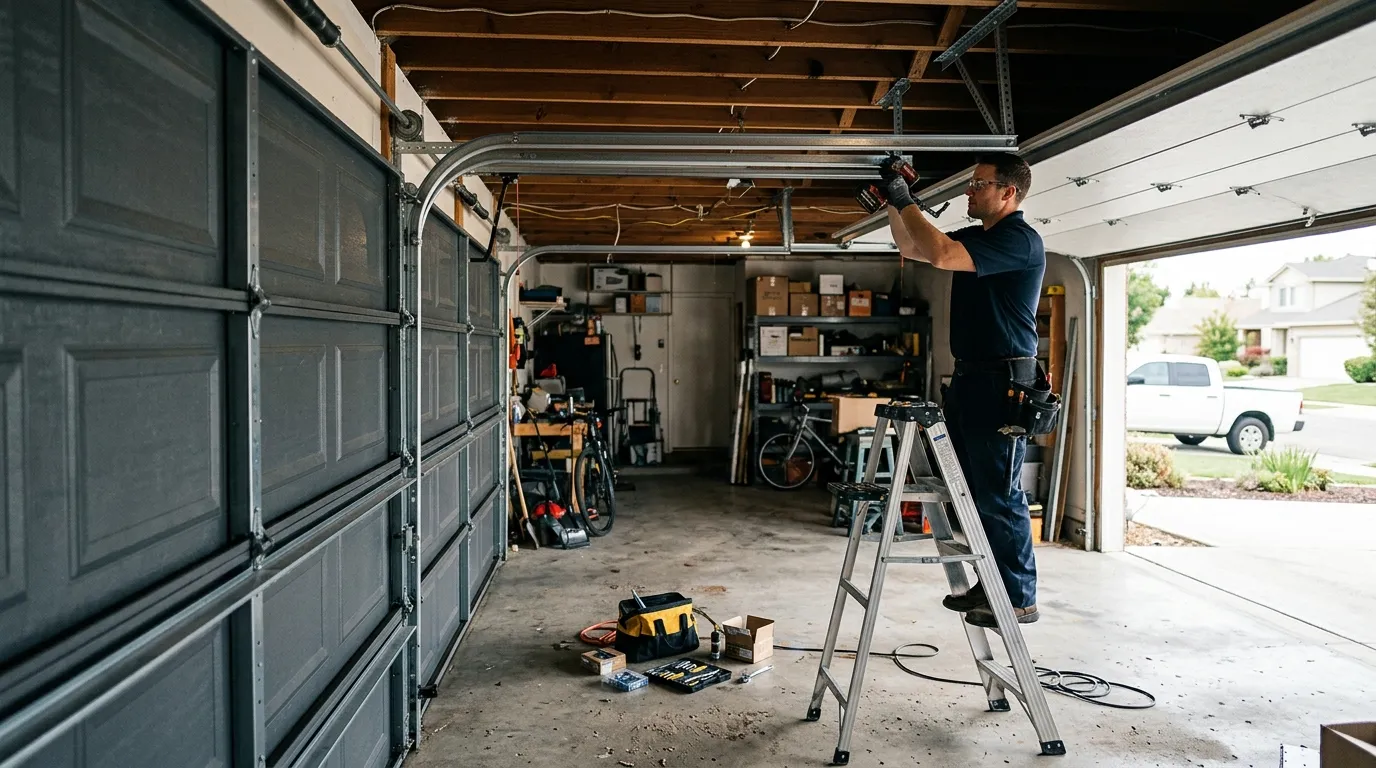
Where we run into a wait is with opener logic boards and some manufacturer-specific remotes from that same era - a few of those parts aren't stocked anywhere locally and have to be ordered in. If your opener is original to a 1990s install, we'll check the model on-site and tell you straight whether it's a same-visit part or a return trip.
We don't stock every trim kit or decorative hardware option; if you want a specific panel style to match an existing look, that's something we can special-order but not something we carry on the truck.
Doing It Yourself
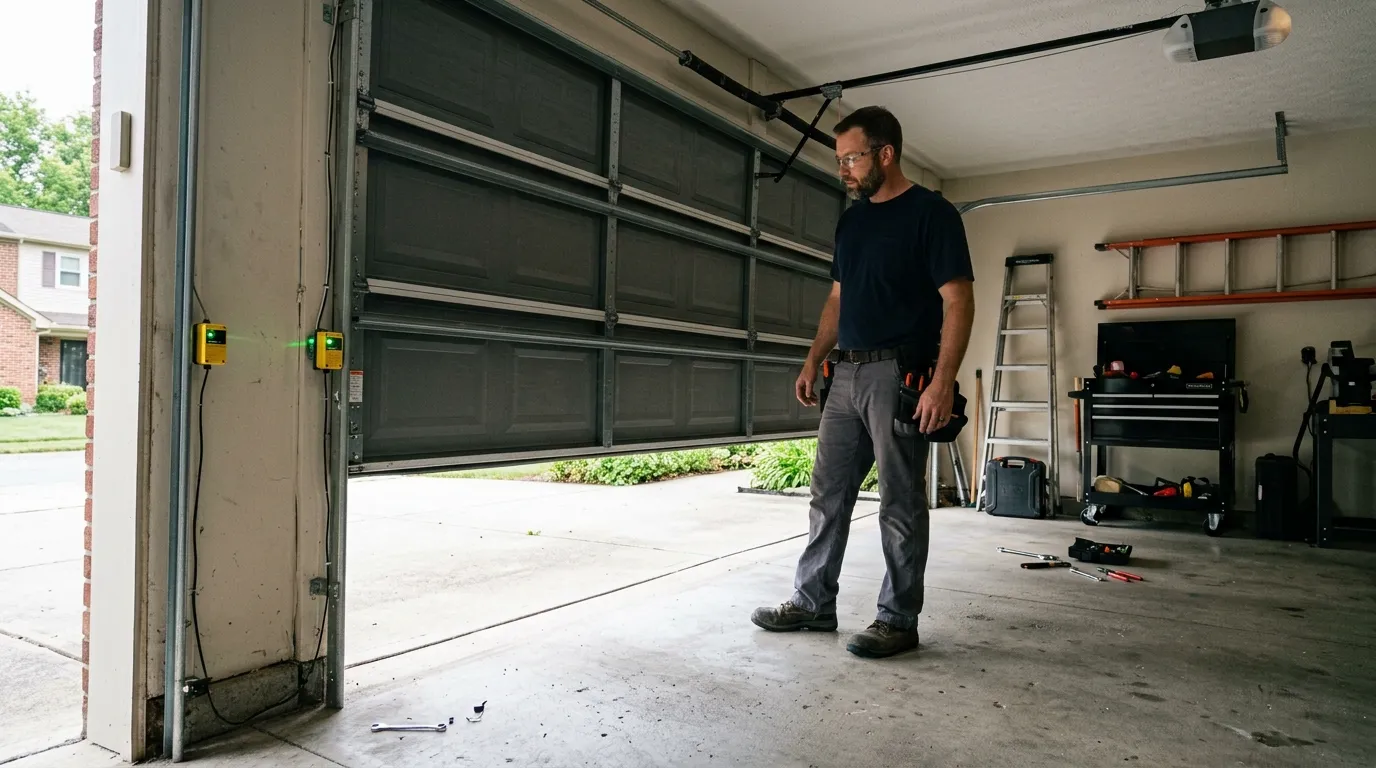
Some of this is fair to do yourself. Wiping down and lubricating rollers and hinges once or twice a year, checking that the photo-eye sensors are aligned and clean, and tightening loose bolts on the track brackets are all reasonable weekend jobs, and doing them on a schedule is what keeps 1990s-era hardware running as long as it has.
What we'd ask you not to touch: the torsion spring itself, the cable under tension, and anything involving the bottom bracket while the door is in motion. Those are the parts most likely to injure someone on a door this age, because the steel has had thirty winters of cold-flex fatigue on it and doesn't behave the way new steel does.
If you're not sure whether what you're looking at is a lubrication job or a spring job, a photo of the spring coils (fully closed door, from a safe distance) tells us most of what we need before we drive the 14 miles out from Colorado Springs.
How it works
From “it’s stuck” to “it’s fixed”
01
Tell us what’s wrong
Describe the symptom - won’t open, loud bang, opener runs but the door won’t move.
02
On-site diagnosis
A technician tests the door under power and by hand and finds what actually failed.
03
Clear, up-front plan
You get the fix that’s needed and what drives the cost - before any work starts.
04
Repaired & tested
The repair is done, the door is set true and tested, and the work area left clean.
Serving Colorado Springs, CO - tell us what your door’s doing and we’ll take it from there.
How old is the hardware on a typical Black Forest garage door?
Most homes here were built around 1996, so if the door hasn't been serviced, the spring, cables, and rollers are usually original - pushing thirty years old. That's well past the rated cycle life on a torsion spring, which is why unexplained sagging or a straining opener often traces back to age rather than a single broken part.
Do you have a shop in Black Forest?
No, we're based in Colorado Springs and drive out to Black Forest for maintenance and repair calls, about 14 miles each way. We don't keep a branch or drop-off counter out here, so parts that need special ordering come with us on a return trip rather than a same-day pickup.
Is it worth fixing an original 1990s opener or replacing it?
Depends what's failing. If it's just the sensor or a worn gear, repair usually makes sense. If the logic board is going and the drive chain is stretched, a same-era opener is often past the point where parts cost less than a new unit - we'll check the model on-site and give you a straight answer either way.
Does the cold weather out here matter for maintenance timing?
Yes. Steel contracts in the cold and old lubricant stiffens, so a spring near the end of its life is far more likely to snap on a cold morning than in mild weather. Servicing rollers, hinges, and spring tension before the hard part of winter cuts down on cold-morning failures.
Ready to get your garage door sorted?
Tell us what it’s doing and where you are in Colorado Springs - we’ll take it from there.