Why It Happens Here
Housing across this service area was built mostly between 1951 and 2006, with the median close to 1990 and the bulk of the stock dating to the 1980s and 90s. That means a huge share of the openers out there are original equipment or a first replacement, now old enough that motors, capacitors, and gear sets are simply wearing out on schedule. Chain-drive units from that era were solid for their time but they were not built with today's circuit boards, and boards that age fail in ways belt-drive owners rarely see - intermittent power, random reversing, a keypad that stops responding. Then there's the cold. This area sits in a severe cold climate band, and garage openers take a beating from it that isn't obvious from inside a warm house. Grease in the drive gear stiffens below freezing, which loads up the motor every single cycle. Photo-eye sensors mounted low near the floor pick up condensation and frost that a warmer climate never produces. Circuit boards that read fine in July throw errors in January because cold solder joints and aging capacitors both get worse at low temperatures. None of that is a defect - it's just what happens to 30-year-old electronics in a climate that swings hard.
Doing It Yourself
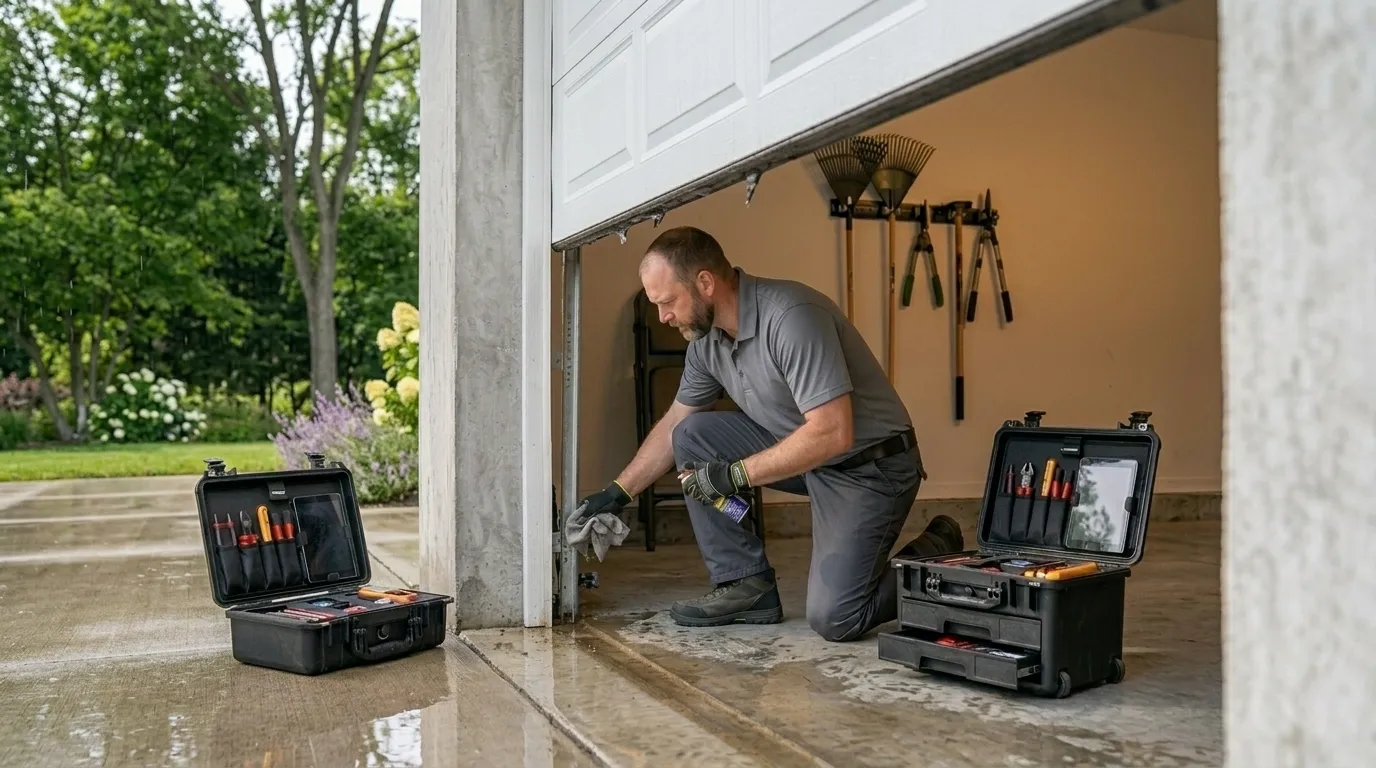
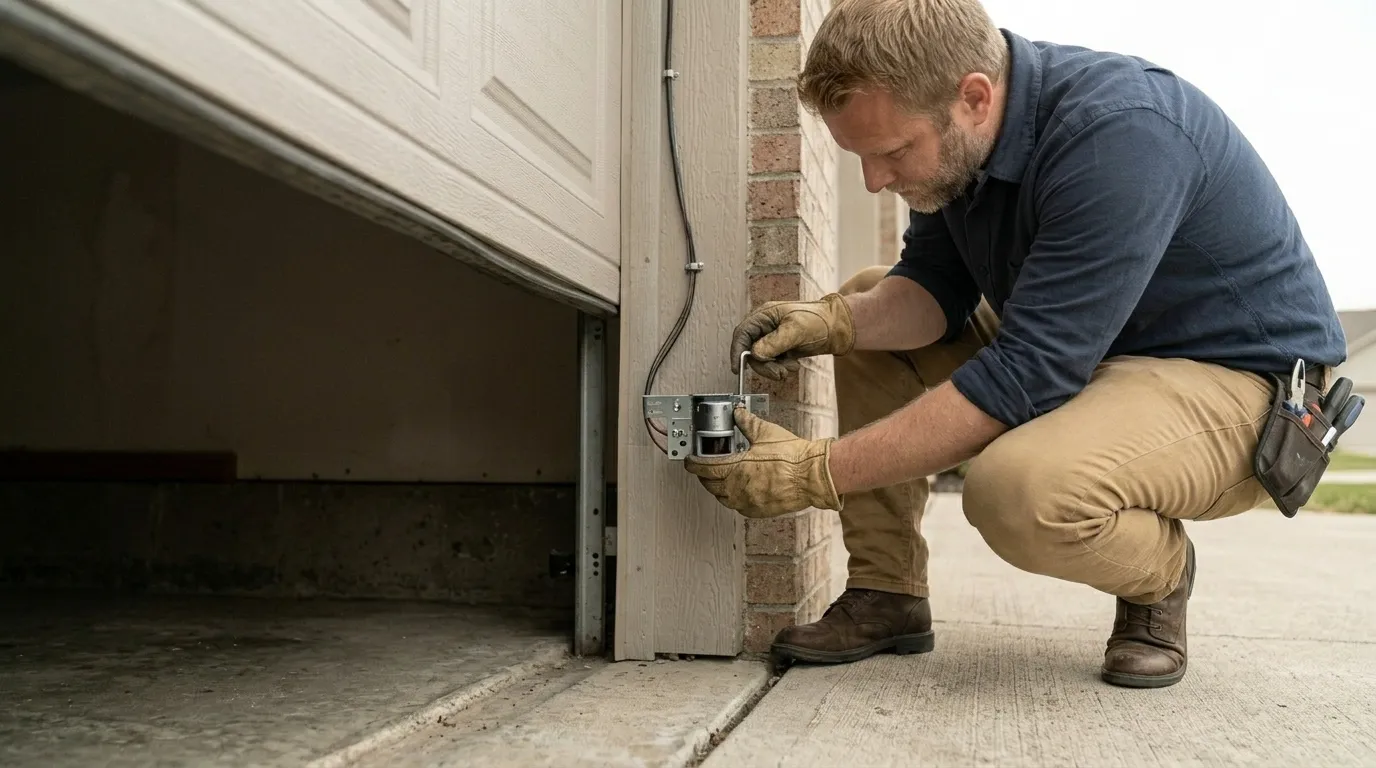
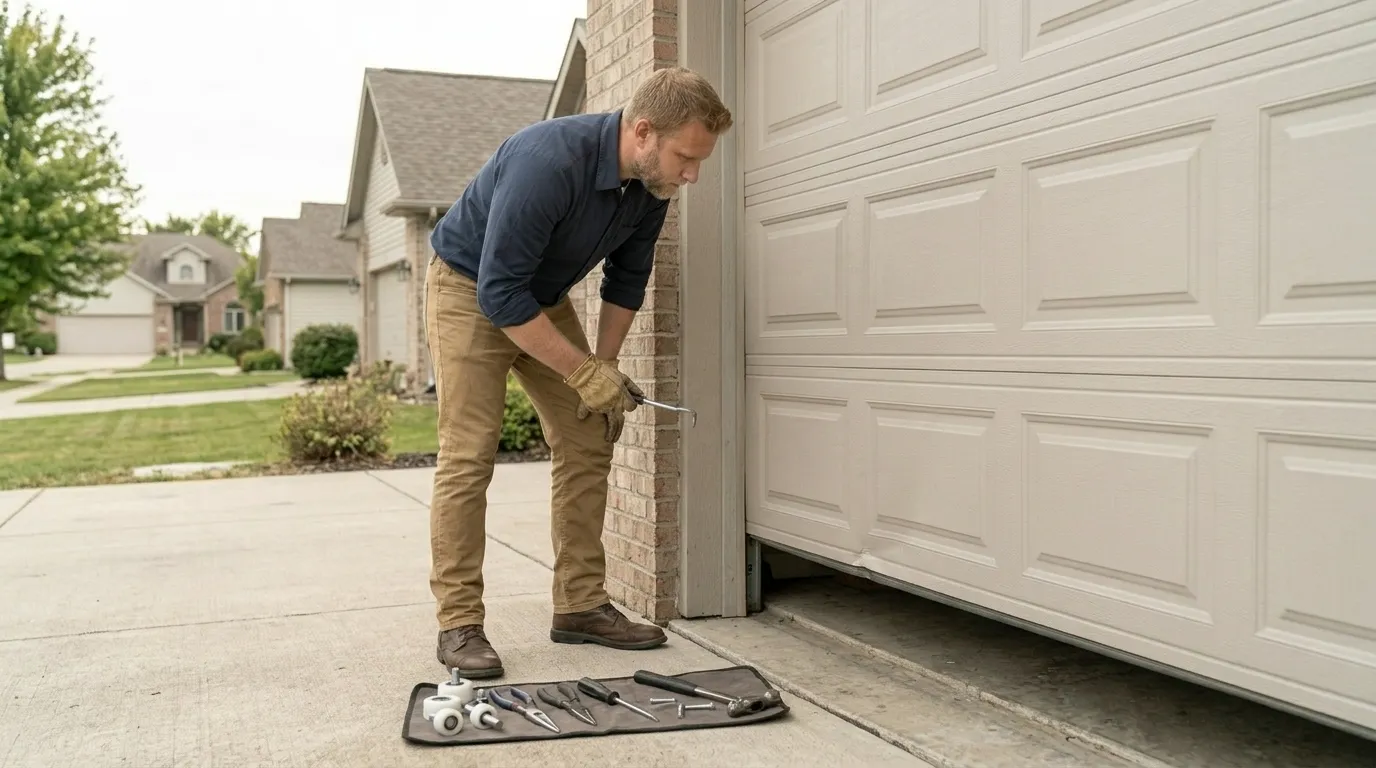
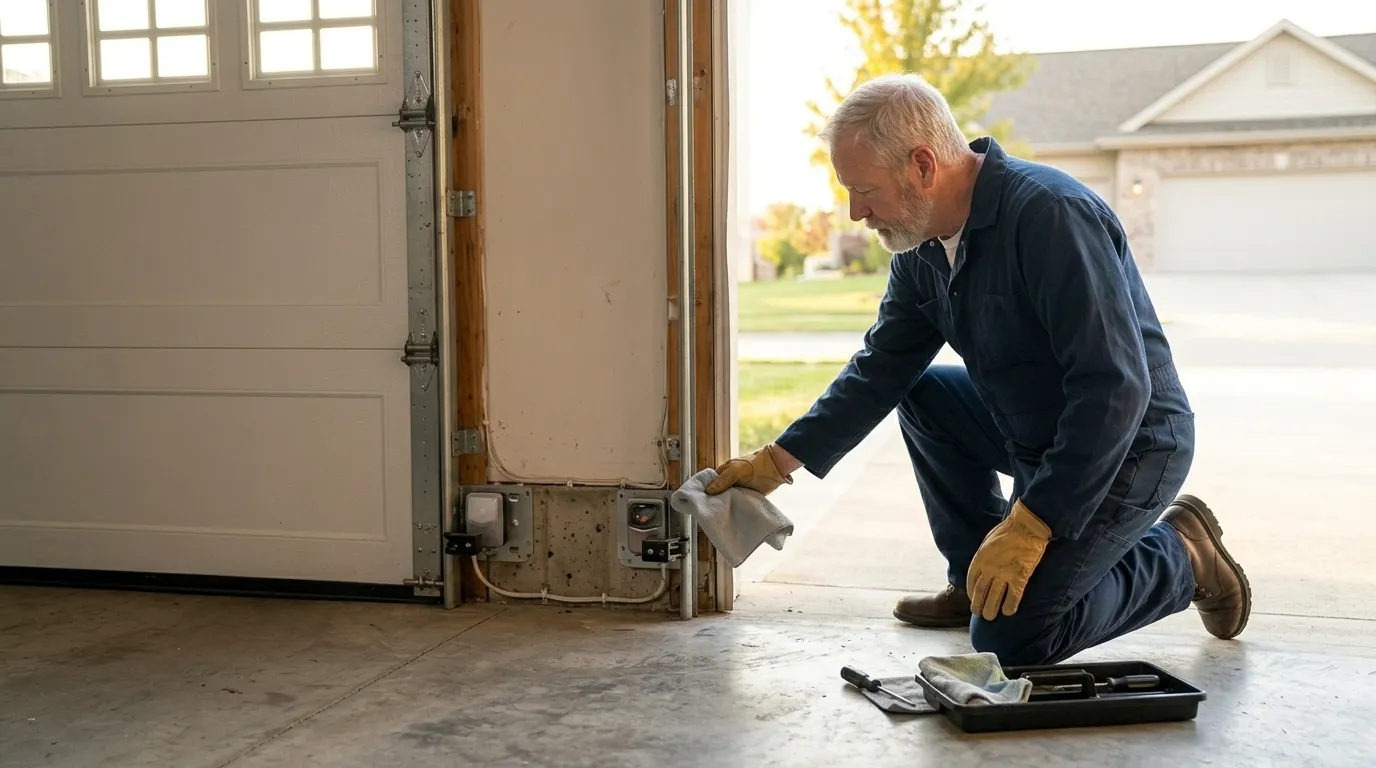
Some opener problems are worth checking before you call anyone. If the door won't move at all, check that the unit is actually getting power - a tripped breaker or an unplugged cord from a garage cleanout is more common than people admit. If the door reverses right before it closes, look at the two sensor eyes near the floor track; wipe them off and make sure neither one has been bumped out of line, which happens easily if anything's been leaned against the track. If remotes work but the wall button doesn't, or the other way around, that points to a specific circuit rather than the whole unit being dead, which is useful information even if you don't fix it yourself. What you shouldn't touch: the force and travel-limit adjustment screws inside the unit, and anything involving the drive gear or motor housing. Those adjustments interact with spring tension, and getting them wrong on a door that's already fighting cold-stiffened hardware can let a door slam down with real force. If you've checked power and sensors and the problem's still there, that's where a call earns its cost - the rest is electronics and calibration, not a Saturday project.