Where This Job Goes Sideways
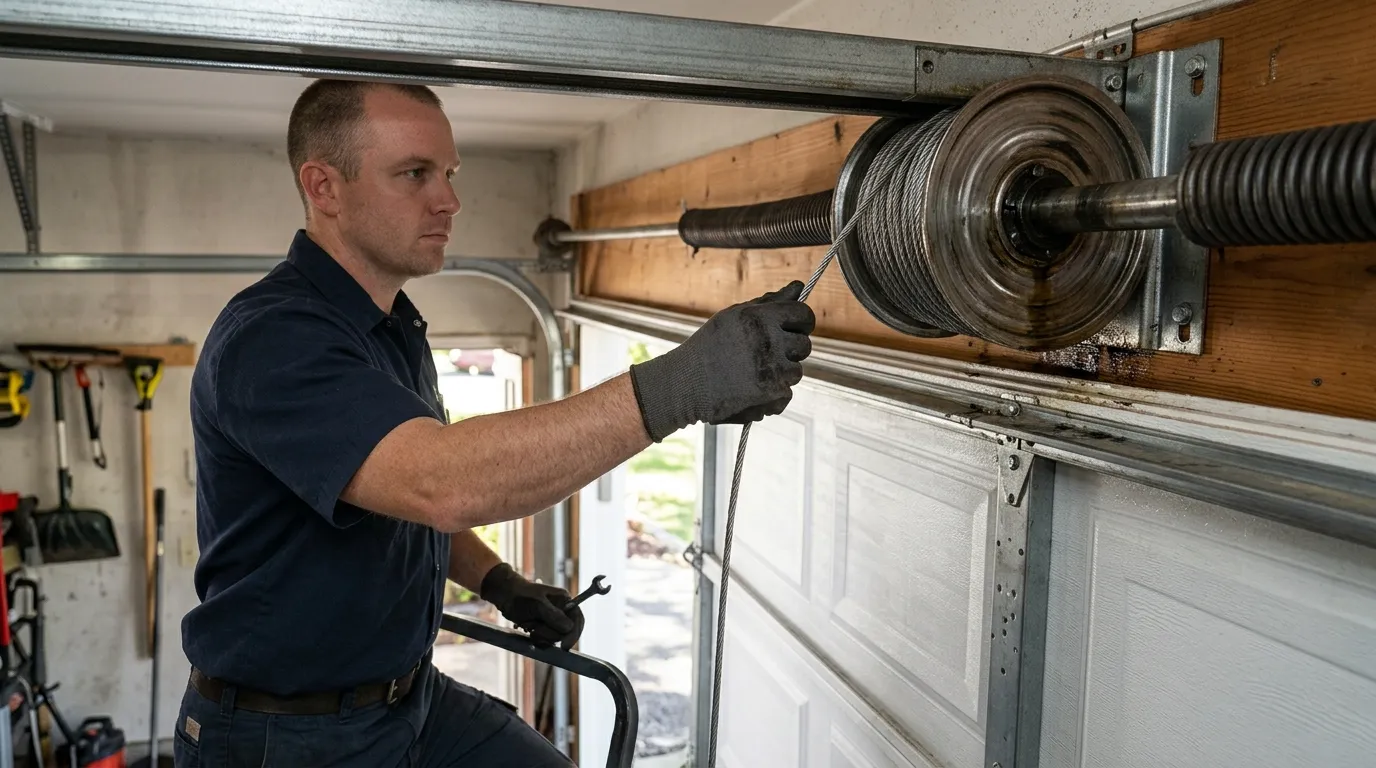
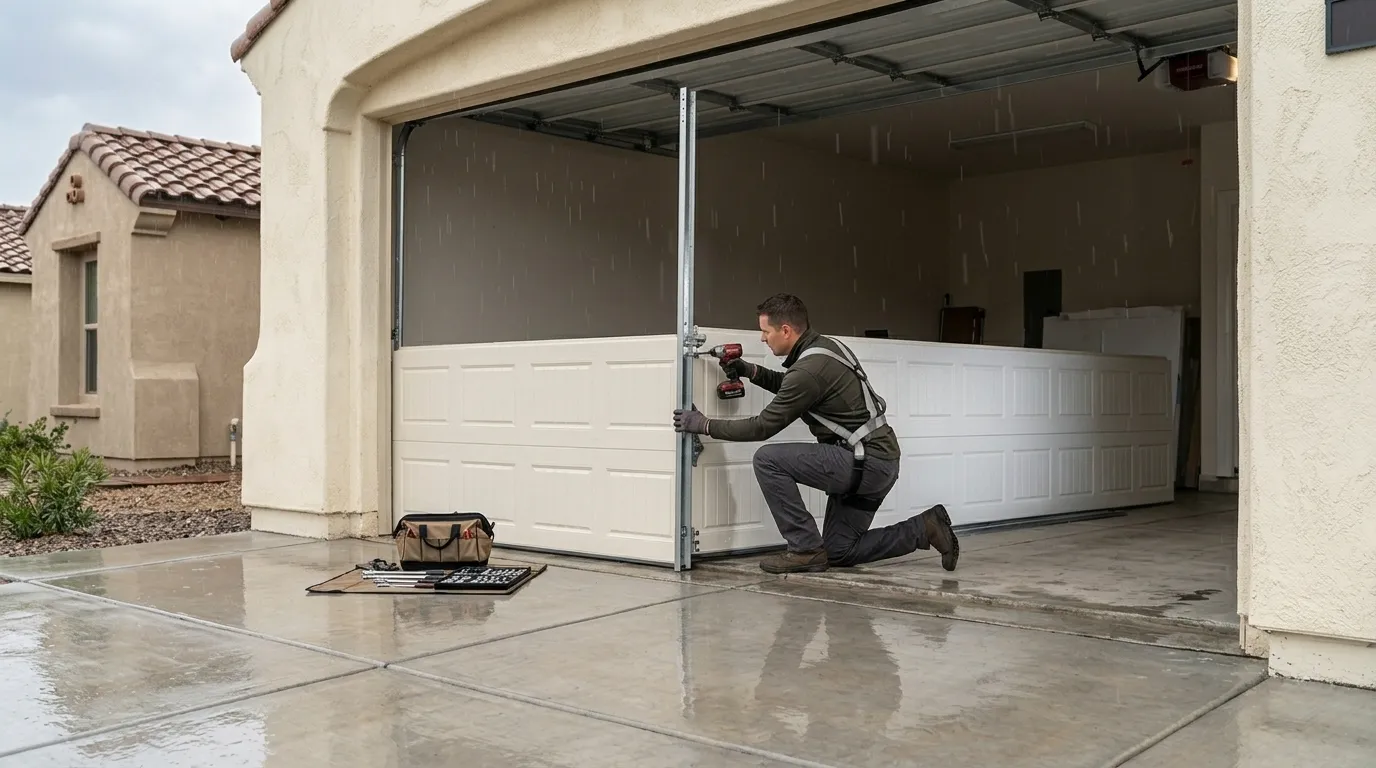
The service area sits in a severe cold climate band, and that doesn't spare Black Forest just because the houses are newer. A torsion spring under tension behaves differently at 15 degrees than it does at 60 - the steel gets brittle, and a spring that was already fatigued from 25-plus years of cycling is far more likely to snap on a cold morning than a mild one. We see this pattern every winter: a door that closed fine the night before won't budge, or worse, closes crooked because one cable let go.
The other place this goes sideways is the opener logic board itself. Mid-90s chain-drive units weren't built with the sealed electronics you get on a new opener, and moisture from temperature swings works into the housing over enough winters. When the board starts misfiring, owners often assume it's the remote or the sensor first, and burn a week swapping batteries before calling us. If your door reverses randomly or won't respond to the wall button, that's the board, not the remote.
Parts We Carry
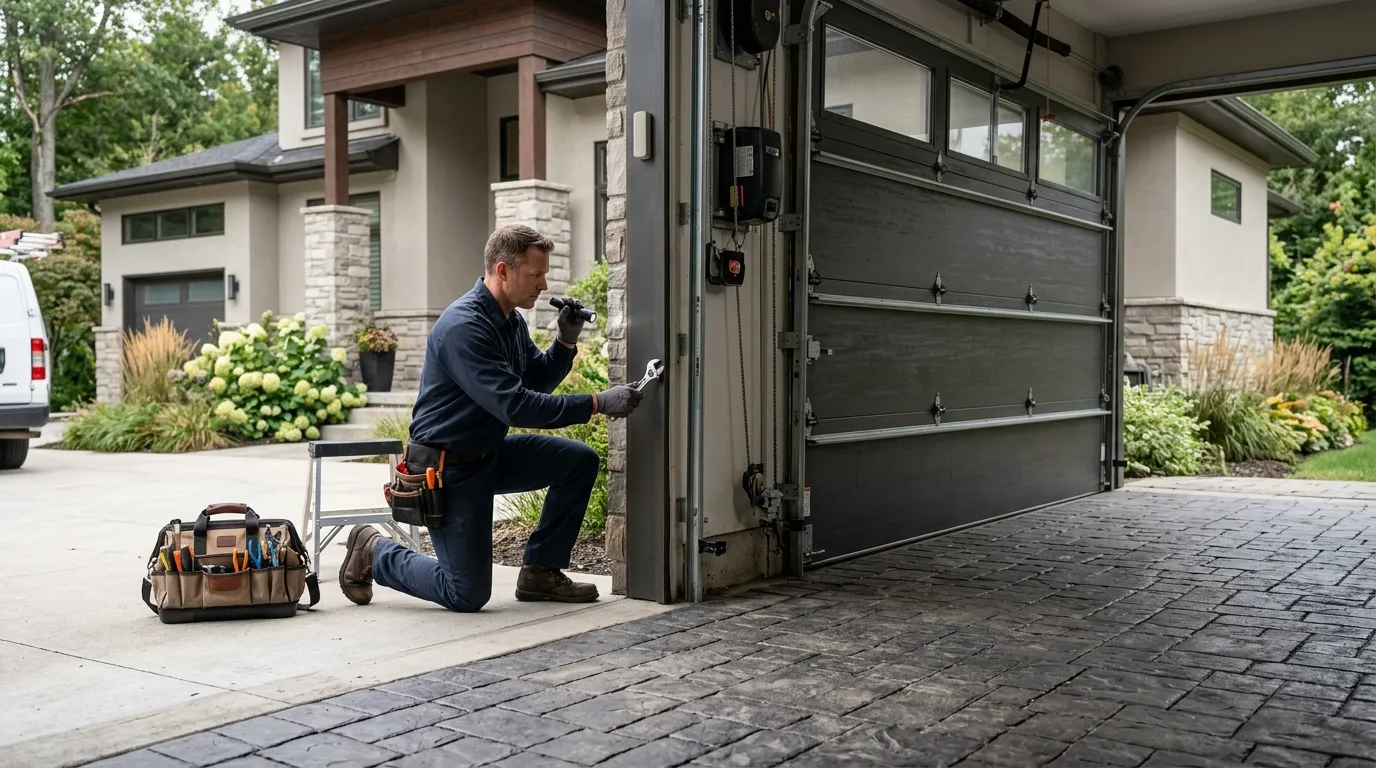
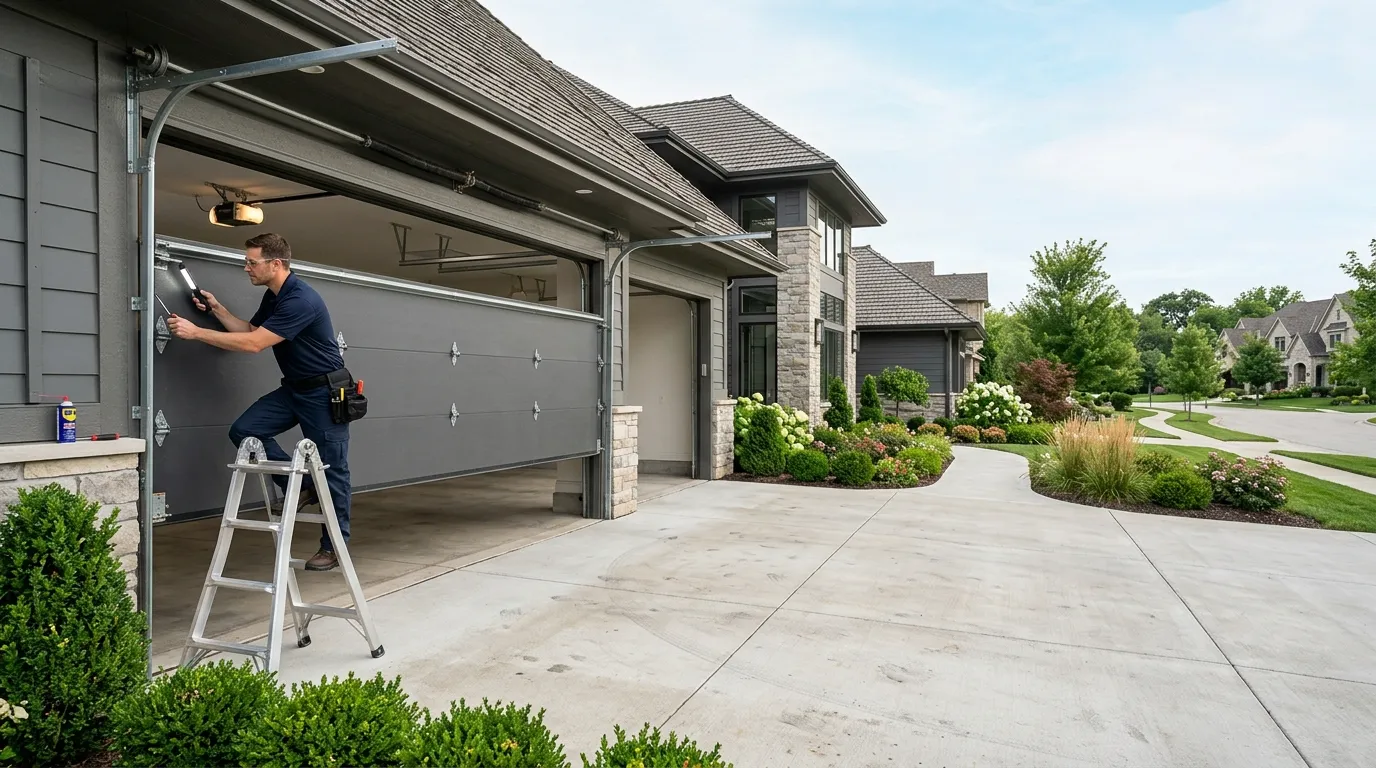
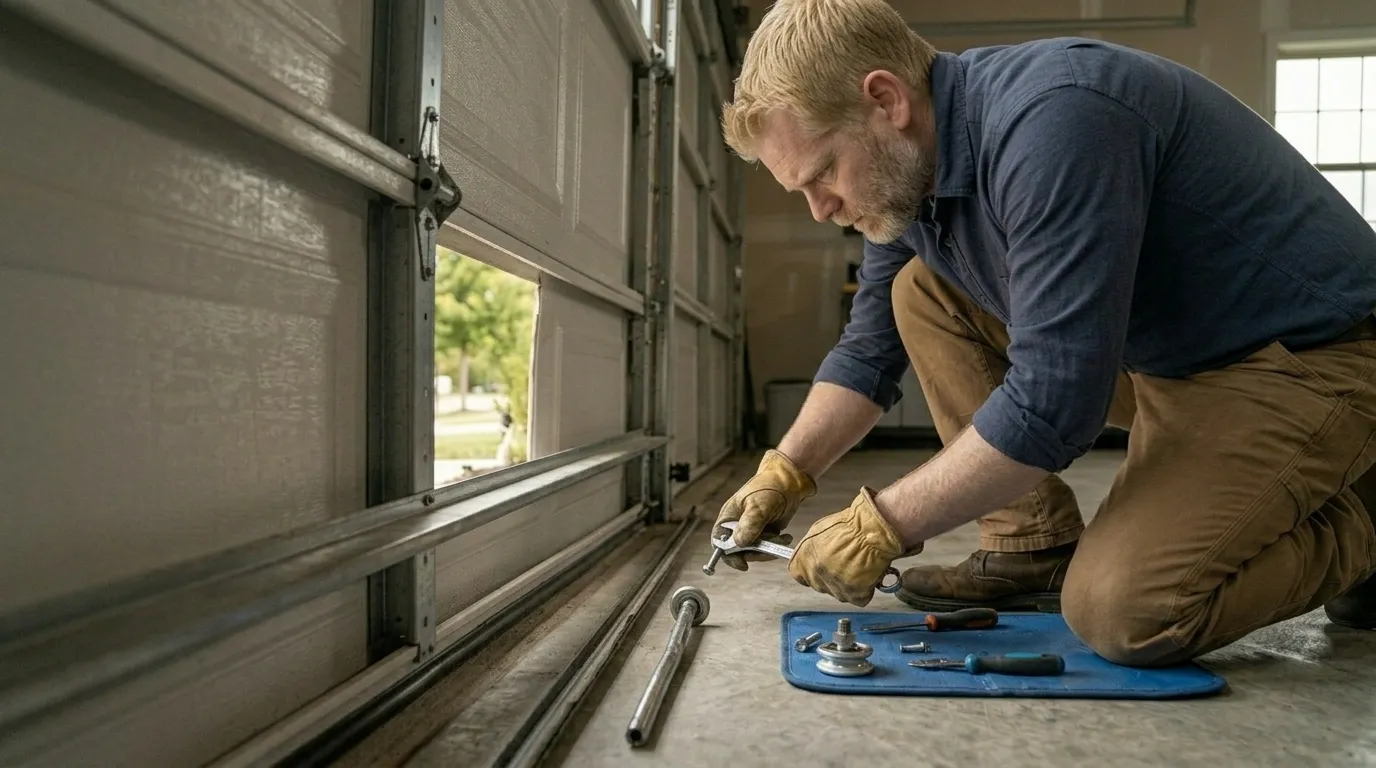
On our truck we carry standard torsion springs in the sizes that fit sectional steel doors from the 1990s and 2000s, along with rollers, lift cables, and end bearing plates - the parts that wear out on a 30-year cycle no matter which side of town a house sits on. We also stock universal opener circuit boards and drive gears that cover most chain-drive and screw-drive units from that era.
What we don't carry, and won't pretend to, is a match for a discontinued opener model with a proprietary logic board that the manufacturer stopped supporting years ago. On a handful of those, the honest answer is a full opener swap rather than a repair - the part simply isn't made anymore, and hunting for a used board isn't a repair we'll bill you for. We'll tell you straight if your unit falls into that category before we start any work.