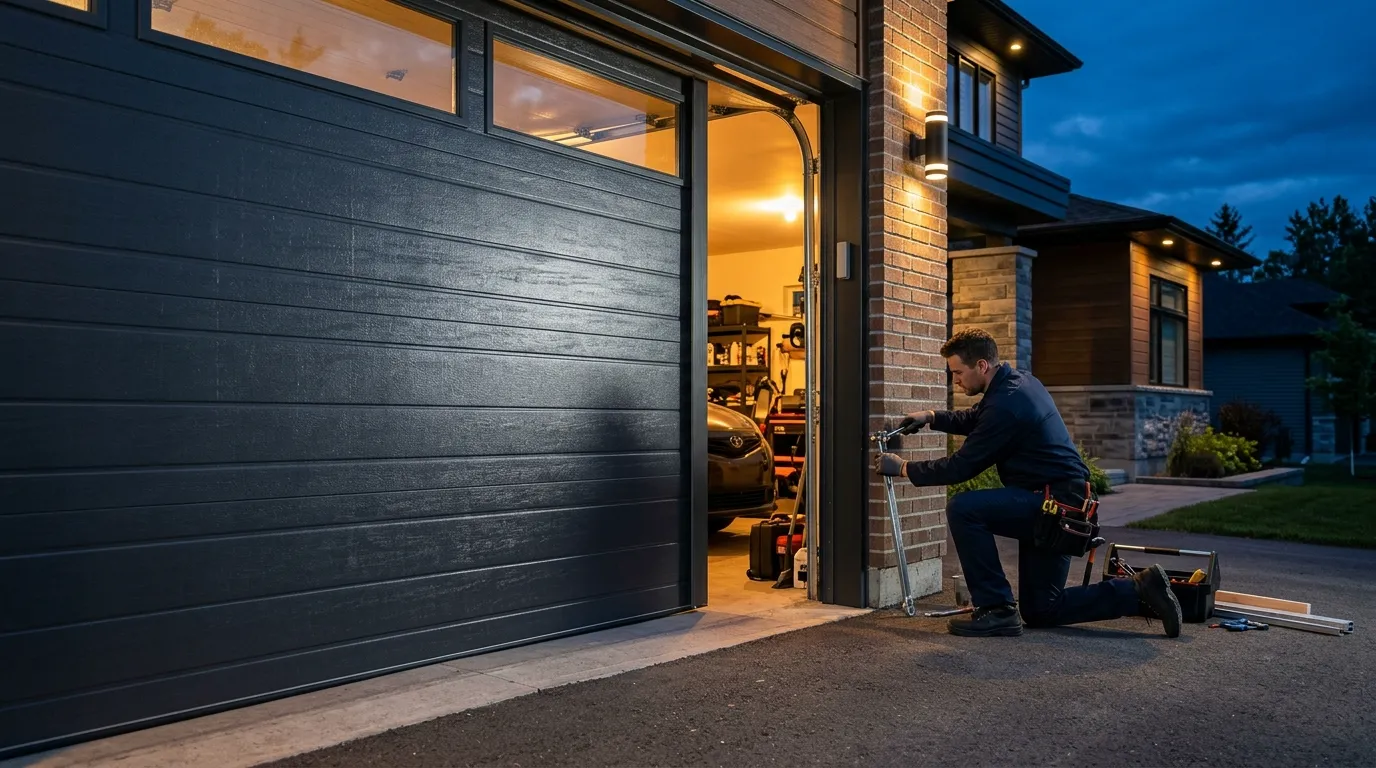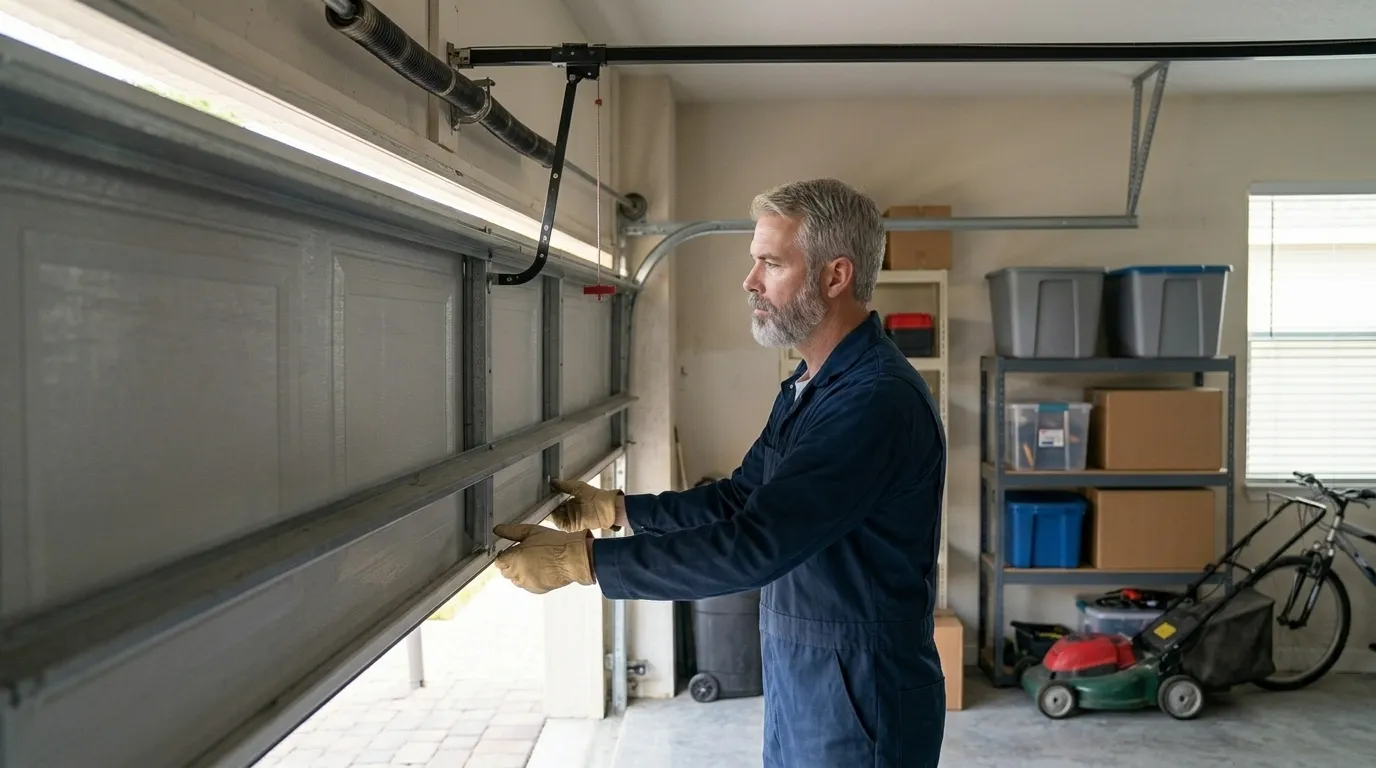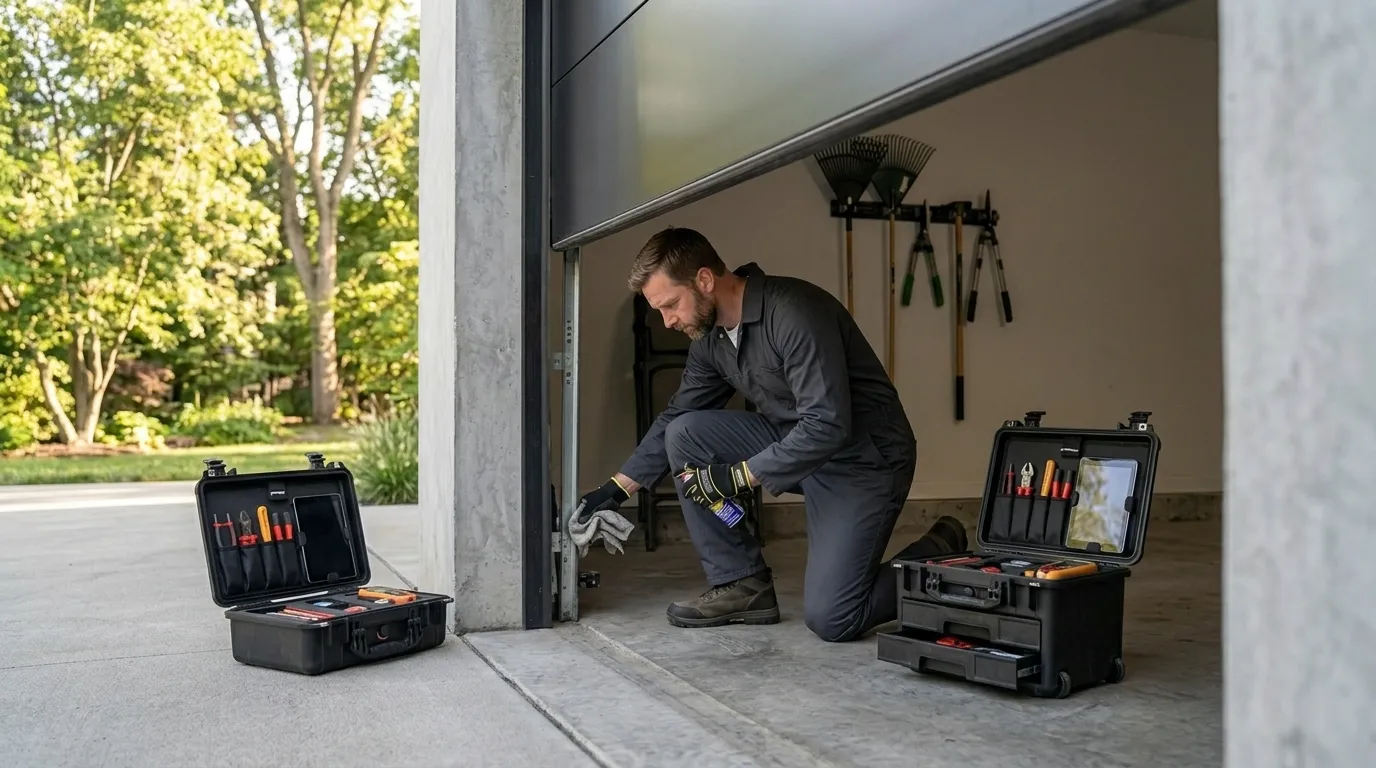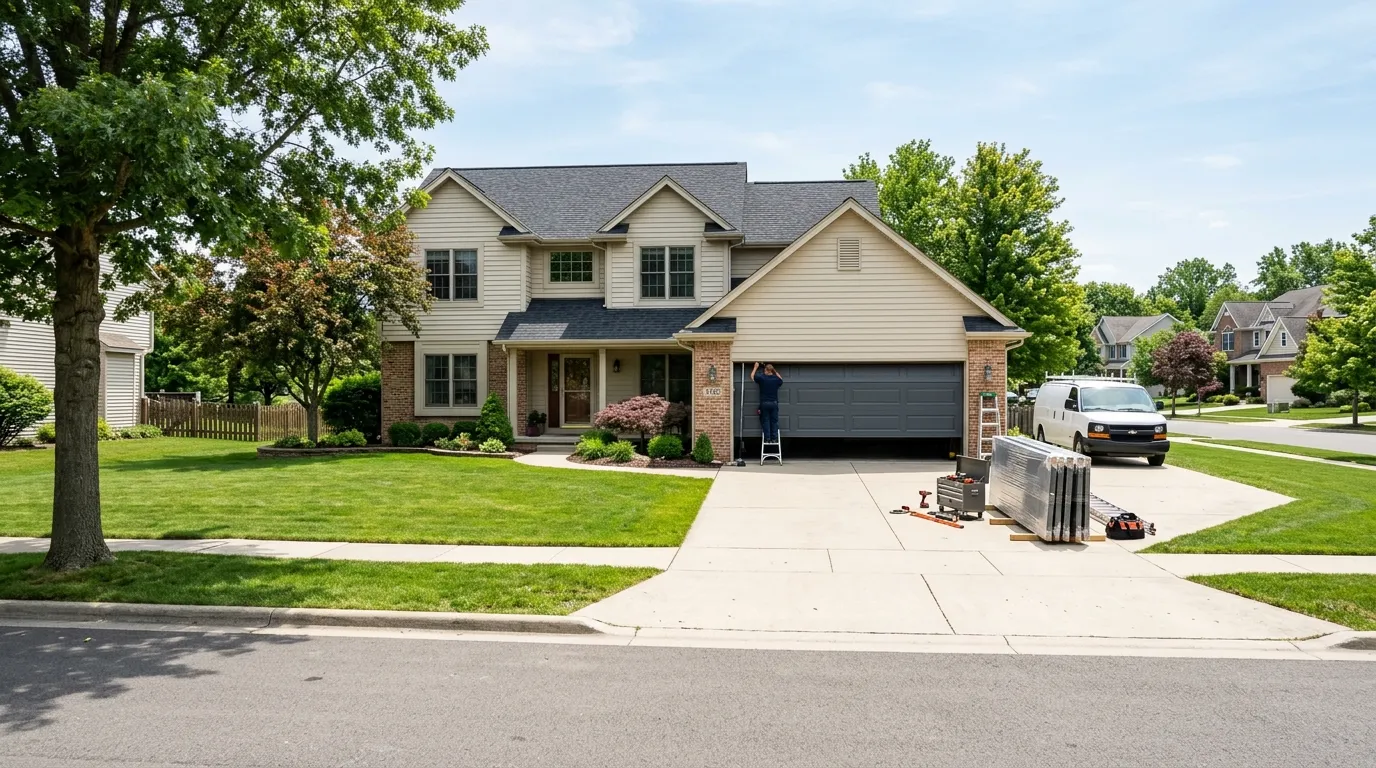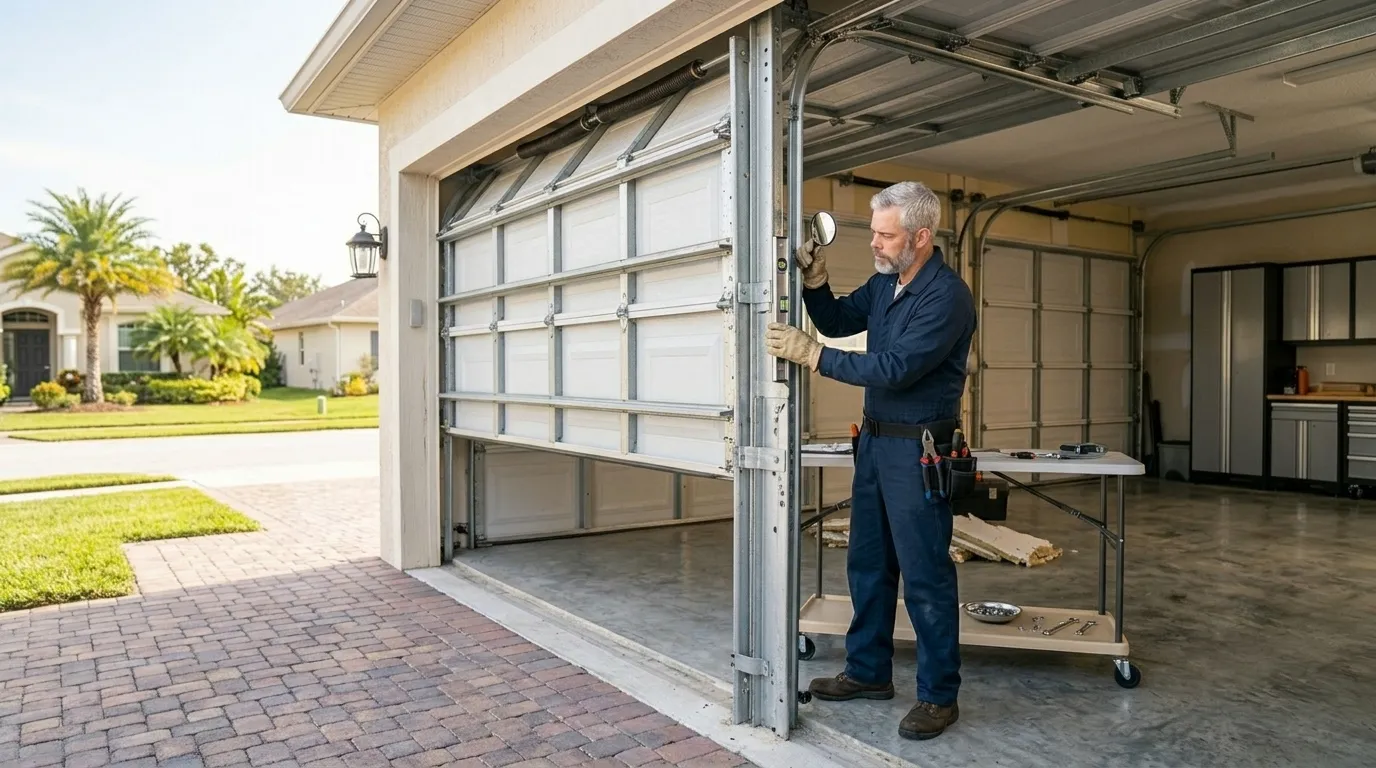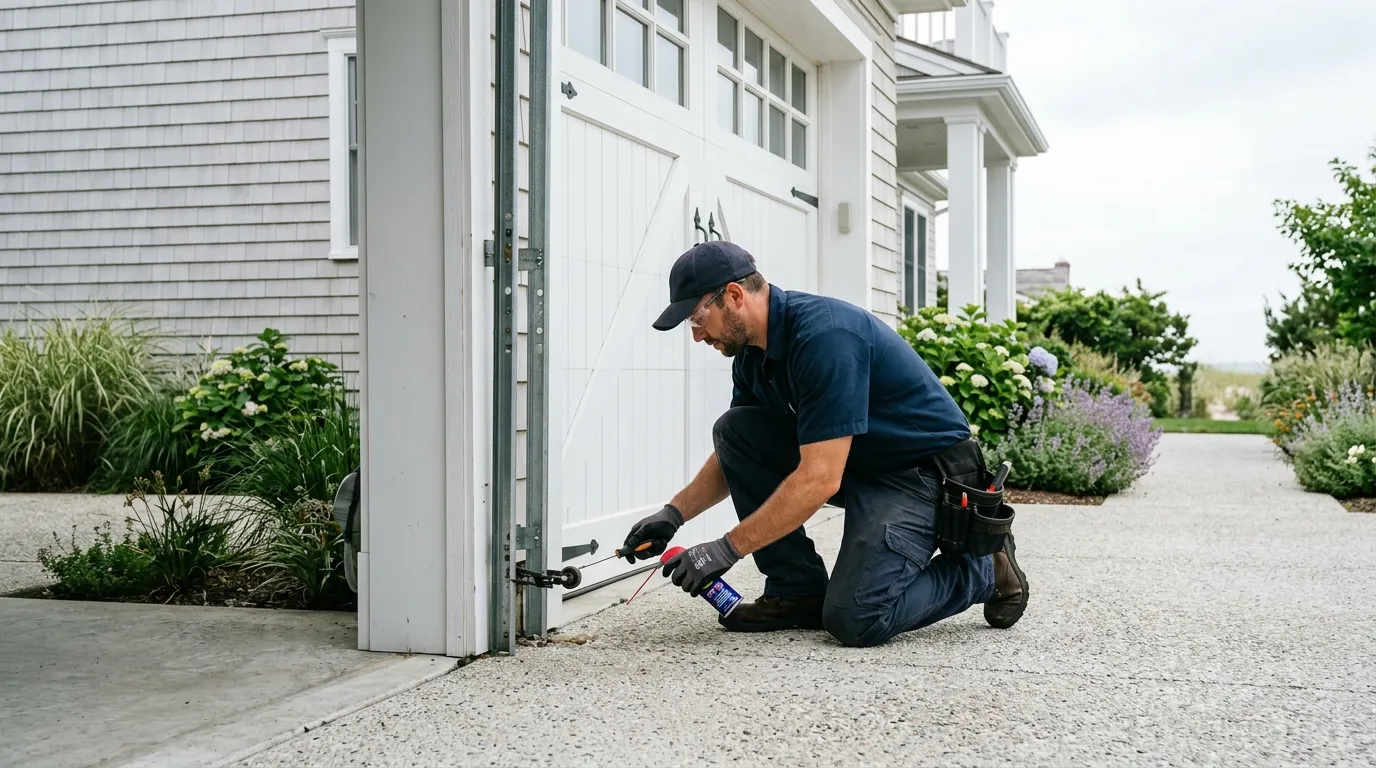
What You Are Seeing
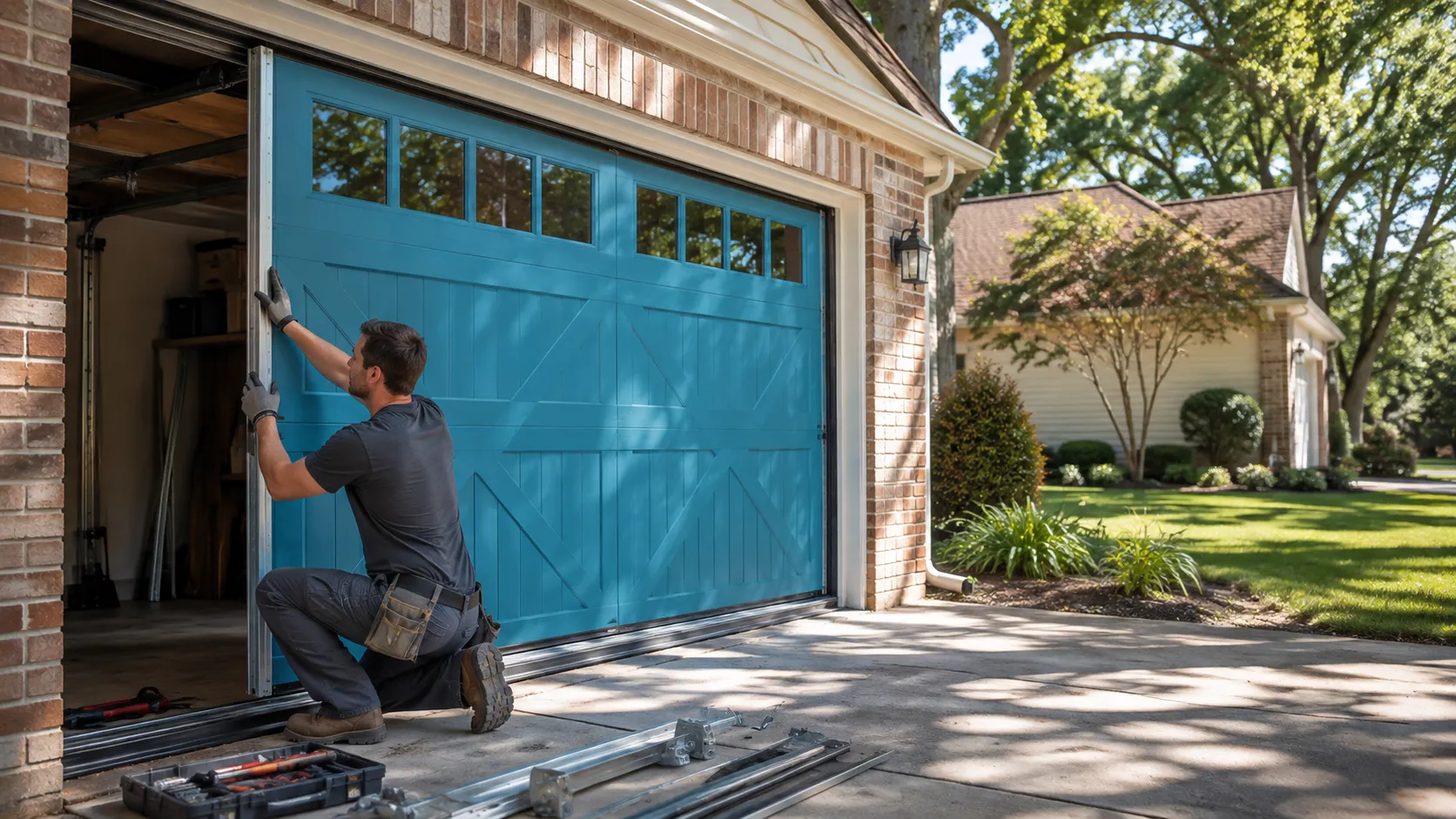
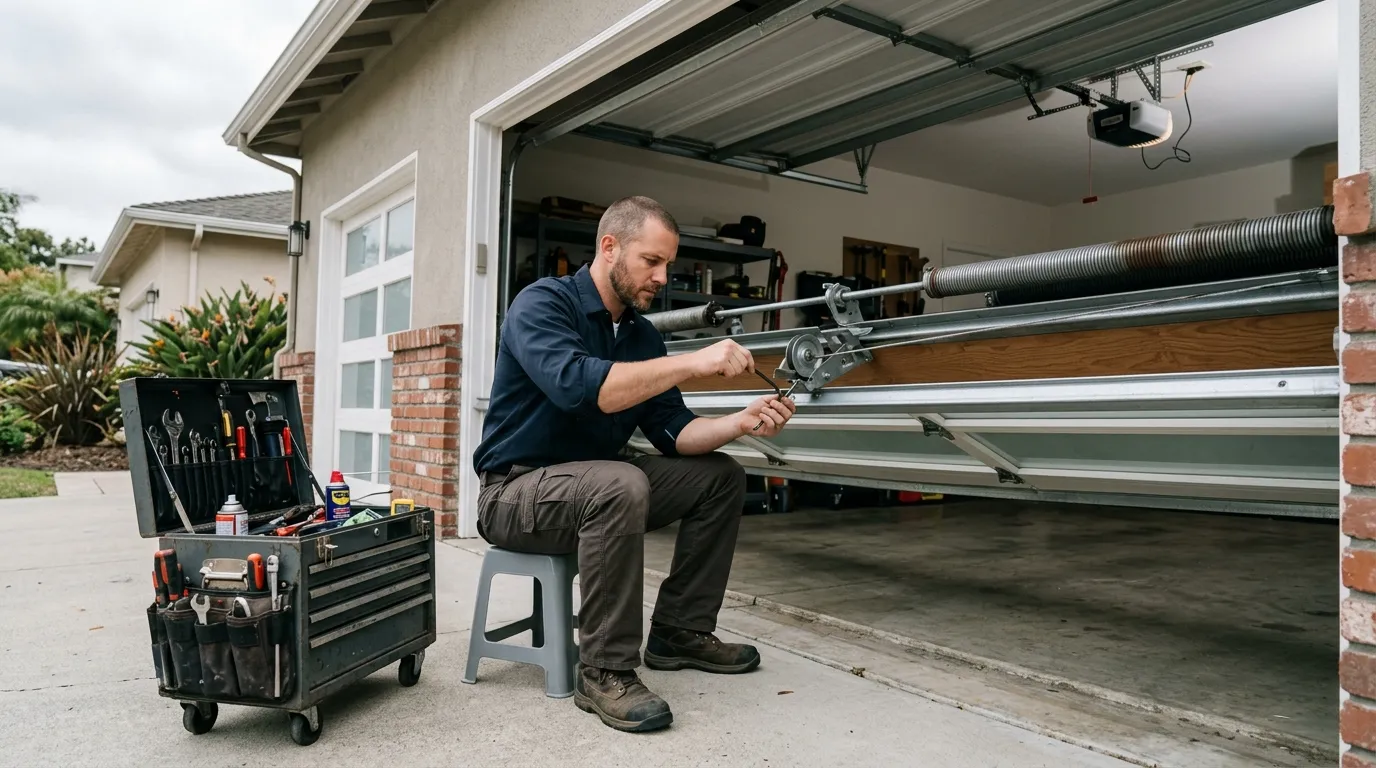
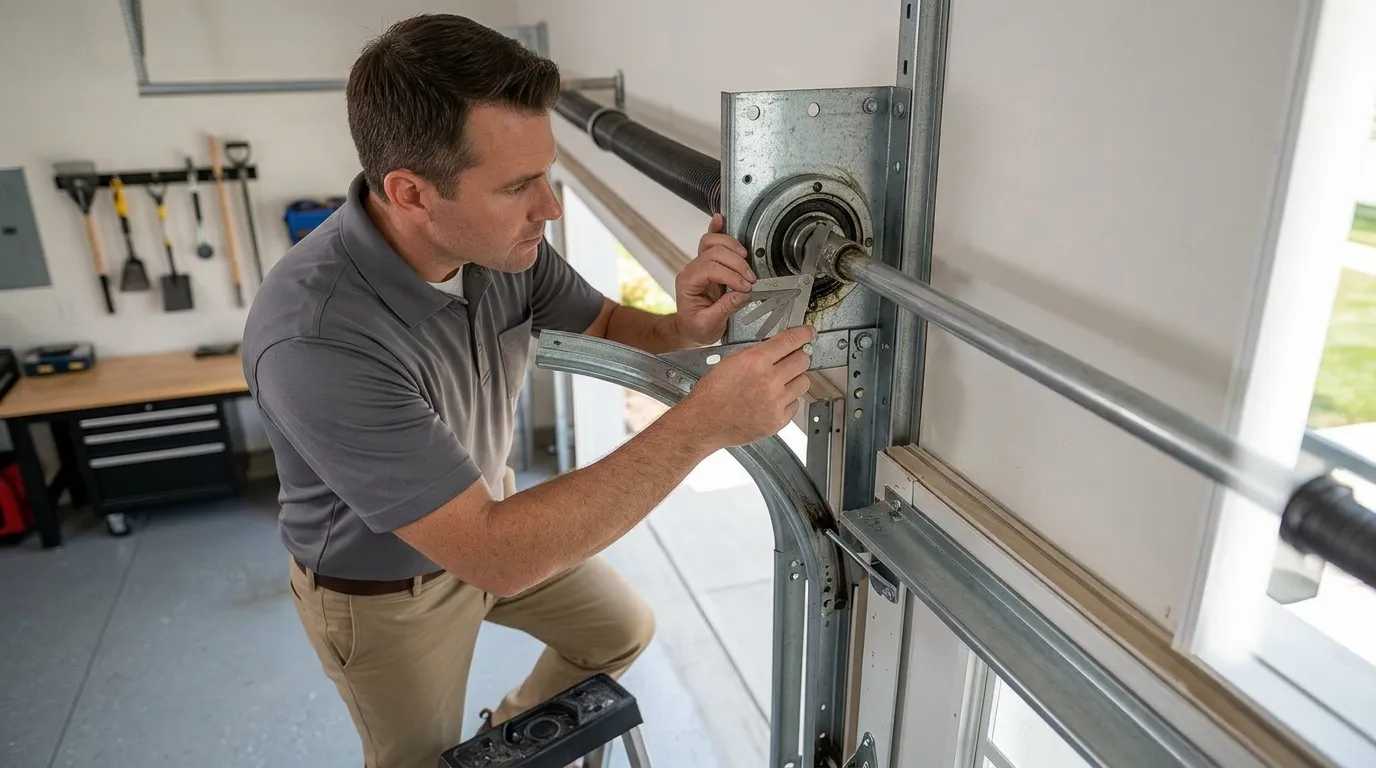
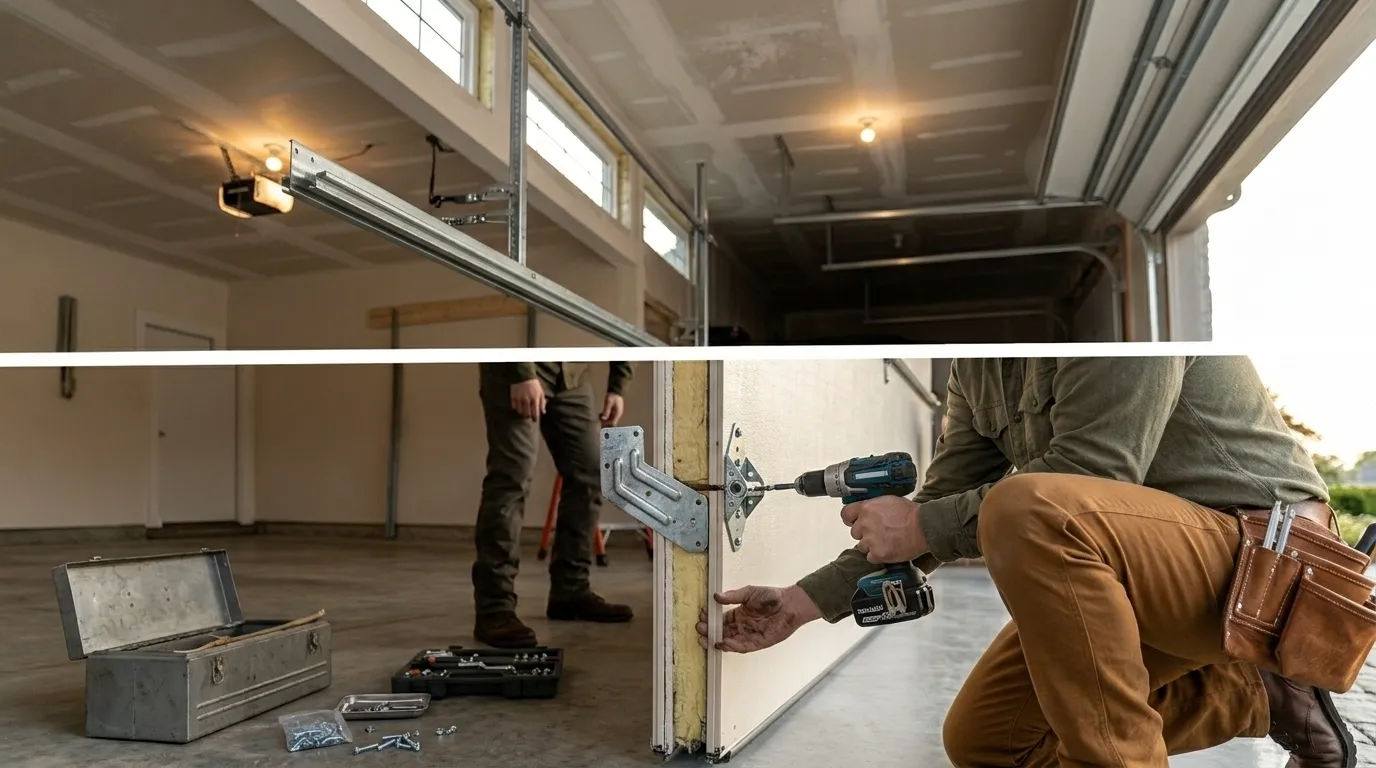
Most garage doors in Security-Widefield are pushing into their fourth decade. A door installed around 1982 was built before coated torsion springs became standard and before insulated steel panels were common, so what we see most is stiff or seized torsion springs, worn cable drums, and single-layer panels that have taken decades of freeze-thaw cycling in a cold, severe climate.
Track alignment problems from years of shifting slab and settling foundation show up more on this side of things than on newer construction. Chain-drive openers from that era, if they're still original, often have worn sprockets and stripped nylon gears - a common failure point at this age. Weatherstripping on doors this old is usually long gone, which lets cold air in around the bottom seal, and that matters given how hard winters run here. None of this means a door is done for. It means a maintenance visit is doing real work, catching wear before it turns into a stuck door on a cold morning or a spring that snaps under load.
Parts We Carry
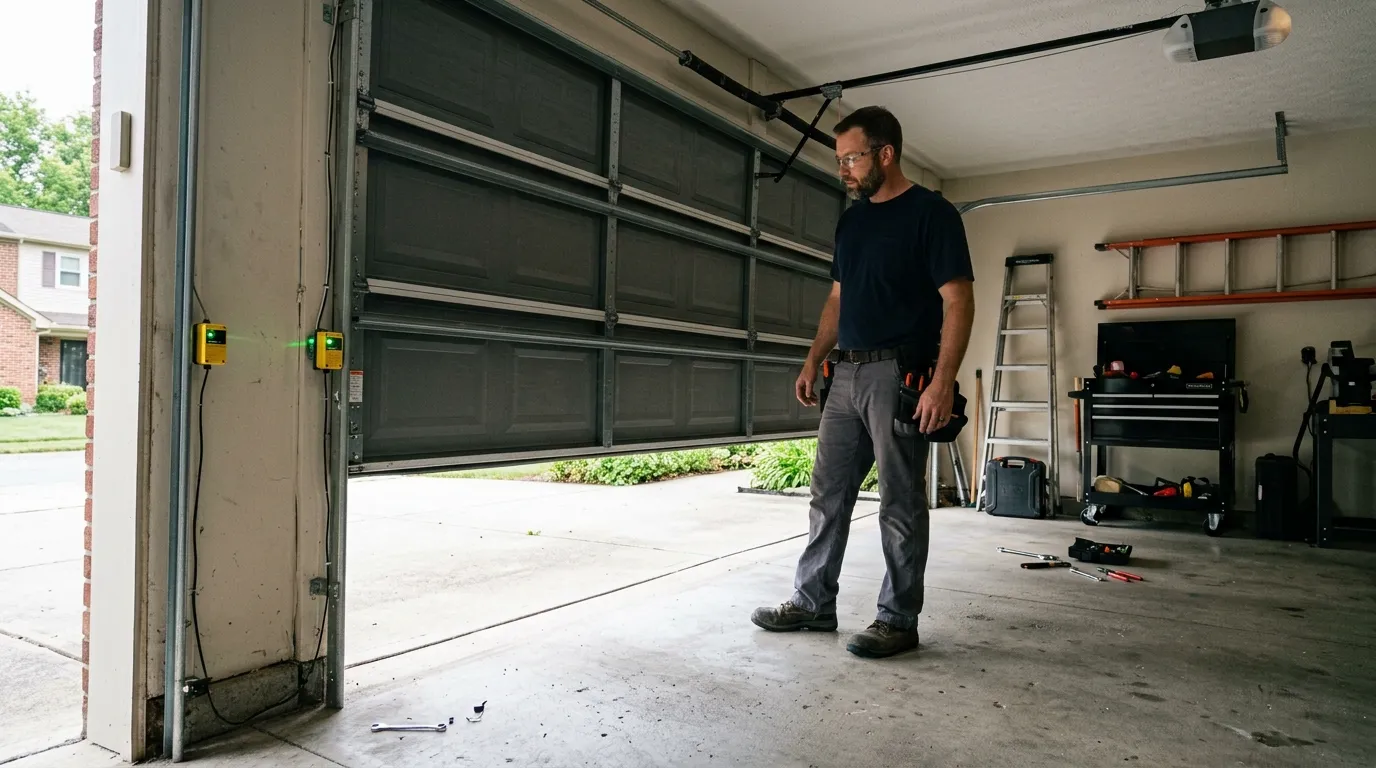
We carry the parts that fail most often on doors from the early 1980s through today: torsion springs sized for older galvanized setups, cables, steel and nylon rollers, extension and torsion spring hardware, drums, and bottom brackets. We also stock common opener parts - sprockets, gears, and safety sensor kits - for the chain and belt-drive units we see most on our routes.
One limitation worth saying plainly: on some original-to-1982 chain-drive openers, the circuit boards are long out of production. We can't always source a board for a unit that old. At that point we recommend a full opener swap rather than trying to keep a discontinued board running, because it saves you paying for parts that won't hold up anyway. It's a straightforward call once we've had a look, and we'll tell you which way it goes before any work starts.