Why It Happens Here
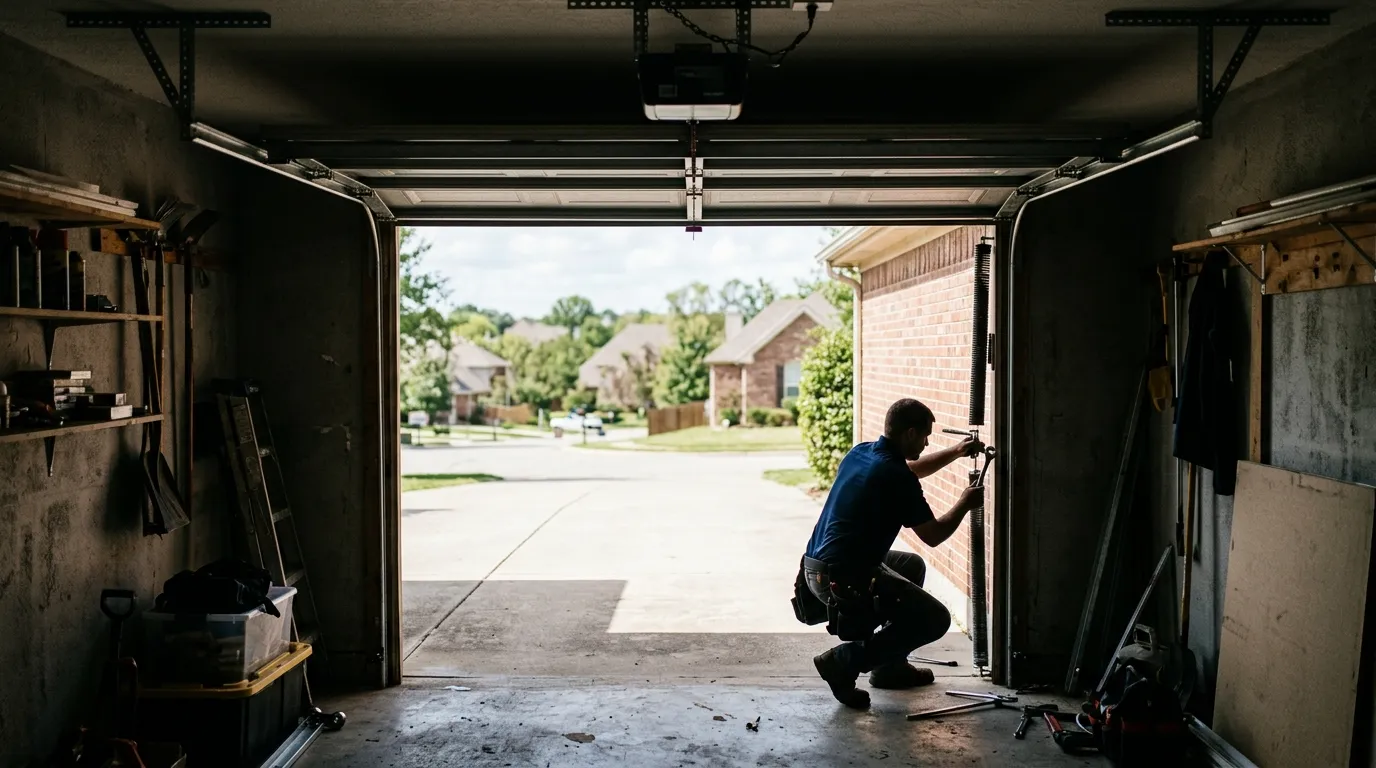
This whole region sits in a cold, severe winter climate band, and that's the backdrop for most emergency calls, not just in Woodland Park but across the area we cover. Cold snaps make steel torsion springs brittle right at the coil, and a spring that's been fine for twenty winters can snap on the twenty-first cold morning for no reason other than metal fatigue meeting a hard freeze.
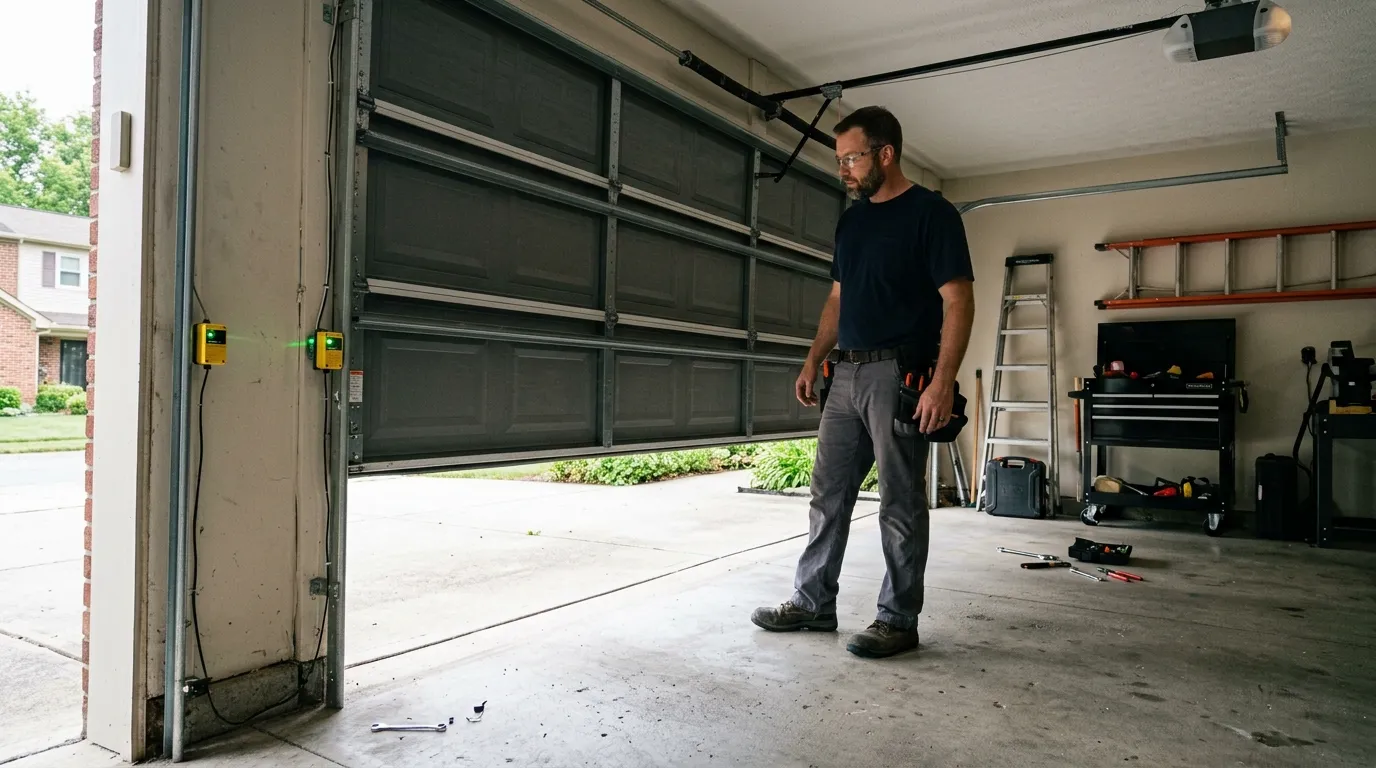
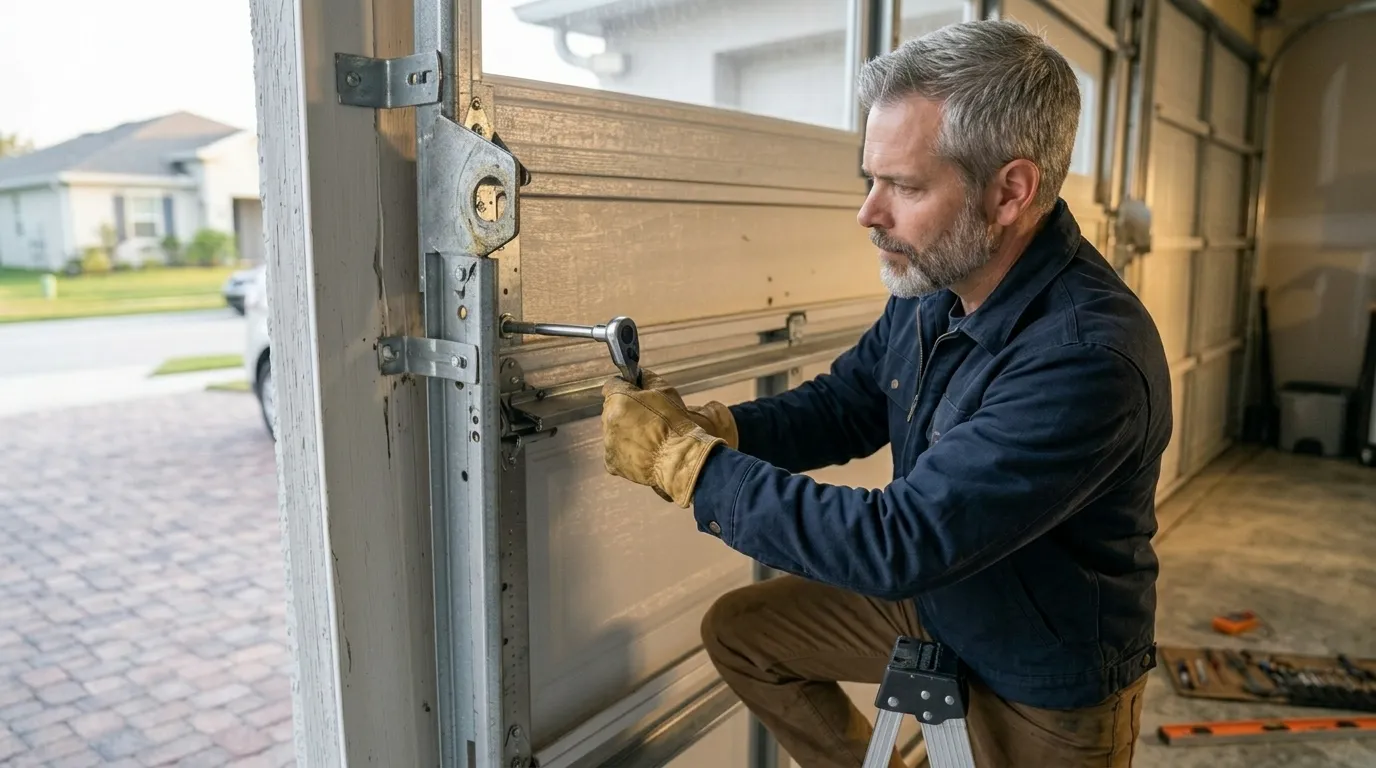
Woodland Park's early-90s housing adds a second layer to that. Doors from that build era have had three decades of seasonal cycling on hardware that wasn't built with today's insulation standards or heavier double-layer steel panels in mind. Rollers wear grooves into tracks that were installed a little narrower than current spec, and when a homeowner upgrades to a heavier door without touching the track or springs, the mismatch shows up as a jammed or torn cable a few winters later. It's a slow build to a sudden failure, and the timing usually lines up with the first hard freeze of the season.
Parts We Carry
For a town built mostly across the 1990s, the parts that matter are torsion springs sized for the lighter panel weights common to that decade, chain-drive opener components and limit switches from the same generation, and standard-width track sections that match narrower original rough openings. We stock these because that's what a 1992-median build actually needs, not because it's a universal kit.
We also carry cables and rollers rated for cold-weather steel, since a rubber-composite roller that's fine in a mild climate tends to crack in a severe one. One honest limit here: if your door needs a part that's been discontinued by the original manufacturer - which happens with openers and some panel hardware from this era - we may need to source a compatible replacement rather than an exact match, and that can add a day or two versus a same-visit fix.
Where This Job Goes Sideways
The call that turns into a longer job is almost always the one where a homeowner tried to force the door open manually after a spring broke. On a door this age, the cables are often original too, and forcing a spring-less door up by hand can snap a cable that was already fatigued, turning a spring swap into a spring-and-cable job with an extra parts run.
The other place it goes sideways is replacement-versus-repair. A door original to a 1992 build has had thirty-plus years of cold cycling on every moving part, and sometimes a customer wants one component fixed when the track, rollers, and opener are all near end of life together. We'll tell you when that's the case rather than patch one part and have you calling again next winter - that's a judgment call we make on-site, not over the phone, given we're driving up from Colorado Springs either way.