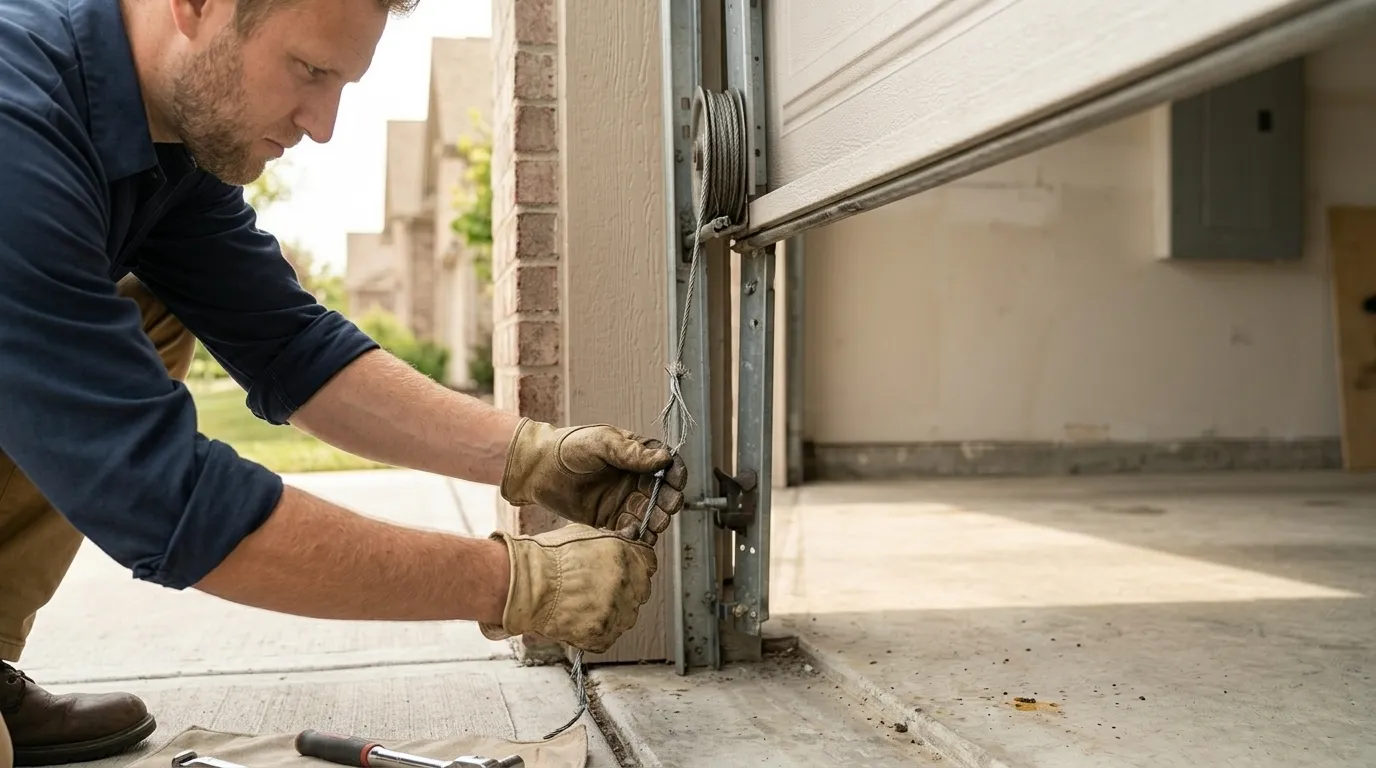
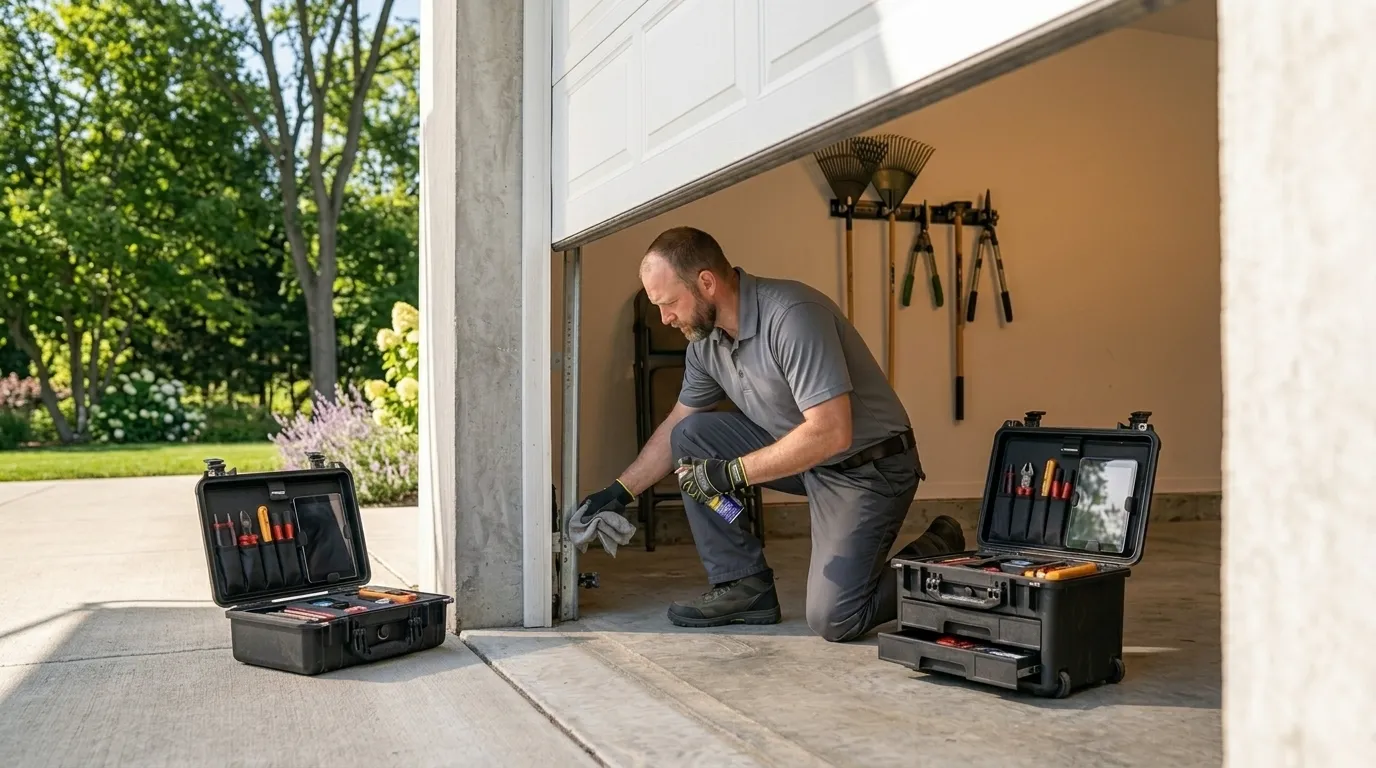
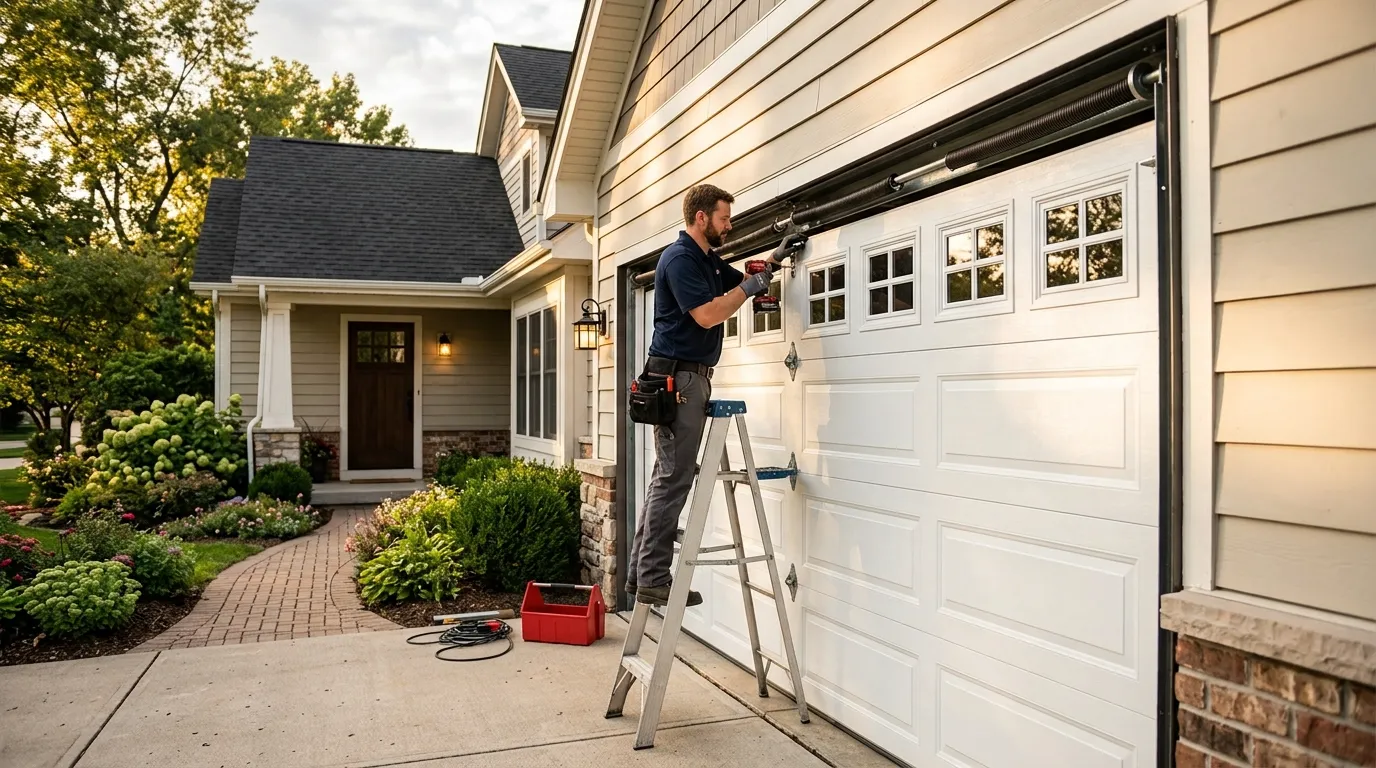
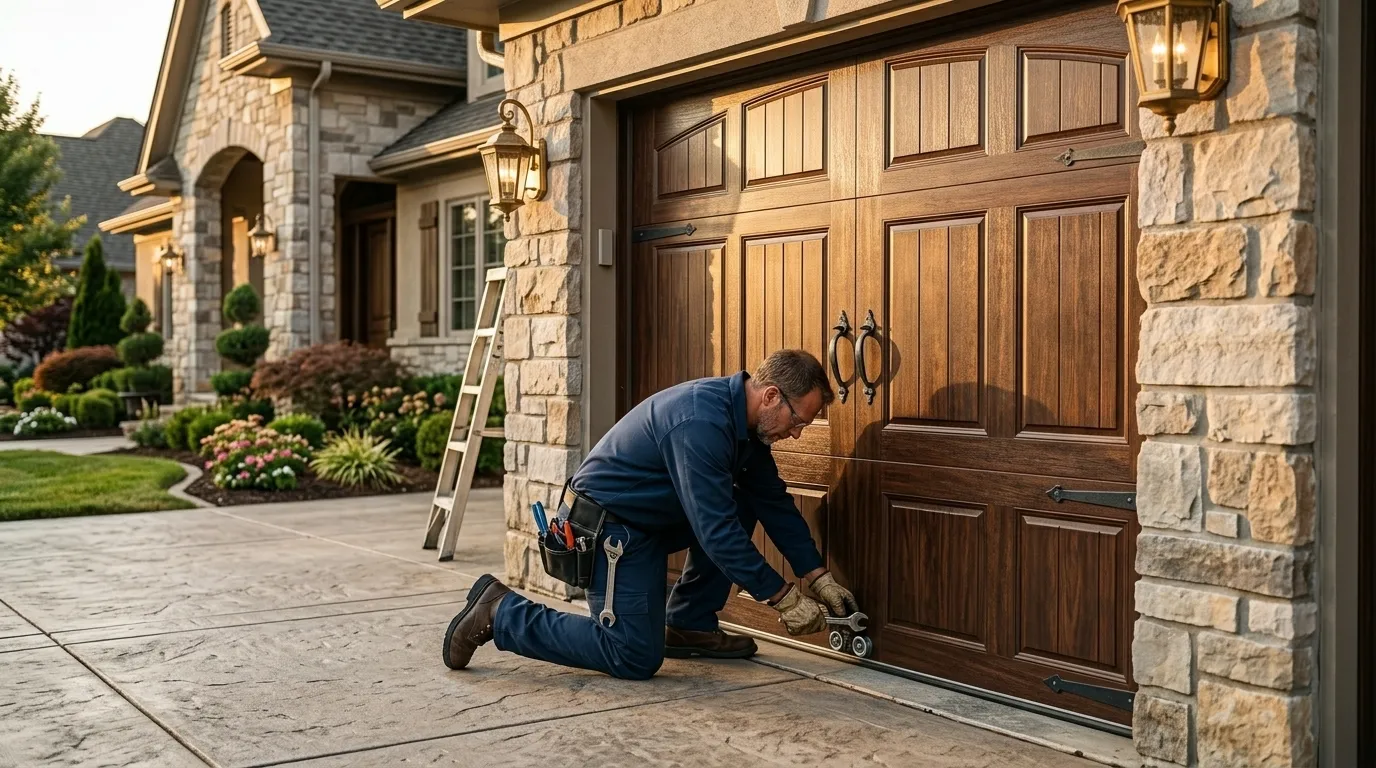
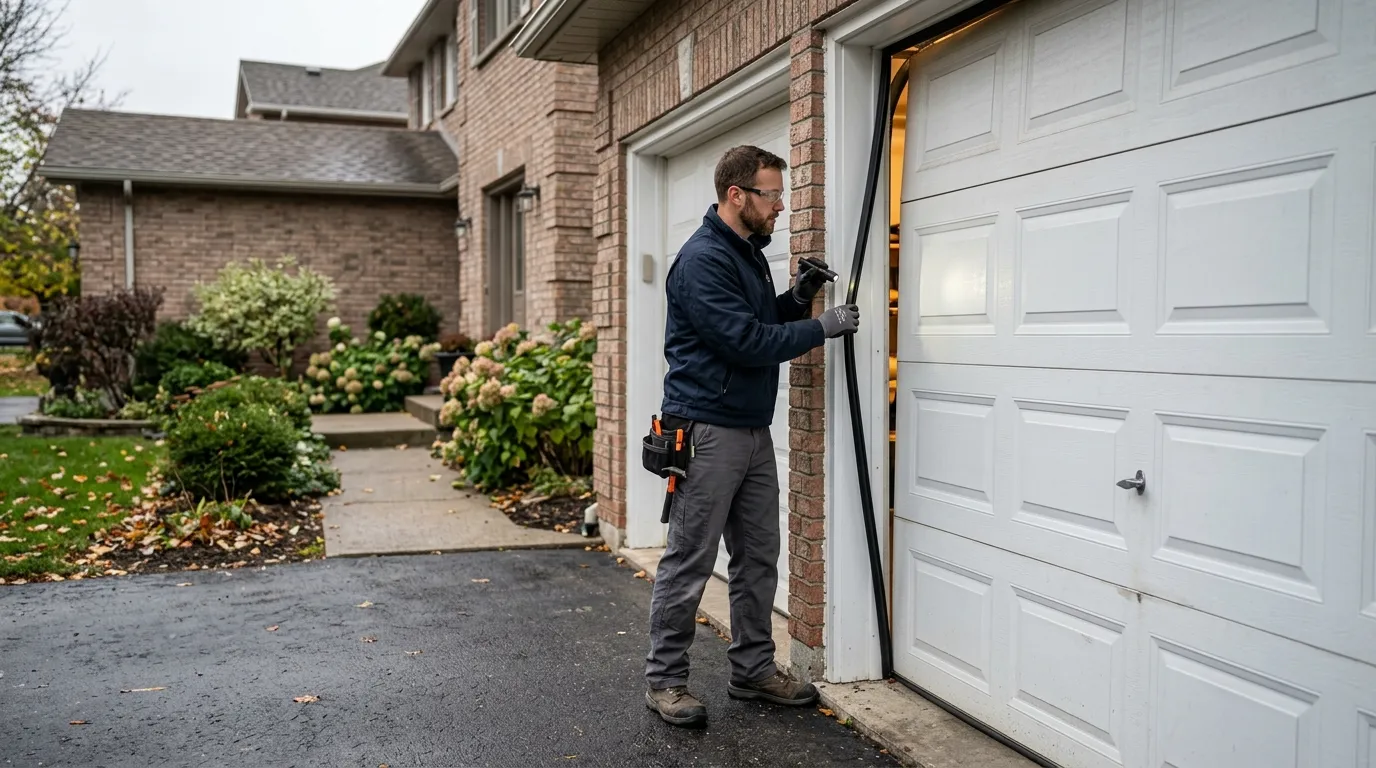
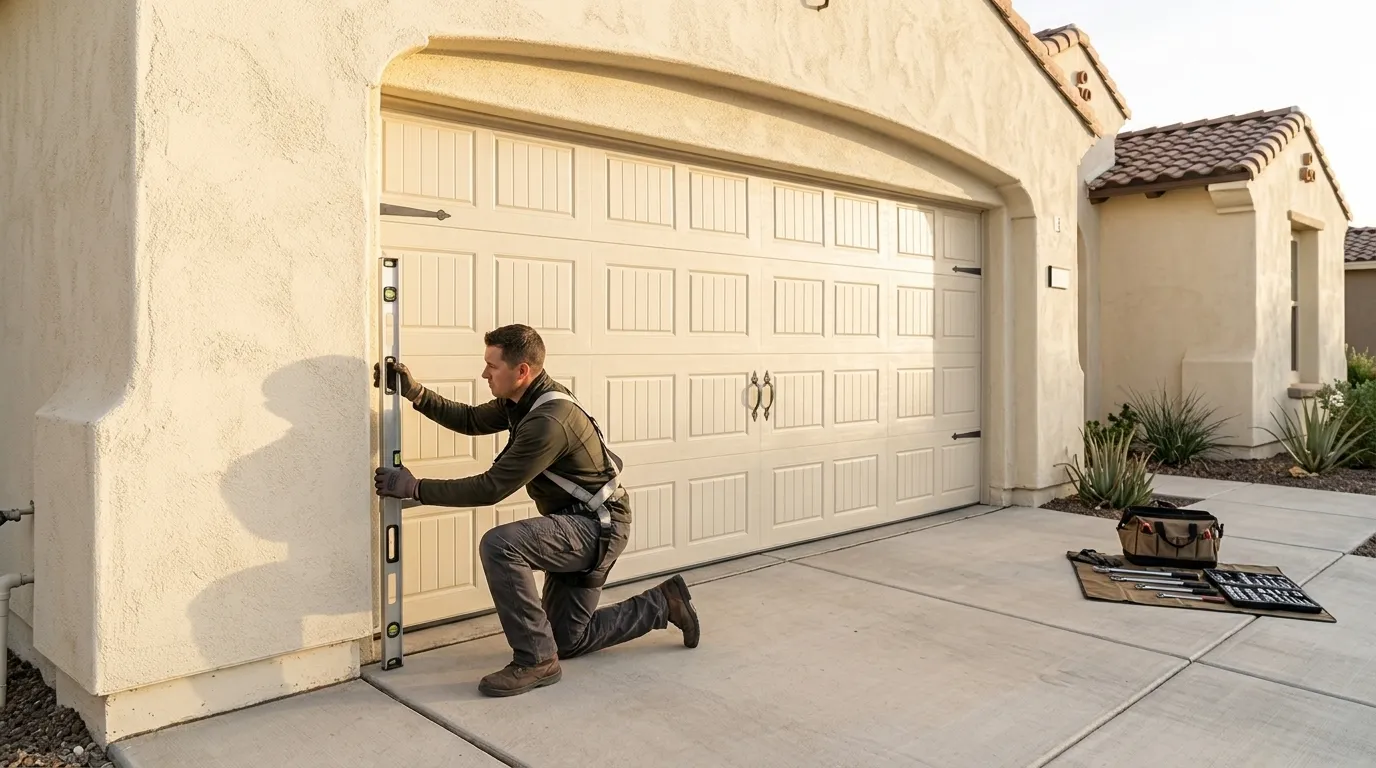
Stratmoor sits about 7 miles south of our shop in Colorado Springs, and that drive shapes how a call here actually works. We don't have a crew sitting in Stratmoor waiting on a phone to ring - the truck comes from Colorado Springs, loaded before it leaves, because a wasted trip back for a part costs everyone the afternoon. On a broken spring or a cable off the drum, that means we ask more questions on the phone up front: door make, opener type, roughly how old the house is. Most of Stratmoor's homes went up around 1976, which narrows down the hardware fast - a lot of these are original torsion setups on steel track that's been repainted more than once.
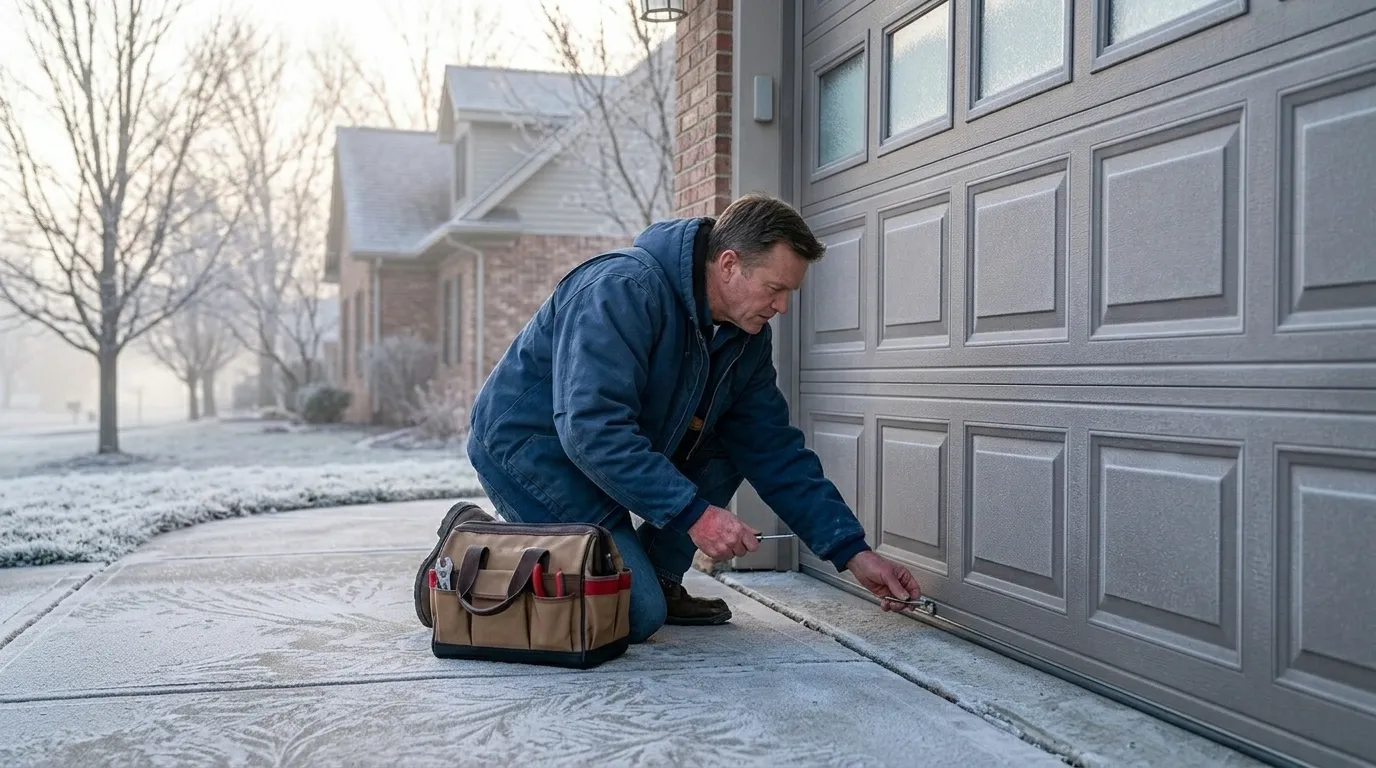
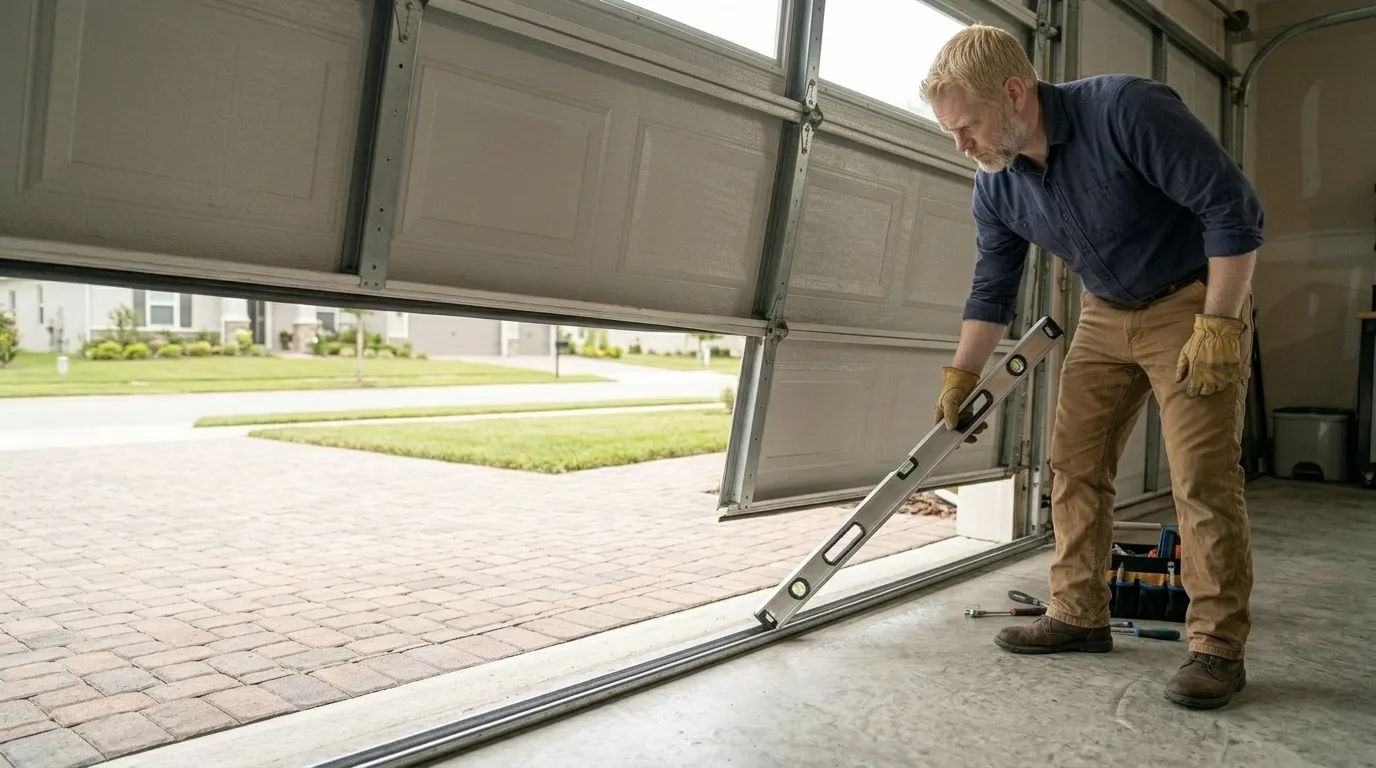
Once we're on site, the work itself is the same job it would be anywhere: isolate what broke, check the rest of the system while we're in there, and quote before we touch a wrench to anything that costs money. Torsion springs, broken rollers, snapped cables, and openers that won't cycle are the calls we see most. If the door came off its track or a panel's caved from a car backing into it, that's a same visit, different repair - track alignment and panel work don't wait any better than a spring does.
What It Costs
We don't publish a flat number for Stratmoor because a torsion spring job and a full opener swap aren't the same bill, and quoting blind over the phone does nobody favors. What we can tell you is that median household income here runs around $62,759, noticeably lower than the wider Colorado Springs service area, and that's part of why we price the repair, not the trip. You're not paying a separate surcharge because your house is in Stratmoor instead of somewhere closer to the shop.
What drives the cost is what's actually broken and how old the parts are. A house built in 1976 is closer to 50 years old now, and original hardware on a door that age has usually outlived its second or third spring already - sometimes the fix is the spring, sometimes it's the whole torsion tube because the shaft's worn. We'll tell you which one it is before we start, and if replacement makes more sense than another patch repair, we'll say that too.
Why It Happens Here
Stratmoor's housing stock centers on 1976, which puts a lot of doors and openers well past the point where the original springs and rollers were designed to last. Steel doors from that era don't insulate the way current ones do, and torsion hardware from the 70s and 80s wasn't built for the cycle counts a door sees decades later. Add a cold, severe winter climate to steel track and steel springs, and you get the two failure points we see most out here: cold-brittle springs snapping on the coldest mornings, and openers straining against doors that have gotten heavier to lift as seals age and hardware sags.
With about 2,396 households in Stratmoor, it's a smaller, tighter area than a lot of what we cover, and a good share of those houses are original owners or long-term residents who've had the same door since they moved in. That's not a bad thing - it means the failure patterns are consistent and we've seen the same setup enough times to know what usually goes first on a house this age.
Where This Job Goes Sideways
The job goes sideways when a spring snaps and someone tries to force the door open by hand before calling. On a torsion system that's lost tension unevenly, that's how a track gets bent or a cable comes off the drum, turning a one-part fix into two or three. We also see it when an opener's been straining against a bad spring for months - the motor takes the load the spring should be carrying, and by the time the spring finally goes, the opener's cooked too.
Here's the honest limit: if your door and opener are both original to a 1976 build and both are failing at once, replacing just the spring is sometimes throwing money at a system that's due for retirement anyway. We'll tell you straight when a repair isn't worth it and a new door makes more sense than another round of patches. We don't stock every obsolete part for hardware that old, either - some of it has to be ordered, and we'll tell you that up front rather than promise same-day on a part we don't have on the truck.
How it works
From “it’s stuck” to “it’s fixed”
01
Tell us what’s wrong
Describe the symptom - won’t open, loud bang, opener runs but the door won’t move.
02
On-site diagnosis
A technician tests the door under power and by hand and finds what actually failed.
03
Clear, up-front plan
You get the fix that’s needed and what drives the cost - before any work starts.
04
Repaired & tested
The repair is done, the door is set true and tested, and the work area left clean.
Serving Colorado Springs, CO - tell us what your door’s doing and we’ll take it from there.
How fast can you get to Stratmoor for a broken spring?
We come from Colorado Springs, about 7 miles out, so we're not sitting on standby in Stratmoor itself. Call and we'll give you a real window based on where the truck is that day, not a canned promise.
Are Stratmoor garage doors different from newer parts of Colorado Springs?
A lot of them, yes. Stratmoor's housing centers on 1976, so you're more likely to have original torsion hardware and steel doors from that era rather than the newer insulated doors and updated openers common in areas built after 1990.
Do you charge extra to drive out to Stratmoor?
No. We price the repair itself, not the distance. The 7-mile drive from our Colorado Springs base doesn't show up as a separate line on your invoice.
My opener works but the door won't lift - is that the spring?
Usually, especially on an older setup. If the opener strains, stalls, or reverses on its own, a torsion spring that's lost tension is the most common cause on doors from Stratmoor's era. We'll confirm on site before replacing anything.
Ready to get your garage door sorted?
Tell us what it’s doing and where you are in Colorado Springs - we’ll take it from there.